This learning resource is available in interactive and printable formats. The interactive worksheet can be played online and assigned to students. The Printable PDF version can be downloaded and printed for completion by hand.
This engaging 250-word reading passage introduces Grade 4 students to the structure and function of bones, aligned with NGSS standard 4-LS1-1 and Disciplinary Core Idea LS1.A. Students discover that bones are not dry and dead like they appear in pictures, but are actually living parts of the body with important jobs. The passage explains the hard outer layer that provides strength and protection, and the softer inside called bone marrow that produces blood cells. Students learn how bones grow as they grow and can even heal themselves when broken. The passage includes audio integration for accessibility, bold key vocabulary terms with immediate definitions, and relatable examples. Supplementary materials include a simplified differentiated version for struggling readers, Spanish translations of both passages, an 8-question multiple-choice quiz testing recall and comprehension, writing activities requiring application of concepts, and two graphic organizers (Structure and Function Table, Main Idea and Supporting Details Table) to help students organize their understanding. This comprehensive resource helps students build foundational understanding of bones as living, active structures essential for body support, protection, movement, and blood cell production.
CONTENT PREVIEW
Expand content preview
When you see a picture of a skeleton, bones look white, hard, and dry. But the bones inside your body are very different. Bones are living parts of your body, just like your skin, heart, and muscles. They are alive and working every day to keep you healthy and strong.
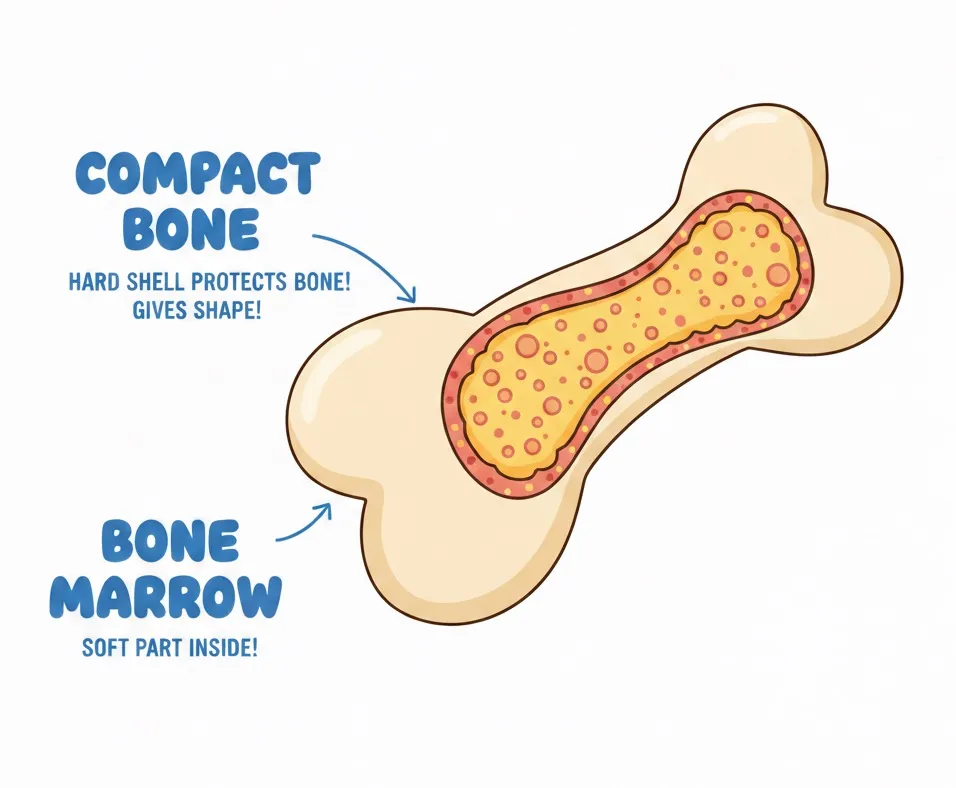
Each bone has two main parts. The outside of a bone has a hard layer called compact bone. This layer is very strong and protects the bone. It gives your body shape and helps you stand, walk, and move. The compact bone is like a hard shell that keeps the bone safe.
Inside the bone is a softer part called bone marrow. Bone marrow is like a soft sponge. It has an important job—it makes blood cells that travel through your body. Blood cells carry oxygen to all your body parts and help you fight germs when you are sick. Without bone marrow, your body could not make new blood cells.
Because bones are alive, they can do amazing things. Bones grow as you grow taller and bigger. When you are a baby, your bones are small and soft. As you get older, your bones grow longer and harder. If you break a bone, special cells work together to heal the bone and make it strong again. This can take several weeks, but your living bones can fix themselves!
Interesting Fact: An adult human has 206 bones, but a baby is born with about 300 bones! As babies grow, some of their smaller bones join together to form bigger, stronger bones.
What are bones in your body?
Dead, white, and dry partsLiving parts that work every dayOnly hard shells with nothing insideParts that never change or grow
What is compact bone?
The soft inside of a boneThe part that makes blood cellsThe hard outer layer of boneA type of blood cell
What does bone marrow make?
New bones for your bodyHard shells around bonesBlood cells for your bodyMuscles to help you move
Why do blood cells matter to you?
They make bones grow longerThey carry oxygen and fight germsThey make bones hard and strongThey help you walk and run
What happens when you break a bone?
It stays broken foreverIt turns into bone marrowSpecial cells heal it over timeIt becomes softer than before
How do bones change as you grow?
They get smaller and softerThey stay exactly the same sizeThey get longer and harderThey turn into muscles
Bones are dead parts of the body.
TrueFalse
Which word means to fix or repair?
CompactMarrowHealCell
Perfect For:
👩🏫 Teachers
• Reading comprehension practice
• Auto-graded assessments
• Literacy skill development
👨👩👧👦 Parents
• Reading practice at home
• Comprehension improvement
• Educational reading time
🏠 Homeschoolers
• Reading curriculum support
• Independent reading practice
• Progress monitoring
Reading Features:
📖
Reading Passage
Engaging fiction or nonfiction text
❓
Comprehension Quiz
Auto-graded questions
📊
Instant Feedback
Immediate results and scoring
📄
Printable Version
Download for offline reading
🔊
Read Aloud
Voice-over with word highlighting
Reviews & Ratings
No reviews yet. Be the first to share your experience!
Related Content
How Bones Protect Organs
This engaging 250-word reading passage helps Grade 4 students understand how bones protect organs, aligned with NGSS sta...
NGSS 4-LS1-1LS1.A
How Joints Connect Bones
This 250-word reading passage teaches fourth-grade students about joints and their role in the human skeletal system. Al...
NGSS 4-LS1-1LS1.A
Layers of the Skin
This engaging 250-word reading passage introduces fourth-grade students to the three layers of skin and their functions....
NGSS 4-LS1-1LS1.A
Parts of Plant Stems
This engaging 250-word reading passage introduces fourth-grade students to the internal structure and function of plant ...
NGSS 4-LS1-1LS1.A
Parts of a Flower
This comprehensive 250-word reading passage introduces fourth-grade students to the essential parts of a flower and thei...
NGSS 4-LS1-1LS1.A
How Animals See Differently
This engaging 250-word reading passage introduces fourth-grade students to the fascinating world of animal vision and ey...
NGSS 4-LS1-1LS1.D
Animal Internal Structure
This engaging science passage for Grade 4-5 students explores animal internal structure and how organs work together to ...
NGSS 4-LS1-1
How Muscles Move Bones
This comprehensive 250-word reading passage introduces fourth-grade students to the fundamental concept of how muscles a...
NGSS 4-LS1-1
Two Types of Muscles
This 250-word reading passage introduces fourth-grade students to the two main types of muscles in the human body: volun...
NGSS 4-LS1-1
What Are Muscles
This engaging 250-word reading passage introduces fourth-grade students to the essential concept of muscles and how they...
NGSS 4-LS1-1
How Skin Protects Body
This audio-integrated reading passage introduces fourth-grade students to the protective functions of skin, aligned with...
NGSS 4-LS1-1
What Are Plant Structures
This engaging 250-word reading passage introduces fourth-grade students to the fundamental concept of plant structures a...
NGSS 4-LS1-1
How Water Moves Inside Plants
This 250-word reading passage introduces fourth-grade students to the concept of water transport in plants, aligned with...