This learning resource is available in interactive and printable formats. The interactive worksheet can be played online and assigned to students. The Printable PDF version can be downloaded and printed for completion by hand.
This comprehensive 250-word reading passage introduces fourth-grade students to the essential parts of a flower and their specific functions in plant reproduction. Aligned with NGSS standard 4-LS1-1 and Disciplinary Core Ideas LS1.A, the passage explains how petals attract pollinators with color and scent, how sepals protect developing flower buds, and how stamens and pistils work together to produce seeds. Students explore the structure and function relationship in flowers, understanding that these beautiful plant parts serve critical reproductive purposes beyond decoration. The passage uses simple, grade-appropriate language and includes a helpful analogy comparing sepals to protective covers. Audio integration supports diverse learners and enhances accessibility. Accompanied by differentiated versions for various reading levels, Spanish translations, a comprehensive glossary of key terms, multiple-choice comprehension questions, writing activities, and structured graphic organizers, this resource provides complete instructional support. Students engage with scientific vocabulary including petals, sepals, stamens, pistil, pollen, and pollinator while building foundational understanding of plant structures and life cycles. The materials encourage hands-on learning and prepare students for deeper investigations into plant reproduction and ecosystems.
CONTENT PREVIEW
Expand content preview
A flower is the part of a plant that makes seeds. Flowers are important because seeds grow into new plants. Without flowers, many plants could not reproduce.
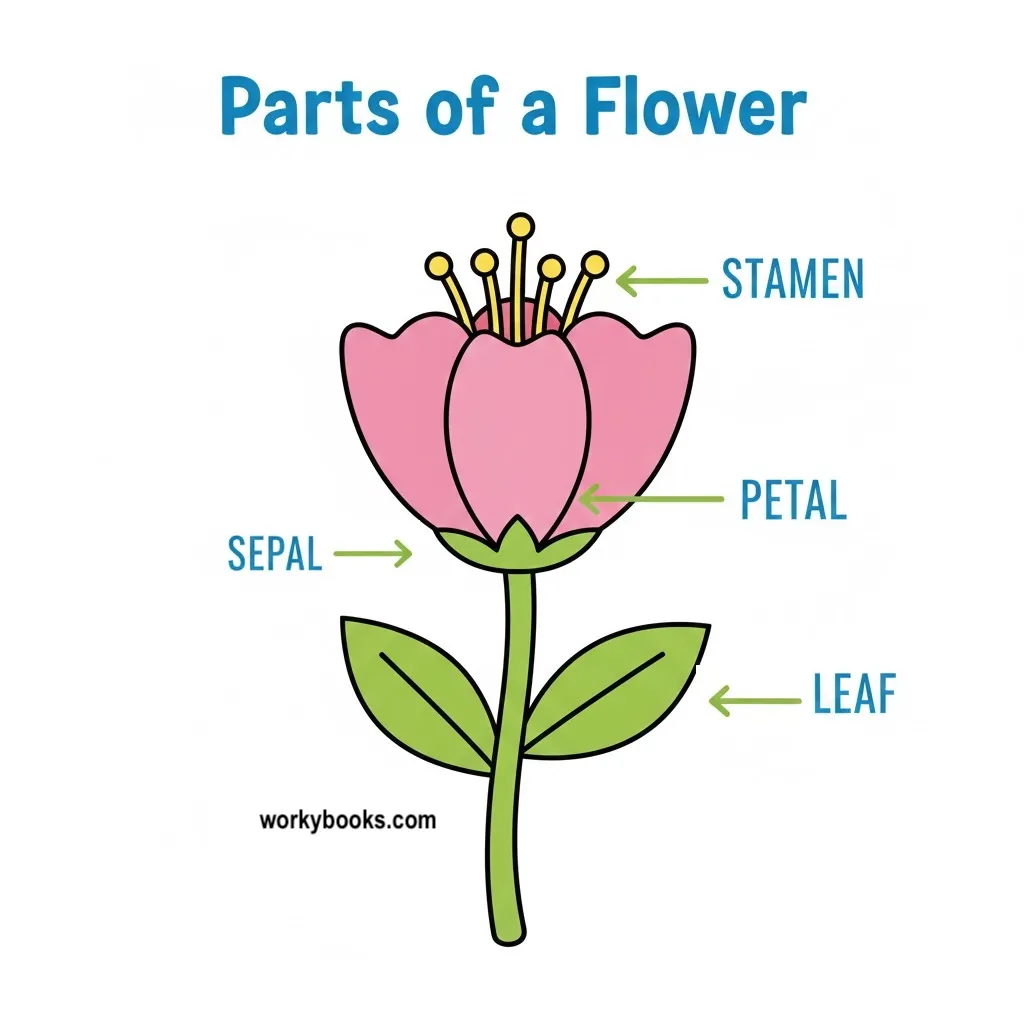
The outside of a flower has colorful petals. Petals are the bright parts that attract animals like bees and butterflies. These animals are called pollinators because they help move pollen from one flower to another. Pollen is a powdery substance that flowers need to make seeds. Petals use bright colors and sweet scents to get pollinators to visit.
Below the petals are small green parts called sepals. Sepals protect the flower bud before it opens, like a cover protects a book. Once the flower opens, the sepals stay at the base.
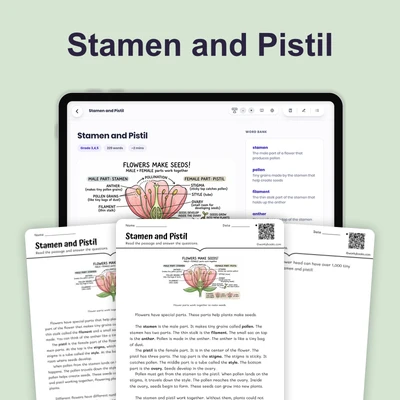
Inside the flower are the parts that make seeds. The stamen is the male part that makes pollen. It looks like a thin stalk with a small knob on top. The pistil is the female part in the center of the flower. When pollen from the stamen reaches the pistil, the flower can make seeds. These seeds will eventually grow into new plants.
Each part of a flower has a special job that helps the plant reproduce and continue its life cycle.
Interesting Fact: The largest flower in the world is the Rafflesia, which can grow up to three feet wide and smells like rotting meat to attract flies as pollinators!
What is the main job of a flower?
To look pretty in gardensTo make seeds for new plantsTo give shade to animalsTo hold water for the plant
What do petals use to attract pollinators?
Bright colors and sweet scentsLoud sounds and movementsWater and soilShadows and darkness
What protects the flower bud before opening?
PetalsPollenSepalsStamens
Why do flowers need pollinators?
To water the plantTo move pollen between flowersTo eat the petalsTo dig in the soil
Which part makes pollen in a flower?
The pistilThe sepalsThe stamenThe petals
What happens when pollen reaches the pistil?
The flower dies immediatelyThe petals change colorThe flower can make seedsThe sepals fall off
Flowers are only for decoration and beauty.
TrueFalse
What is pollen?
A type of insectA powdery substance for making seedsA kind of waterA flower disease
Perfect For:
👩🏫 Teachers
• Reading comprehension practice
• Auto-graded assessments
• Literacy skill development
👨👩👧👦 Parents
• Reading practice at home
• Comprehension improvement
• Educational reading time
🏠 Homeschoolers
• Reading curriculum support
• Independent reading practice
• Progress monitoring
Reading Features:
📖
Reading Passage
Engaging fiction or nonfiction text
❓
Comprehension Quiz
Auto-graded questions
📊
Instant Feedback
Immediate results and scoring
📄
Printable Version
Download for offline reading
🔊
Read Aloud
Voice-over with word highlighting
Reviews & Ratings
No reviews yet. Be the first to share your experience!
Related Content
What Are Bones Made Of
This engaging 250-word reading passage introduces Grade 4 students to the structure and function of bones, aligned with ...
NGSS 4-LS1-1LS1.A
How Bones Protect Organs
This engaging 250-word reading passage helps Grade 4 students understand how bones protect organs, aligned with NGSS sta...
NGSS 4-LS1-1LS1.A
How Joints Connect Bones
This 250-word reading passage teaches fourth-grade students about joints and their role in the human skeletal system. Al...
NGSS 4-LS1-1LS1.A
Layers of the Skin
This engaging 250-word reading passage introduces fourth-grade students to the three layers of skin and their functions....
NGSS 4-LS1-1LS1.A
Parts of Plant Stems
This engaging 250-word reading passage introduces fourth-grade students to the internal structure and function of plant ...
NGSS 4-LS1-1LS1.A
How Animals See Differently
This engaging 250-word reading passage introduces fourth-grade students to the fascinating world of animal vision and ey...
NGSS 4-LS1-1LS1.D
Animal Internal Structure
This engaging science passage for Grade 4-5 students explores animal internal structure and how organs work together to ...
NGSS 4-LS1-1
How Muscles Move Bones
This comprehensive 250-word reading passage introduces fourth-grade students to the fundamental concept of how muscles a...
NGSS 4-LS1-1
Two Types of Muscles
This 250-word reading passage introduces fourth-grade students to the two main types of muscles in the human body: volun...
NGSS 4-LS1-1
What Are Muscles
This engaging 250-word reading passage introduces fourth-grade students to the essential concept of muscles and how they...
NGSS 4-LS1-1
How Skin Protects Body
This audio-integrated reading passage introduces fourth-grade students to the protective functions of skin, aligned with...
NGSS 4-LS1-1
What Are Plant Structures
This engaging 250-word reading passage introduces fourth-grade students to the fundamental concept of plant structures a...
NGSS 4-LS1-1
How Water Moves Inside Plants
This 250-word reading passage introduces fourth-grade students to the concept of water transport in plants, aligned with...