This learning resource is available in interactive and printable formats. The interactive worksheet can be played online and assigned to students. The Printable PDF version can be downloaded and printed for completion by hand.
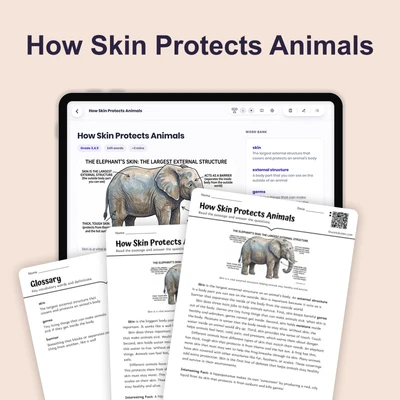
This engaging 250-word reading passage introduces fourth-grade students to the three layers of skin and their functions. Aligned with NGSS 4-LS1-1 and the Disciplinary Core Idea LS1.A, students learn that skin is the body's largest organ with distinct layers: the tough, waterproof epidermis on the outside; the dermis containing nerves, blood vessels, and sweat glands in the middle; and the subcutaneous fat layer that provides insulation and cushioning at the bottom. The passage uses simple, age-appropriate language and real-world examples to help students understand how each skin layer protects and supports the body. Audio-integrated features support diverse learners. Activities include multiple-choice comprehension questions, writing prompts that ask students to explain and apply concepts, and graphic organizers including a Structure and Function Table and a Layers Sequence Table. The Spanish translation and simplified differentiated version ensure accessibility for all learners. This resource builds foundational understanding of human body structures and prepares students for hands-on investigations about how organisms' internal and external structures support survival, growth, behavior, and reproduction.
CONTENT PREVIEW
Expand content preview
Skin is the largest organ of your body. An organ is a body part that does an important job. Your skin covers your entire body and protects everything inside. It keeps germs out and keeps water in. Without skin, you could not survive.
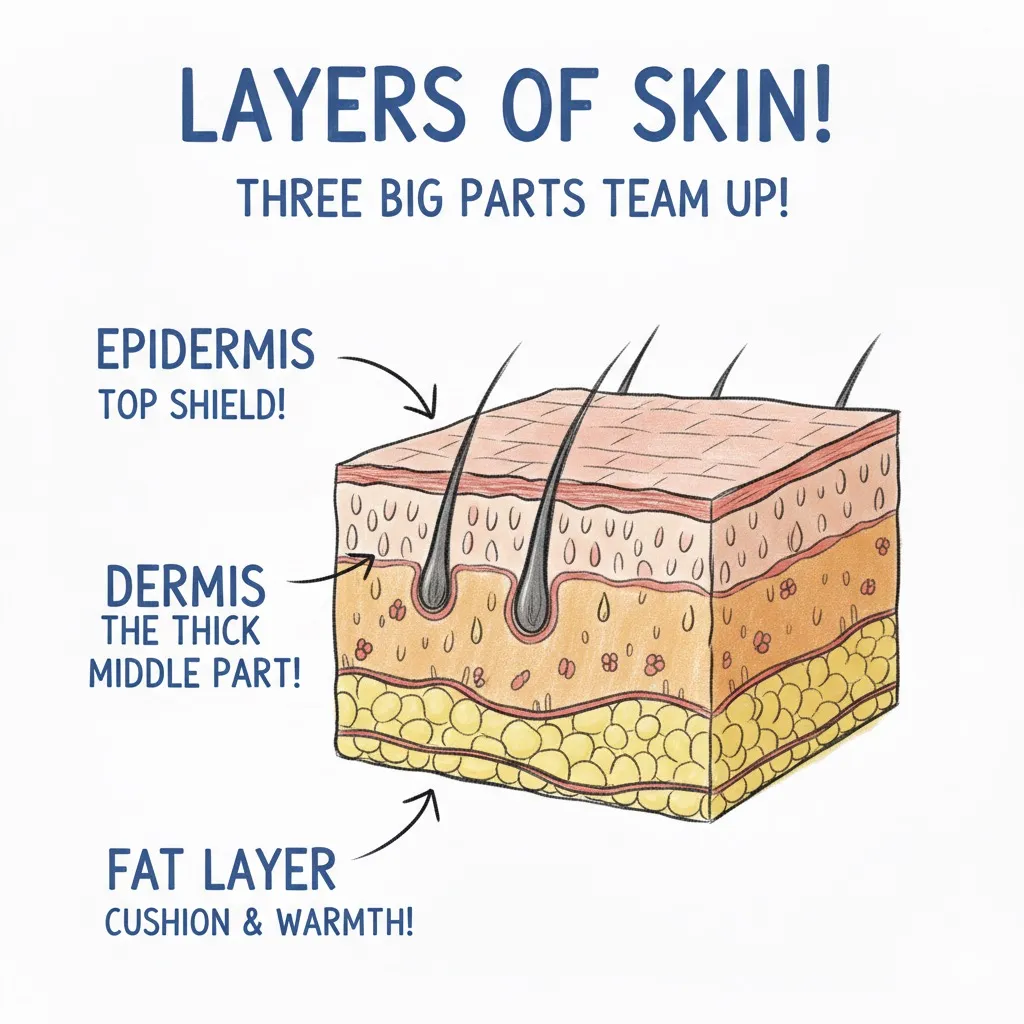
Your skin has three main layers that work together. The top layer is called the epidermis. This is the layer you can see and touch. The epidermis is tough and waterproof, like a raincoat. It stops water from getting in when you take a bath. It also keeps the water inside your body from leaking out. Dead skin cells on the surface fall off all the time, and new cells grow to replace them.
Below the epidermis is a thicker layer called the dermis. The dermis contains many important parts. It has nerves that let you feel hot, cold, and pain. It has tiny blood vessels that bring food and oxygen to your skin cells. Blood vessels are like small tubes that carry blood through your body. The dermis also has sweat glands that make sweat to cool you down when you are hot.
The bottom layer is made of fat. This layer keeps you warm, like a blanket under your skin. It also cushions your body when you bump into things. All three layers work together to protect you, help you feel the world around you, and keep your body working properly.
Interesting Fact: You shed about 30,000 to 40,000 dead skin cells every minute! That means you grow a completely new outer layer of skin about every 28 days.
What is the largest organ of your body?
HeartBrainSkinStomach
Which layer of skin can you see?
DermisEpidermisFat layerBlood vessels
What does the dermis contain?
Only dead skin cellsNerves, blood vessels, and sweat glandsOnly fatOnly water
Why does your skin need blood vessels?
To make you sweatTo keep germs outTo bring food and oxygen to cellsTo make you feel cold
How does the fat layer help your body?
It makes you feel painIt keeps you warm and cushions youIt keeps water outIt makes sweat
What happens when you are hot?
Sweat glands make sweat to cool youYour skin gets thickerBlood vessels disappearThe epidermis falls off
The epidermis is waterproof like a raincoat.
TrueFalse
What does the word 'organ' mean?
A musical instrumentA body part with an important jobA type of skin cellA layer of fat
Perfect For:
👩🏫 Teachers
• Reading comprehension practice
• Auto-graded assessments
• Literacy skill development
👨👩👧👦 Parents
• Reading practice at home
• Comprehension improvement
• Educational reading time
🏠 Homeschoolers
• Reading curriculum support
• Independent reading practice
• Progress monitoring
Reading Features:
📖
Reading Passage
Engaging fiction or nonfiction text
❓
Comprehension Quiz
Auto-graded questions
📊
Instant Feedback
Immediate results and scoring
📄
Printable Version
Download for offline reading
🔊
Read Aloud
Voice-over with word highlighting
Reviews & Ratings
No reviews yet. Be the first to share your experience!
Related Content
What Are Bones Made Of
This engaging 250-word reading passage introduces Grade 4 students to the structure and function of bones, aligned with ...
NGSS 4-LS1-1LS1.A
How Bones Protect Organs
This engaging 250-word reading passage helps Grade 4 students understand how bones protect organs, aligned with NGSS sta...
NGSS 4-LS1-1LS1.A
How Joints Connect Bones
This 250-word reading passage teaches fourth-grade students about joints and their role in the human skeletal system. Al...
NGSS 4-LS1-1LS1.A
Parts of Plant Stems
This engaging 250-word reading passage introduces fourth-grade students to the internal structure and function of plant ...
NGSS 4-LS1-1LS1.A
Parts of a Flower
This comprehensive 250-word reading passage introduces fourth-grade students to the essential parts of a flower and thei...
NGSS 4-LS1-1LS1.A
How Animals See Differently
This engaging 250-word reading passage introduces fourth-grade students to the fascinating world of animal vision and ey...
NGSS 4-LS1-1LS1.D
Animal Internal Structure
This engaging science passage for Grade 4-5 students explores animal internal structure and how organs work together to ...
NGSS 4-LS1-1
How Muscles Move Bones
This comprehensive 250-word reading passage introduces fourth-grade students to the fundamental concept of how muscles a...
NGSS 4-LS1-1
Two Types of Muscles
This 250-word reading passage introduces fourth-grade students to the two main types of muscles in the human body: volun...
NGSS 4-LS1-1
What Are Muscles
This engaging 250-word reading passage introduces fourth-grade students to the essential concept of muscles and how they...
NGSS 4-LS1-1
How Skin Protects Body
This audio-integrated reading passage introduces fourth-grade students to the protective functions of skin, aligned with...
NGSS 4-LS1-1
What Are Plant Structures
This engaging 250-word reading passage introduces fourth-grade students to the fundamental concept of plant structures a...
NGSS 4-LS1-1
How Water Moves Inside Plants
This 250-word reading passage introduces fourth-grade students to the concept of water transport in plants, aligned with...