How Animals See Differently
Interactive passage with audio narration, comprehension questions, and printable PDF.
By completing this purchase you agree to our Terms of Use and Privacy Policy. Your subscription renews automatically until you cancel. You can cancel anytime from your account settings. All sales are final and non-refundable. Digital content is available for download in your account immediately upon purchase.
What's included
Part of this bundle

How Animals See Differently preview and details
About this printable How Animals See Differently science reading passage, NGSS-aligned (Grades 3-5)
Sample passage and quiz from How Animals See Differently
Reading passage and comprehension quiz preview
How Animals See Differently
Animals have eyes that are built in different ways to help them survive. The structure, or how something is built, of an animal's eye determines what kind of information that animal can see. This matters because animals need to find food, avoid danger, and live in their environments.
Eagles have extremely sharp eyes that face forward. These eyes work like powerful binoculars. An eagle can spot a small rabbit from more than a mile away! The structure of an eagle's eye has many more receptors, which are special cells that detect light, than human eyes have. This helps eagles hunt prey from high in the sky.
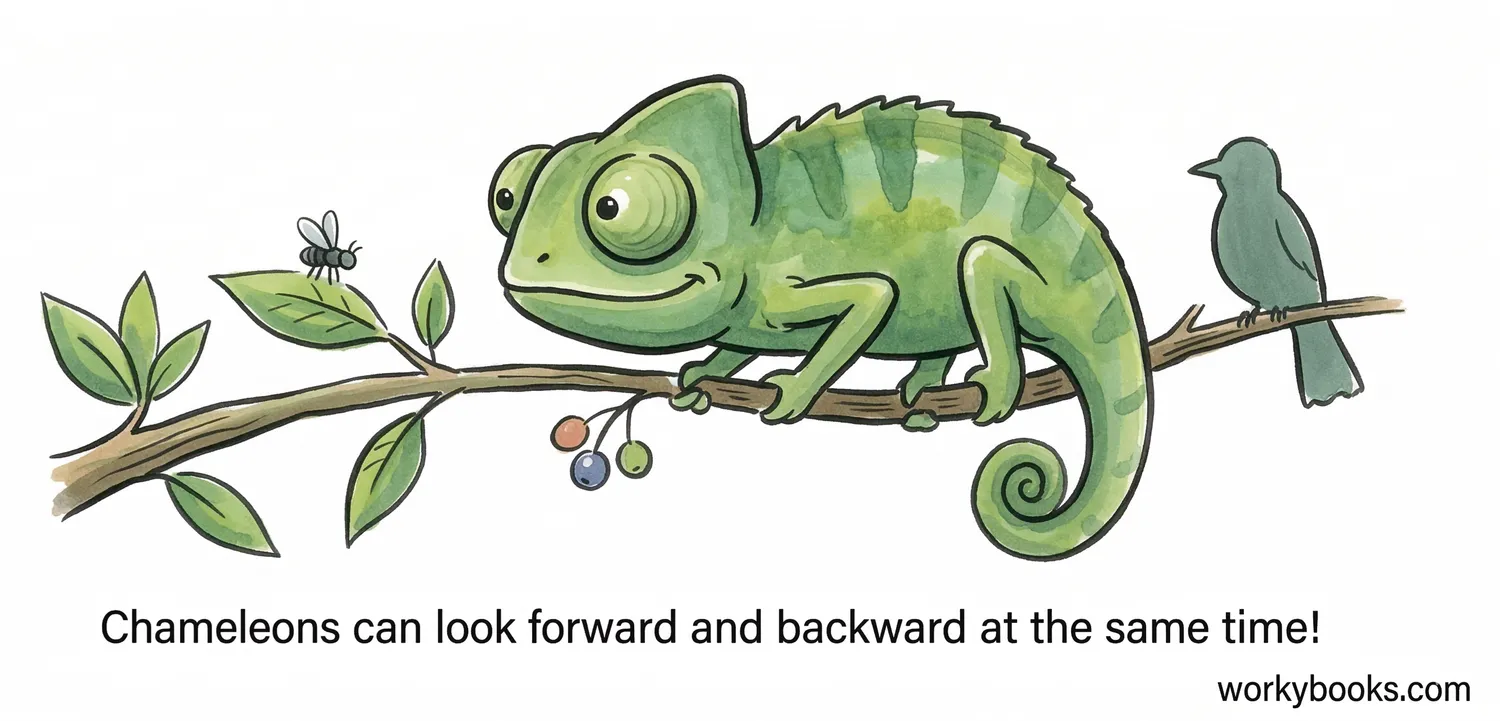
Chameleons have eyes that can move separately from each other. One eye can look forward while the other looks backward at the same time. This special structure helps chameleons watch for predators and search for insects to eat without moving their heads.
Many insects have compound eyes, which are eyes made of thousands of tiny lenses. Each small lens sees a little piece of the world. Together, they create a picture that is excellent at detecting movement in all directions. A fly can see you coming from almost any angle!
Some animals see colors that humans cannot see. Bees can see ultraviolet light, which is a type of light invisible to people. Other animals, like some dogs, see mostly in black and white. The structure of each animal's eye gives it exactly the information it needs to survive.
Interesting Fact: A dragonfly has about 30,000 tiny lenses in each compound eye, giving it nearly 360-degree vision. This makes dragonflies some of the best hunters in the insect world!
Comprehension quiz (8 questions)
1. What are receptors in an eye?
2. How far can eagles see prey?
3. What makes compound eyes special?
4. Why do chameleons move eyes separately?
5. How does eye structure help survival?
6. What can bees see that humans cannot?
7. All animals see colors the same way.
8. What does structure mean in the passage?
Perfect for the way you teach
- Build comprehension skills
- Auto-graded quiz
- Differentiated reading
- Read together at home
- Improve fluency
- Quiet reading time
- Reading curriculum support
- Independent practice
- Track Lexile growth