This learning resource is available in interactive and printable formats. The interactive worksheet can be played online and assigned to students. The Printable PDF version can be downloaded and printed for completion by hand.
This audio-integrated reading passage introduces fourth-grade students to the protective functions of skin, aligned with NGSS standard 4-LS1-1. Students discover how skin serves as the body's armor, keeping harmful germs and dirt outside while retaining essential fluids like water and blood inside. The passage explains how skin protects soft tissues from physical damage and regulates body temperature through sweating. Students also learn about the skin's remarkable ability to heal itself after injury. Written at a Grade 4 reading level, this passage uses accessible language and relatable examples to build foundational understanding of how body structures support survival and protection. The content includes differentiated versions for diverse learners, Spanish translations, comprehension activities, writing prompts, and graphic organizers. Audio integration supports reading fluency and comprehension for all learners, making complex biological concepts accessible to elementary students exploring life science.
CONTENT PREVIEW
Expand content preview
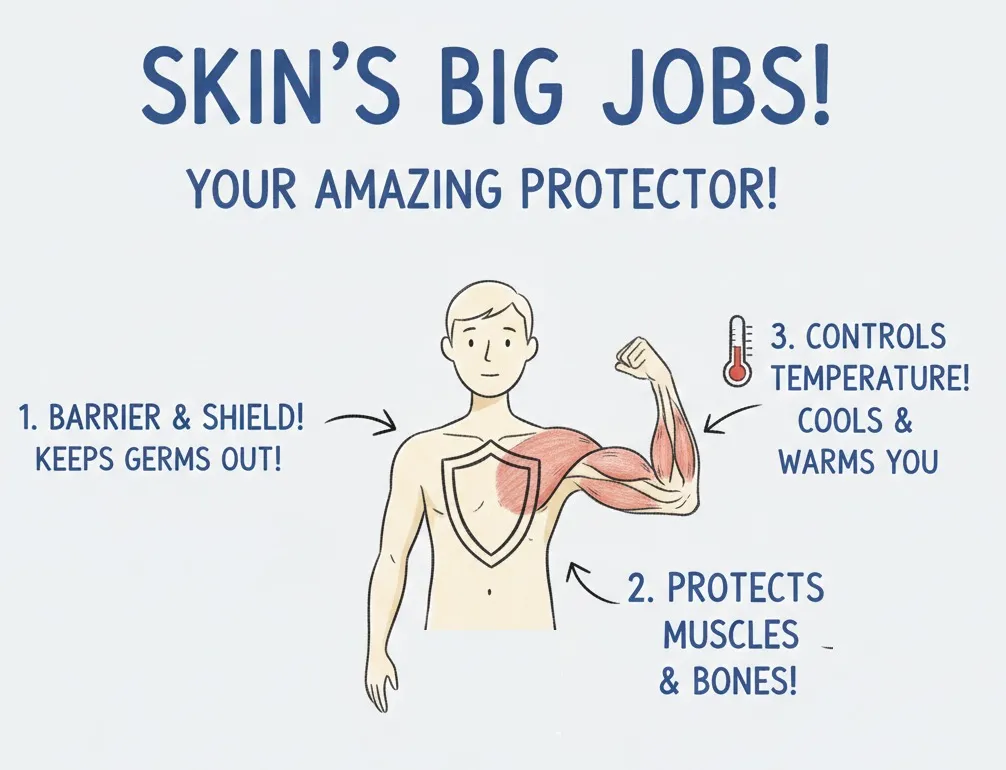
Skin is the largest organ of your body. It covers you completely from head to toe. Skin acts like a suit of armor that protects everything inside your body. Without this protective covering, your body would be in danger from many things in the environment.
Skin has several important jobs that keep you safe and healthy. First, it forms a barrier that keeps harmful things out. Germs, dirt, and other dangerous materials cannot easily get inside your body because skin blocks them. Second, skin keeps important things in. It holds water and blood inside your body where they belong. Without skin, these fluids would leak out.
Skin also protects the soft tissues underneath from bumps and scrapes. When you fall on the playground, your skin takes the impact and protects your muscles and bones. Additionally, skin helps control your body temperature. When you get hot from running or playing, tiny drops of water called sweat come out through your skin. As the sweat dries, it cools you down, just like water evaporating from a wet towel makes it feel cooler.
When you get a cut, your skin works hard to heal itself. Special cells rush to the injury to close the opening and form a scab. Under the scab, new skin grows to repair the damage. This healing process keeps germs from entering your body through the cut.
Interesting Fact: Your skin completely replaces itself about once every month! Dead skin cells fall off, and new cells grow to take their place.
What is the largest organ of your body?
HeartSkinBrainStomach
How does skin keep you safe?
It blocks germs and dirtIt makes you tallerIt helps you see betterIt makes food digest
What does skin hold inside your body?
Air and dirtWater and bloodFood and toysGerms and bacteria
Why does your body make sweat?
To make you smell badTo cool you down when hotTo keep you warmTo help you grow taller
What happens when you get a cut?
Skin stops working foreverBlood turns into waterSkin heals itself and closes openingGerms help fix the cut
How does skin protect soft tissues underneath?
It takes the impact from bumpsIt makes tissues harderIt removes all the tissuesIt changes tissues into bones
Skin replaces itself completely every month.
TrueFalse
What is a barrier?
A type of foodSomething that blocks thingsA kind of exerciseA body temperature
Perfect For:
๐ฉโ๐ซ Teachers
โข Reading comprehension practice
โข Auto-graded assessments
โข Literacy skill development
๐จโ๐ฉโ๐งโ๐ฆ Parents
โข Reading practice at home
โข Comprehension improvement
โข Educational reading time
๐ Homeschoolers
โข Reading curriculum support
โข Independent reading practice
โข Progress monitoring
Reading Features:
๐
Reading Passage
Engaging fiction or nonfiction text
โ
Comprehension Quiz
Auto-graded questions
๐
Instant Feedback
Immediate results and scoring
๐
Printable Version
Download for offline reading
๐
Read Aloud
Voice-over with word highlighting
Reviews & Ratings
No reviews yet. Be the first to share your experience!
Related Content
How Animals See Differently
This engaging 250-word reading passage introduces fourth-grade students to the fascinating world of animal vision and ey...
NGSS 4-LS1-1LS1.D
Animal Internal Structure
This engaging science passage for Grade 4-5 students explores animal internal structure and how organs work together to ...
NGSS 4-LS1-1
What Are Bones Made Of
This engaging 250-word reading passage introduces Grade 4 students to the structure and function of bones, aligned with ...
NGSS 4-LS1-1LS1.A
How Bones Protect Organs
This engaging 250-word reading passage helps Grade 4 students understand how bones protect organs, aligned with NGSS sta...
NGSS 4-LS1-1LS1.A
How Joints Connect Bones
This 250-word reading passage teaches fourth-grade students about joints and their role in the human skeletal system. Al...
NGSS 4-LS1-1LS1.A
How Muscles Move Bones
This comprehensive 250-word reading passage introduces fourth-grade students to the fundamental concept of how muscles a...
NGSS 4-LS1-1
Two Types of Muscles
This 250-word reading passage introduces fourth-grade students to the two main types of muscles in the human body: volun...
NGSS 4-LS1-1
What Are Muscles
This engaging 250-word reading passage introduces fourth-grade students to the essential concept of muscles and how they...
NGSS 4-LS1-1
Layers of the Skin
This engaging 250-word reading passage introduces fourth-grade students to the three layers of skin and their functions....
NGSS 4-LS1-1LS1.A
What Are Plant Structures
This engaging 250-word reading passage introduces fourth-grade students to the fundamental concept of plant structures a...
NGSS 4-LS1-1
Parts of Plant Stems
This engaging 250-word reading passage introduces fourth-grade students to the internal structure and function of plant ...
NGSS 4-LS1-1LS1.A
How Water Moves Inside Plants
This 250-word reading passage introduces fourth-grade students to the concept of water transport in plants, aligned with...
NGSS 4-LS1-1
Parts of a Flower
This comprehensive 250-word reading passage introduces fourth-grade students to the essential parts of a flower and thei...