How Water Moves Inside Plants — Reading Comprehension
Rate this
Premium Resource
Present
Present in classroom. No work saved
Assign
Classroom with student accounts, Track progress
Quick Play
No student accounts, assign with a link
Grades
3
4
5
Standards
NGSS 4-LS1-1
PRINT+DIGITAL RESOURCE
This learning resource is available in interactive and printable formats. The interactive worksheet can be played online and assigned to students. The Printable PDF version can be downloaded and printed for completion by hand.
This 250-word reading passage introduces fourth-grade students to the concept of water transport in plants, aligned with NGSS 4-LS1-1 and the Disciplinary Core Idea LS1.A: Structure and Function. Students discover how plants have tiny tubes inside their stems and roots that pull water from the soil all the way up to the leaves, working like a drinking straw. The passage explains how water carries nutrients from the soil to every part of the plant, emphasizing why this internal system is essential for plant survival. Written in age-appropriate language for Grade 4 readers, the passage avoids advanced terminology like xylem and phloem, instead using simple analogies and everyday examples. The content includes audio integration for enhanced accessibility, a simplified differentiated version for struggling readers, Spanish translations of both versions, and engaging activities including multiple-choice questions, writing prompts, and graphic organizers. This comprehensive resource helps students build foundational understanding of plant internal structures and prepares them for hands-on investigations and classroom discussions about how living things meet their basic needs.
CONTENT PREVIEW
Expand content preview
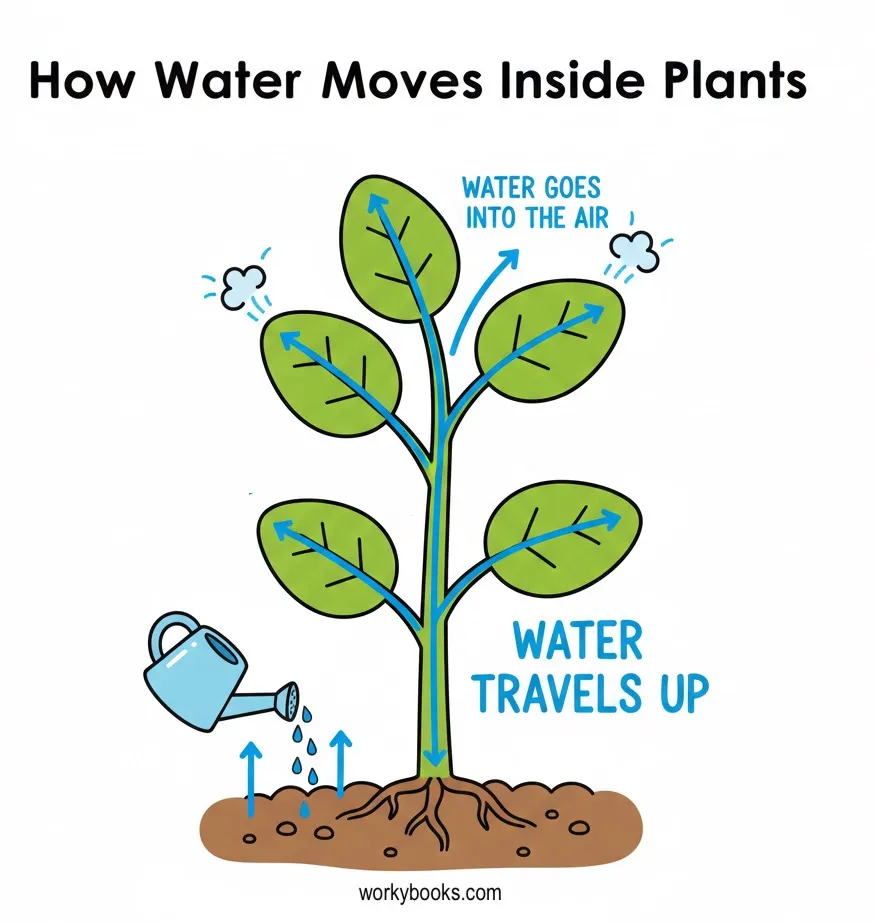
Plants need water to live and grow, just like you need water to stay healthy. But how does water get from the soil all the way up to the leaves at the top of a tall plant? Plants have a special system inside them that solves this problem.
Inside every plant are tiny tubes that run from the roots, through the stem, and into the leaves. These tubes are like thin straws that carry water upward. When you drink through a straw, you pull the liquid up into your mouth. Plants work in a similar way. The tubes inside the plant pull water up from the soil where the roots are buried.
As water moves through these tubes, it carries important nutrients—materials from the soil that help the plant grow strong and healthy. The nutrients are like vitamins for plants. Without these tubes, water and nutrients could not reach the leaves, flowers, or fruits.
The tubes also help the plant stay firm and stand upright. When the tubes are full of water, the plant stands tall. When a plant does not get enough water, the tubes become empty, and the plant wilts or droops.
This transport system works all day and night, moving water from the roots to every part of the plant. It is one of the most important jobs happening inside a plant, even though we cannot see it from the outside.
Interesting Fact: A large tree can pull up more than 100 gallons of water from the soil in just one day! That's enough water to fill a bathtub.
Where do plant tubes start and end?
Flowers to seedsRoots to leavesLeaves to flowersSoil to air
What do nutrients do for plants?
Make plants colorful and brightHelp plants grow strong and healthyHelp plants make more seedsKeep plants cool in summer
What happens when tubes are full of water?
The plant wilts and droops downThe plant grows new flowers quicklyThe plant stands tall and uprightThe plant loses all its leaves
Why is the transport system important?
It helps plants make oxygen for usIt moves water to all plant partsIt protects plants from cold weatherIt helps plants catch more sunlight
How do plant tubes work like straws?
They both store water for laterThey both pull liquid upwardThey both bend easily in windThey both are made of plastic
What would happen without plant tubes?
Plants would grow much faster than normalWater could not reach leaves or flowersPlants would make more seeds each yearRoots would grow above the ground
The transport system works only during daytime.
TrueFalse
What does the word 'wilts' mean?
Grows taller and strongerBecomes limp without enough waterProduces flowers and seedsTurns green in the spring
Perfect For:
👩🏫 Teachers
• Reading comprehension practice
• Auto-graded assessments
• Literacy skill development
👨👩👧👦 Parents
• Reading practice at home
• Comprehension improvement
• Educational reading time
🏠 Homeschoolers
• Reading curriculum support
• Independent reading practice
• Progress monitoring
Reading Features:
📖
Reading Passage
Engaging fiction or nonfiction text
❓
Comprehension Quiz
Auto-graded questions
📊
Instant Feedback
Immediate results and scoring
📄
Printable Version
Download for offline reading
🔊
Read Aloud
Voice-over with word highlighting
Reviews & Ratings
No reviews yet. Be the first to share your experience!
Related Content
How Animals See Differently
This engaging 250-word reading passage introduces fourth-grade students to the fascinating world of animal vision and ey...
NGSS 4-LS1-1LS1.D
Animal Internal Structure
This engaging science passage for Grade 4-5 students explores animal internal structure and how organs work together to ...
NGSS 4-LS1-1
What Are Bones Made Of
This engaging 250-word reading passage introduces Grade 4 students to the structure and function of bones, aligned with ...
NGSS 4-LS1-1LS1.A
How Bones Protect Organs
This engaging 250-word reading passage helps Grade 4 students understand how bones protect organs, aligned with NGSS sta...
NGSS 4-LS1-1LS1.A
How Joints Connect Bones
This 250-word reading passage teaches fourth-grade students about joints and their role in the human skeletal system. Al...
NGSS 4-LS1-1LS1.A
How Muscles Move Bones
This comprehensive 250-word reading passage introduces fourth-grade students to the fundamental concept of how muscles a...
NGSS 4-LS1-1
Two Types of Muscles
This 250-word reading passage introduces fourth-grade students to the two main types of muscles in the human body: volun...
NGSS 4-LS1-1
What Are Muscles
This engaging 250-word reading passage introduces fourth-grade students to the essential concept of muscles and how they...
NGSS 4-LS1-1
How Skin Protects Body
This audio-integrated reading passage introduces fourth-grade students to the protective functions of skin, aligned with...
NGSS 4-LS1-1
Layers of the Skin
This engaging 250-word reading passage introduces fourth-grade students to the three layers of skin and their functions....
NGSS 4-LS1-1LS1.A
What Are Plant Structures
This engaging 250-word reading passage introduces fourth-grade students to the fundamental concept of plant structures a...
NGSS 4-LS1-1
Parts of Plant Stems
This engaging 250-word reading passage introduces fourth-grade students to the internal structure and function of plant ...
NGSS 4-LS1-1LS1.A
Parts of a Flower
This comprehensive 250-word reading passage introduces fourth-grade students to the essential parts of a flower and thei...