This learning resource is available in interactive and printable formats. The interactive worksheet can be played online and assigned to students. The Printable PDF version can be downloaded and printed for completion by hand.
This engaging 250-word reading passage helps Grade 4 students understand how bones protect organs, aligned with NGSS standard 4-LS1-1 and the Disciplinary Core Idea LS1.A: Structure and Function. Students explore how the skull acts like a helmet to protect the brain, the rib cage serves as a shield around the heart and lungs, and the spine protects the spinal cord. The passage uses age-appropriate language and relatable analogies to help fourth graders connect the shape of each bone group to what it protects. This audio-integrated resource includes a simplified differentiated version for struggling readers, complete Spanish translations of both passages, a comprehensive glossary of key terms, multiple-choice comprehension questions, writing activities, and graphic organizers. Students learn why bones are essential for protecting soft organs from damage and understand the relationship between bone structure and function. Perfect for introducing skeletal system concepts, this passage builds foundational understanding that prepares students for hands-on investigations and classroom discussions about human body systems and how organisms are structured to support survival and growth.
CONTENT PREVIEW
Expand content preview
Your body has many soft organs inside it. Organs are body parts that do important jobs, like your brain, heart, and lungs. These organs are soft and can be hurt easily. That is why your body has bones to protect them.
The skull is the group of bones that covers your head. The skull is like a hard helmet that protects your brain. Your brain controls everything you do, so it needs strong protection. Without your skull, even a small bump on your head could hurt your brain.
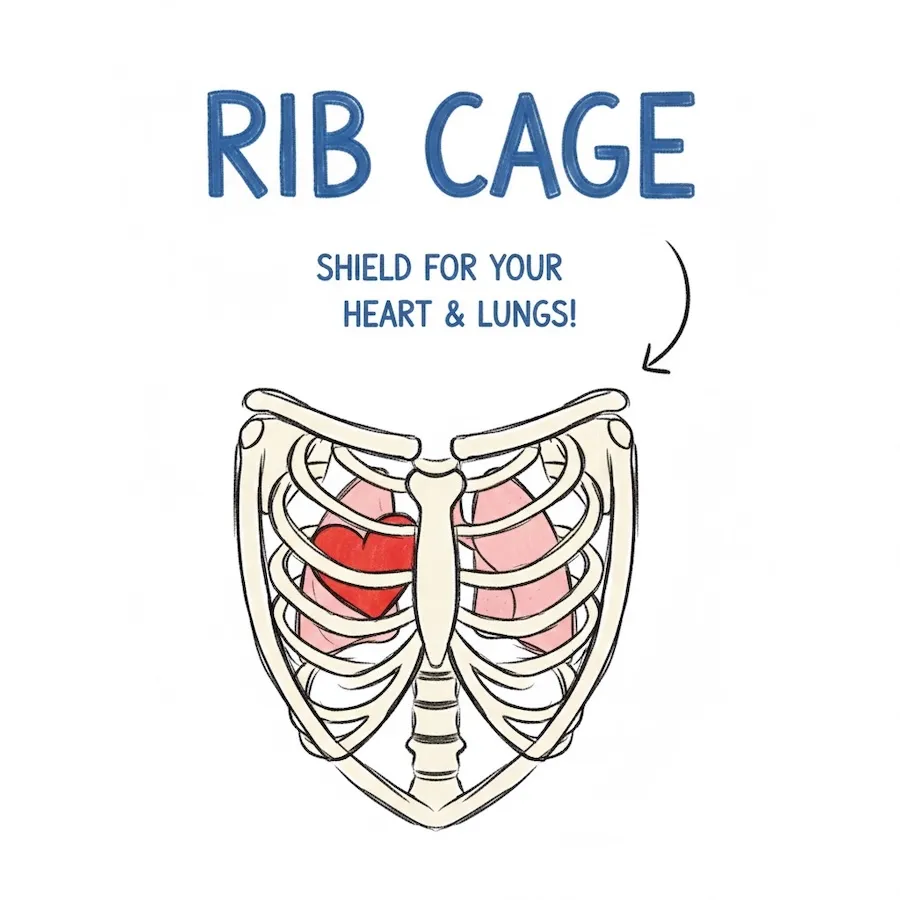
Your chest has a rib cage made of curved bones. The rib cage works like a shield around your heart and lungs. Your heart pumps blood to your whole body. Your lungs help you breathe. The rib cage keeps these organs safe when you run, play, or accidentally bump into something.
Down the middle of your back is your spine. The spine is a column of small bones stacked on top of each other. Inside the spine is the spinal cord, which carries messages between your brain and the rest of your body. The spine protects this important pathway. Without bones protecting your organs, these soft parts would be damaged very easily.
Interesting Fact: An adult human has 206 bones, but a baby is born with about 300 bones! As a baby grows, some of these bones fuse together to make the skeleton stronger.
What does the skull protect?
The brainThe heartThe lungsThe stomach
What are organs?
Hard bones in the bodyBody parts that do important jobsMuscles that help you moveBlood vessels in the chest
Which bones protect the heart and lungs?
The skullThe spineThe rib cageThe leg bones
Why do organs need bone protection?
Organs are soft and hurt easilyOrgans are too heavyOrgans need to stay warmOrgans grow very fast
How does the rib cage help you?
It helps you think clearlyIt protects organs when you playIt helps you digest foodIt makes you grow taller
What does the spinal cord do?
Pumps blood through the bodyHelps you breathe airCarries messages between brain and bodyProtects the heart
Bones protect all soft organs in the body.
TrueFalse
What is a rib cage?
Bones stacked down your backHard bones covering your headCurved bones protecting heart and lungsSoft organs inside your body
Perfect For:
👩🏫 Teachers
• Reading comprehension practice
• Auto-graded assessments
• Literacy skill development
👨👩👧👦 Parents
• Reading practice at home
• Comprehension improvement
• Educational reading time
🏠 Homeschoolers
• Reading curriculum support
• Independent reading practice
• Progress monitoring
Reading Features:
📖
Reading Passage
Engaging fiction or nonfiction text
❓
Comprehension Quiz
Auto-graded questions
📊
Instant Feedback
Immediate results and scoring
📄
Printable Version
Download for offline reading
🔊
Read Aloud
Voice-over with word highlighting
Reviews & Ratings
No reviews yet. Be the first to share your experience!
Related Content
What Are Bones Made Of
This engaging 250-word reading passage introduces Grade 4 students to the structure and function of bones, aligned with ...
NGSS 4-LS1-1LS1.A
How Joints Connect Bones
This 250-word reading passage teaches fourth-grade students about joints and their role in the human skeletal system. Al...
NGSS 4-LS1-1LS1.A
Layers of the Skin
This engaging 250-word reading passage introduces fourth-grade students to the three layers of skin and their functions....
NGSS 4-LS1-1LS1.A
Parts of Plant Stems
This engaging 250-word reading passage introduces fourth-grade students to the internal structure and function of plant ...
NGSS 4-LS1-1LS1.A
Parts of a Flower
This comprehensive 250-word reading passage introduces fourth-grade students to the essential parts of a flower and thei...
NGSS 4-LS1-1LS1.A
How Animals See Differently
This engaging 250-word reading passage introduces fourth-grade students to the fascinating world of animal vision and ey...
NGSS 4-LS1-1LS1.D
Animal Internal Structure
This engaging science passage for Grade 4-5 students explores animal internal structure and how organs work together to ...
NGSS 4-LS1-1
How Muscles Move Bones
This comprehensive 250-word reading passage introduces fourth-grade students to the fundamental concept of how muscles a...
NGSS 4-LS1-1
Two Types of Muscles
This 250-word reading passage introduces fourth-grade students to the two main types of muscles in the human body: volun...
NGSS 4-LS1-1
What Are Muscles
This engaging 250-word reading passage introduces fourth-grade students to the essential concept of muscles and how they...
NGSS 4-LS1-1
How Skin Protects Body
This audio-integrated reading passage introduces fourth-grade students to the protective functions of skin, aligned with...
NGSS 4-LS1-1
What Are Plant Structures
This engaging 250-word reading passage introduces fourth-grade students to the fundamental concept of plant structures a...
NGSS 4-LS1-1
How Water Moves Inside Plants
This 250-word reading passage introduces fourth-grade students to the concept of water transport in plants, aligned with...