Aristophanes Greek Comedy Writer
Interactive passage with audio narration, comprehension questions, and printable PDF.
By completing this purchase you agree to our Terms of Use and Privacy Policy. Your subscription renews automatically until you cancel. You can cancel anytime from your account settings. All sales are final and non-refundable. Digital content is available for download in your account immediately upon purchase.
What's included
Part of this bundle

Aristophanes Greek Comedy Writer preview and details
About this printable Aristophanes Greek Comedy Writer reading passage (Grades 6-8)
Sample passage and quiz from Aristophanes Greek Comedy Writer
Reading passage and comprehension quiz preview
Aristophanes Greek Comedy Writer
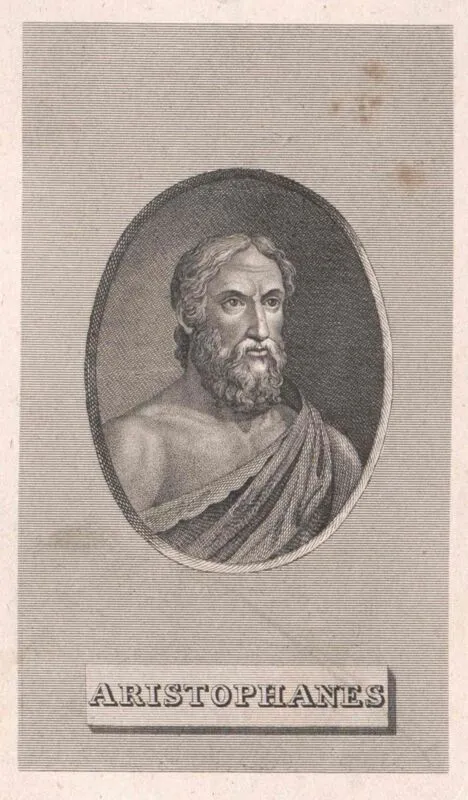
"Aristophanes" / Europeana (Public domain).
Aristophanes was one of the most famous playwrights of ancient Athens during the 5th century BCE. He is best known for his sharp satire, which used humor to criticize political leaders, social customs, and even other playwrights. Through his comedies, Aristophanes created a unique window into Athenian society and its complex democracy.
The city-state of Athens was a center of culture and learning in the ancient Mediterranean world. Theater played a central role in public life, especially during festivals like the Dionysia, where citizens watched performances of both tragedies and comedies. Aristophanes wrote over forty plays, though only eleven survive today. His first play, 'The Banqueters,' was produced in 427 BCE, but his most celebrated works include 'The Clouds,' 'Lysistrata,' and 'The Frogs.' In his plays, Aristophanes often used parody—a humorous imitation—to mock famous figures such as the philosopher Socrates or politicians like Cleon. For example, in 'The Clouds,' Socrates is portrayed as a foolish thinker, which gives historians insight into how some Athenians viewed new ideas.
Aristophanes’s comedies were more than just entertainment; they provided sharp social commentary. For instance, in 'Lysistrata' (411 BCE), women from different Greek city-states unite to end the Peloponnesian War by refusing to let their husbands return home until peace is made. This play not only shows the role of women in Greek society but also criticizes the destructive nature of war. The use of chorus—a group of actors who commented on the action—added to the performance and deepened its message. Ancient sources like the works of Aristotle and later historians help confirm the impact of Aristophanes’s plays on public opinion in Athens.
Over time, the style and function of Greek comedy evolved. Early plays by Aristophanes were called 'Old Comedy' and focused on political satire, while later playwrights developed 'New Comedy,' which centered more on everyday life and family issues. Aristophanes’s works have survived through the efforts of ancient scribes who copied his texts, and through archaeological discoveries of theater remains in Athens. The large open-air theaters, such as the Theater of Dionysus, could hold thousands of spectators and were important sites for civic participation.
Aristophanes’s legacy continues to influence literature and drama today. His use of comedy to address serious issues demonstrates the power of art to challenge authority and encourage discussion. Studying his plays helps historians understand both the achievements and the challenges of Athenian democracy, and how ordinary citizens responded to the events of their time.
Aristophanes’s work connects to broader themes in world history, such as the relationship between art and society, the evolution of political systems, and the enduring power of humor as a tool for change.
Interesting Fact: The ancient Greeks even awarded prizes for the best comedies at festivals, showing that humor was highly valued in public life.
Comprehension quiz (8 questions)
1. When did Aristophanes write 'Lysistrata'?
2. What type of government did Athens have?
3. How many of Aristophanes’s plays survive today?
4. Why did Aristophanes use satire?
5. What was the chorus in Greek plays?
6. What effect did 'Lysistrata' have?
7. Greek comedy never criticized leaders. True or false?
8. Which word means 'a funny imitation'?
Perfect for the way you teach
- Build comprehension skills
- Auto-graded quiz
- Differentiated reading
- Read together at home
- Improve fluency
- Quiet reading time
- Reading curriculum support
- Independent practice
- Track Lexile growth