Lao Tzu and Daoism
Interactive passage with audio narration, comprehension questions, and printable PDF.
By completing this purchase you agree to our Terms of Use and Privacy Policy. Your subscription renews automatically until you cancel. You can cancel anytime from your account settings. All sales are final and non-refundable. Digital content is available for download in your account immediately upon purchase.
What's included
Lao Tzu and Daoism preview and details
About this printable Lao Tzu and Daoism reading passage (Grades 6-8)
Sample passage and quiz from Lao Tzu and Daoism
Reading passage and comprehension quiz preview
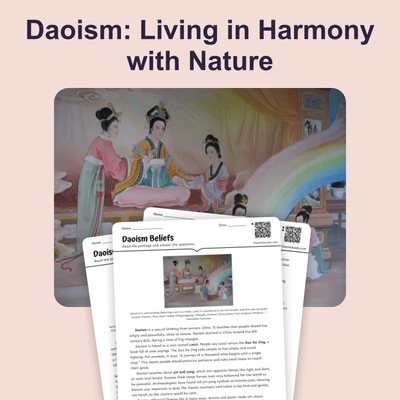
Lao Tzu and Daoism
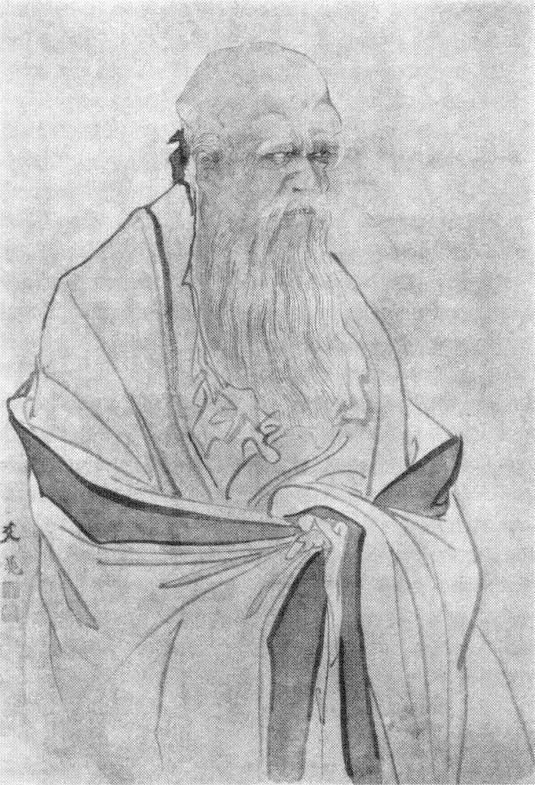
"Laozi" / Wikimedia Commons (Public domain).
Laozi, an ancient Chinese philosopher, is widely regarded as the founder of Daoism, a major philosophical and spiritual tradition that began in China over 2,000 years ago. According to legend, Laozi lived during the sixth century BCE, though some historians debate the exact dates of his life. His teachings, collected in the famous text called the Dao De Jing, emphasize simple living and harmony with nature. Laozi’s ideas have shaped not only Chinese philosophy but also daily life, government, and art across centuries.
The core principle of Daoism is the concept of the Dao, often translated as "the Way." The Dao is seen as the natural order of the universe, a force that flows through all things. Laozi taught that people should align themselves with the Dao by practicing wu wei, or "non-action." This does not mean doing nothing, but rather acting in a way that is natural and effortless, without forcing things. Archaeological evidence, such as bamboo manuscripts found in ancient tombs, supports the early spread of Daoist ideas by the third century BCE. These texts show how Daoism influenced both the ruling class and common people.
Laozi’s teachings encouraged rulers to govern with kindness and avoid harsh laws. In the Dao De Jing, Laozi wrote, “Governing a large country is like cooking a small fish. Do not overdo it.” This suggests that leaders should not interfere too much but instead create a peaceful society. During the Han Dynasty (206 BCE–220 CE), Daoism became one of China’s main philosophies, shaping government policies and religious practices. Rituals, temples, and even traditional Chinese medicine were influenced by Daoist beliefs. Laozi’s ideas about balance and harmony became central to Chinese thought.
Daoism also shaped daily life. People were encouraged to appreciate simplicity, spend time in nature, and seek inner peace. Daoist art often features flowing water, mountains, and clouds, symbolizing the ever-changing yet balanced world. The concept of yin and yang—the balance of opposite forces—came to represent how harmony creates a stable society. Over time, Daoism has continued to influence Chinese culture and is still practiced today.
Laozi’s legacy endures because his teachings address universal themes: balance, respect for nature, and finding peace in a changing world. By understanding the Dao, people can live happier and more meaningful lives. The spread of Daoism from ancient China to other parts of Asia demonstrates its lasting significance in world history.
Studying Laozi and Daoism helps us connect to broader themes in ancient history, such as the relationship between humans and nature, and the ways ideas shape societies.
Interesting Fact: According to one legend, Laozi left China riding a water buffalo, leaving behind the Dao De Jing as a guide for future generations.
Comprehension quiz (8 questions)
1. Who is Laozi known as?
2. What is Dao?
3. What is the Dao De Jing?
4. Why did Laozi say rulers should not overdo it?
5. How did Daoism influence daily life?
6. What does 'wu wei' mean?
7. Daoism began over 2,000 years ago. True or false?
8. What is 'yin and yang'?
Perfect for the way you teach
- Build comprehension skills
- Auto-graded quiz
- Differentiated reading
- Read together at home
- Improve fluency
- Quiet reading time
- Reading curriculum support
- Independent practice
- Track Lexile growth