Empires Across the Ancient World
Interactive passage with audio narration, comprehension questions, and printable PDF.
By completing this purchase you agree to our Terms of Use and Privacy Policy. Your subscription renews automatically until you cancel. You can cancel anytime from your account settings. All sales are final and non-refundable. Digital content is available for download in your account immediately upon purchase.
What's included
Empires Across the Ancient World preview and details
About this printable Empires Across the Ancient World reading passage (Grades 6-8)
Sample passage and quiz from Empires Across the Ancient World
Reading passage and comprehension quiz preview
Empires Across the Ancient World
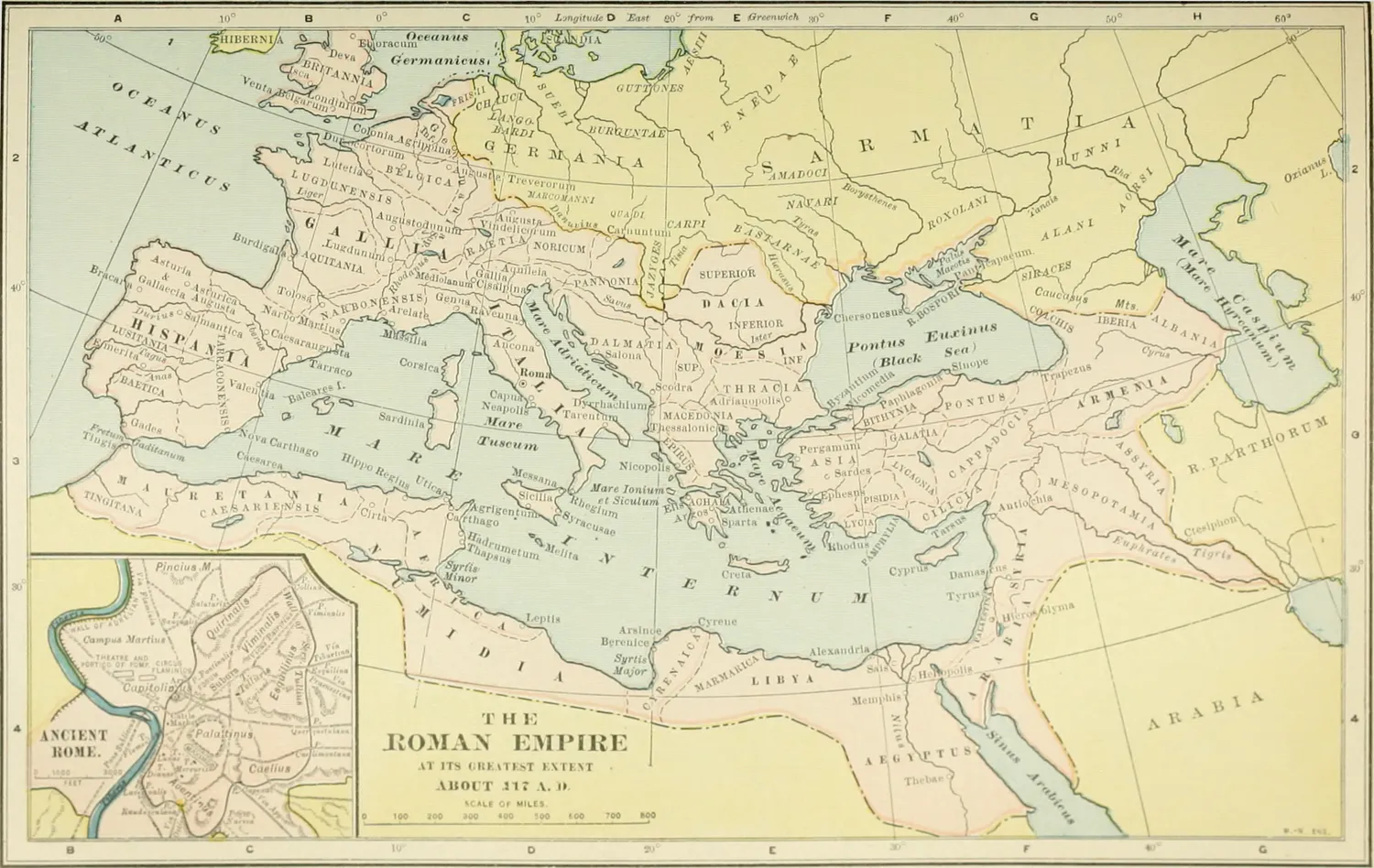
"The Roman Empire at its greatest extent" / Wikimedia Commons (Public domain).
Empires are large political units in which a single ruler governs many different territories and peoples. Throughout ancient history, empires shaped the world by bringing together diverse cultures, languages, and beliefs under one government. Four of the most influential ancient empires were Rome, Persia, Han China, and the Maurya Empire. These civilizations created complex systems of rule, advanced technology, and left lasting legacies.
The Roman Empire began as a small city-state in Italy but grew to control lands across Europe, North Africa, and the Middle East by 117 CE. Roman rulers, like Emperor Augustus, used strong armies, intricate laws, and an extensive road network to manage their vast lands. Archaeological evidence, such as the Arch of Titus and detailed Roman road maps, shows how the Romans used infrastructure to link distant regions. Roman society had strict social hierarchies, with free citizens at the top and enslaved people at the bottom. Everyday life in Rome included public baths, markets, and entertainment such as gladiator games, reflecting both unity and diversity within the empire.
The Persian Empire, founded by Cyrus the Great in the 6th century BCE, was known for its effective administration and respect for local customs. The Persians divided their lands into provinces called satrapies, each ruled by a governor, or satrap. Primary sources like the Behistun Inscription show how Persian kings communicated their power. The empire built the Royal Road, over 1,600 miles long, to enable rapid communication and trade. Religious tolerance was a key feature, allowing conquered peoples to keep their own beliefs, which helped the empire maintain stability.
In East Asia, the Han Dynasty (206 BCE–220 CE) unified China after centuries of war. The Han government used a system called the civil service, where officials were chosen through exams based on Confucian teachings. Ancient silk scrolls and official records reveal how the Han established a centralized bureaucracy. The Han expanded their empire through military campaigns and developed the Silk Road, connecting China to distant lands. Social order was based on family relationships, with scholars and officials respected above farmers and merchants.
South Asia's Maurya Empire (321–185 BCE) was founded by Chandragupta Maurya and reached its height under Emperor Ashoka. Archaeological finds like the Edicts of Ashoka show how Ashoka promoted nonviolence and Buddhist values across his empire. The Mauryan administration used a network of spies and officials to maintain order. Trade, agriculture, and religious diversity flourished, making the empire a center of culture and learning.
Despite their differences, all these empires faced similar challenges: governing vast areas, integrating diverse peoples, and defending borders. Over time, changes in leadership, invasions, and internal conflict led to their decline. However, their achievements in government, law, culture, and technology continue to influence societies today.
Empires show how geography, leadership, and cultural exchange shaped the development of civilizations. Studying these empires helps us understand the roots of modern society and the connections between different parts of the ancient world.
Interesting Fact: The Han and Roman Empires existed at the same time and traded goods like silk and glass along the Silk Road, even though their emperors never met!
Comprehension quiz (8 questions)
1. Who founded the Persian Empire?
2. Which empire used satrapies?
3. What did Ashoka promote?
4. Why was the Royal Road important?
5. How did Han China choose officials?
6. What was a common challenge for empires?
7. The Roman Empire was smaller than Han China. True or false?
8. What does 'infrastructure' mean?
Perfect for the way you teach
- Build comprehension skills
- Auto-graded quiz
- Differentiated reading
- Read together at home
- Improve fluency
- Quiet reading time
- Reading curriculum support
- Independent practice
- Track Lexile growth