King Solomon and the First Temple
Interactive passage with audio narration, comprehension questions, and printable PDF.
By completing this purchase you agree to our Terms of Use and Privacy Policy. Your subscription renews automatically until you cancel. You can cancel anytime from your account settings. All sales are final and non-refundable. Digital content is available for download in your account immediately upon purchase.
What's included
Part of this bundle

King Solomon and the First Temple preview and details
About this printable King Solomon and the First Temple reading passage (Grades 6-8)
Sample passage and quiz from King Solomon and the First Temple
Reading passage and comprehension quiz preview
Solomon and the First Temple
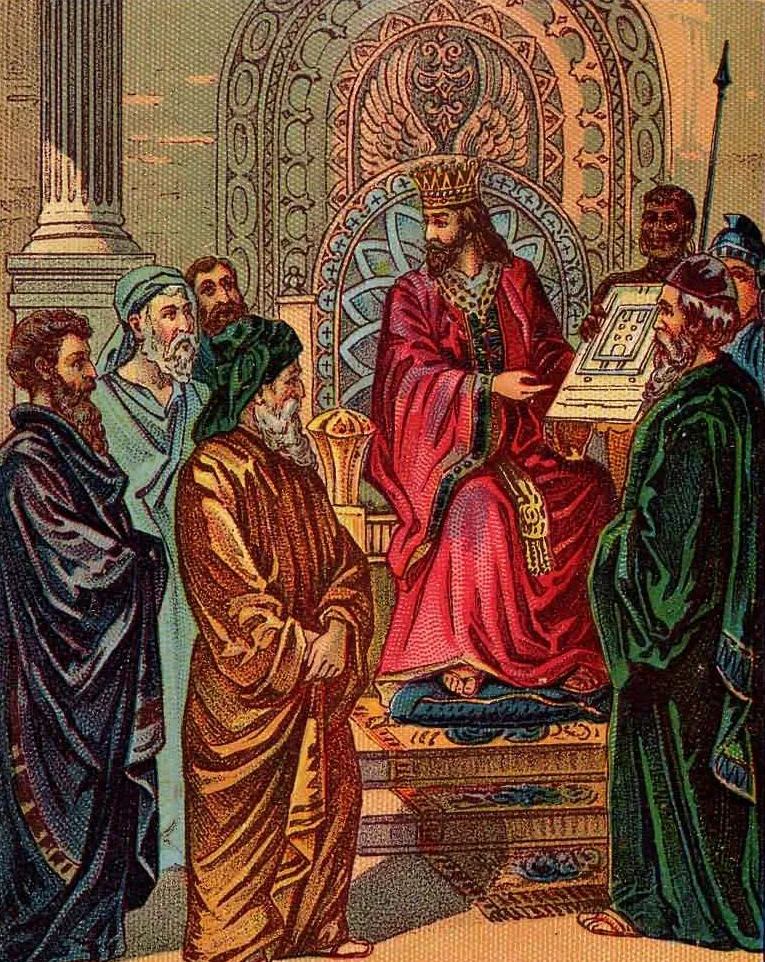
"Solomon and the Plan for the Temple" by the Providence Lithograph Company / Wikimedia Commons
King Solomon ruled the ancient kingdom of Israel from about 970 to 931 BCE. He is remembered for his remarkable wisdom, great wealth, and as the builder of the First Temple in Jerusalem. The Temple became a central place of worship and an important symbol for the people of Israel, reflecting their beliefs and society. Solomon’s actions shaped the religious and political landscape of the ancient Near East.
Solomon’s reign marked a period of peace and prosperity for Israel. According to historical and biblical sources, including the Hebrew Bible’s Book of Kings, Solomon’s wisdom was famous throughout the region. He made alliances with neighboring kingdoms, such as Egypt and Phoenicia, strengthening Israel’s position. Archaeological discoveries, like ancient inscriptions and monumental buildings, support the idea that Jerusalem became a powerful city during this era. However, historians still debate the full extent of Solomon’s kingdom because direct evidence is limited, and much knowledge comes from written records.
One of Solomon’s greatest achievements was the construction of the First Temple around 957 BCE. The Temple was built on Mount Moriah in Jerusalem, a site considered sacred. Solomon organized thousands of workers, including skilled craftsmen from Israel and Phoenicia. The Temple’s design included a large main hall, a special inner sanctuary called the Holy of Holies, and elaborate decorations made of gold, cedar wood, and precious stones. According to the Bible, the Temple housed the Ark of the Covenant, a sacred chest said to hold the tablets of the Ten Commandments. Archaeological digs in Jerusalem have uncovered ancient walls and artifacts that help historians imagine what the Temple area might have looked like, though much remains unknown due to later destructions.
The First Temple became the heart of Israelite religious life. It unified the people by giving them a central place for worship and festivals. The Temple also demonstrated the power and organization of Solomon’s government, as it required careful planning, resources, and cooperation among different groups. Over time, the Temple’s destruction and rebuilding would influence Jewish history and identity for centuries. The story of Solomon and the Temple connects to broader themes of leadership, faith, and how people shape their environment.
The building of the First Temple under King Solomon is significant because it represents a turning point in ancient Israel’s history. It reflects how leaders use architecture and religion to unify societies and leave a lasting legacy. This story also shows the challenges historians face in using both written records and archaeology to understand the past. The legacy of King Solomon and his Temple continues to inspire discussions about culture, faith, and the power of human ambition.
Interesting Fact: According to tradition, King Solomon wrote over 3,000 proverbs and 1,005 songs, though only some survive today.
Comprehension quiz (8 questions)
1. Who built the First Temple?
2. When was the First Temple completed?
3. Where was the Temple built?
4. Why did Solomon make alliances?
5. What was kept in the Holy of Holies?
6. How did the Temple affect Israel?
7. The Temple was built with help from Phoenician craftsmen. True or false?
8. What does 'prosperity' mean?
Perfect for the way you teach
- Build comprehension skills
- Auto-graded quiz
- Differentiated reading
- Read together at home
- Improve fluency
- Quiet reading time
- Reading curriculum support
- Independent practice
- Track Lexile growth