Byzantine Empire
Interactive passage with audio narration, comprehension questions, and printable PDF.
By completing this purchase you agree to our Terms of Use and Privacy Policy. Your subscription renews automatically until you cancel. You can cancel anytime from your account settings. All sales are final and non-refundable. Digital content is available for download in your account immediately upon purchase.
What's included
Byzantine Empire preview and details
About this printable Byzantine Empire reading passage (Grades 5-8)
Sample passage and quiz from Byzantine Empire
Reading passage and comprehension quiz preview
Byzantine Empire
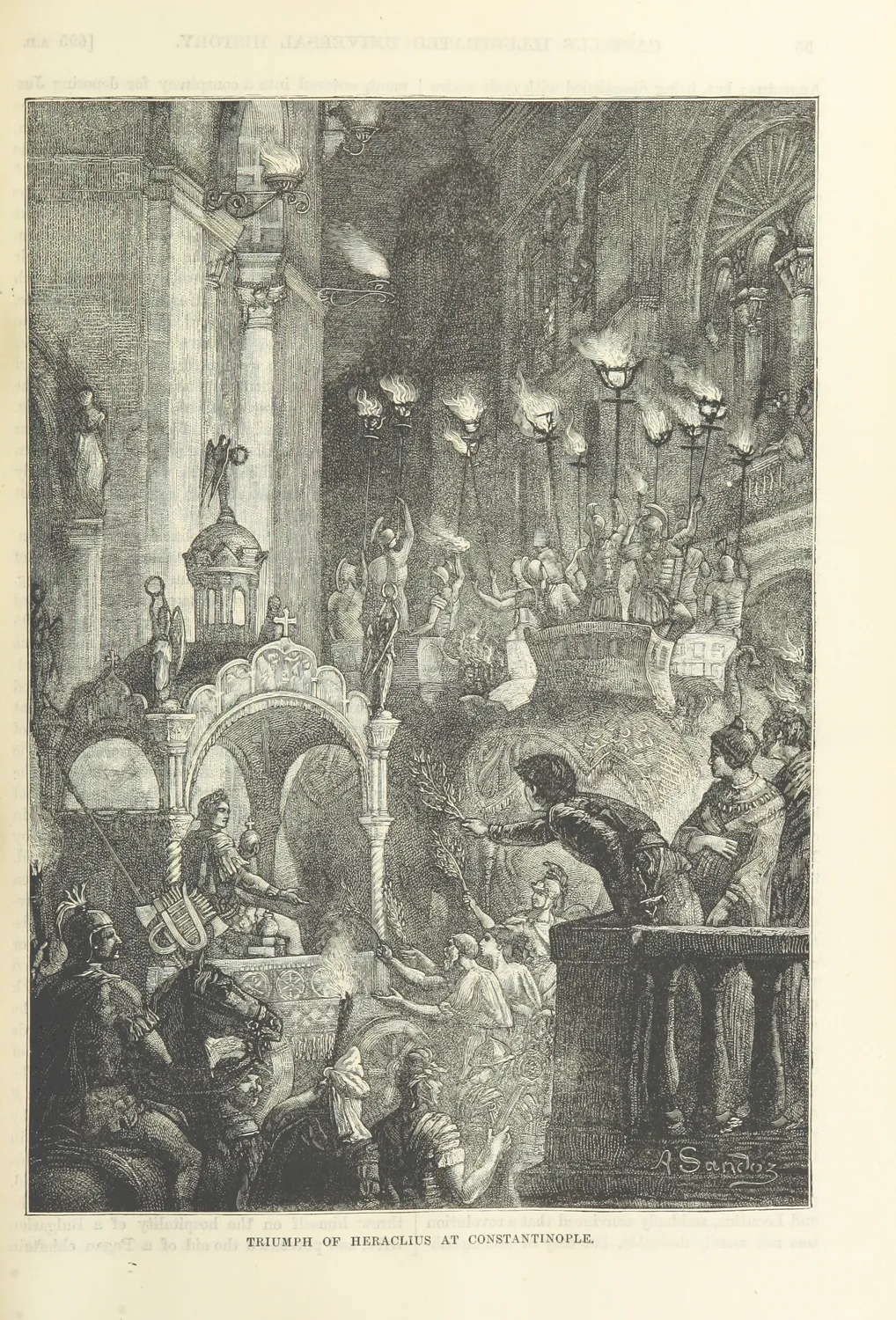
"Byzantine Empire from "[Cassell's Illustrated Universal History.]"." by The British Library / Europeana
The Byzantine Empire was the eastern continuation of the Roman Empire, centered in the city of Constantinople. After the fall of the western Roman Empire in 476 CE, the eastern half survived for nearly 1,000 more years, preserving Roman traditions and influencing cultures around the Mediterranean.
Constantinople, founded by Emperor Constantine in 330 CE, was chosen for its strategic location between Europe and Asia. The city was built on a peninsula surrounded by water on three sides, making it easy to defend against invaders. Its position along key trade routes allowed Constantinople to become a wealthy and powerful center for commerce, culture, and government. Archaeological remains, such as the city’s massive walls and the Hippodrome, show how the Byzantines invested in their capital’s security and public life.
The Byzantine Empire was ruled by emperors who saw themselves as Roman, even though their language and culture became more Greek over time. Emperor Justinian I, who ruled from 527 to 565 CE, is especially famous. He aimed to restore the glory of Rome by reconquering lost western territories and codifying Roman law in the Justinian Code, a collection that became the foundation for many modern legal systems. During his reign, Justinian also built the magnificent Hagia Sophia, a cathedral whose massive dome amazed visitors. Records from writers like Procopius and the surviving mosaics in the Hagia Sophia offer primary evidence of Byzantine art and religious life.
Life in the Byzantine Empire was shaped by its social structure. Society was organized hierarchically, with the emperor at the top, followed by nobles, officials, merchants, and laborers. Religion played a central role; most Byzantines were Christian and followed the Eastern Orthodox Church. The empire was a crossroads for different cultures, and its art, architecture, and scholarship blended Roman, Greek, and Christian influences. Over time, the empire faced challenges from outside invaders, like the Ottomans, and internal tensions, but its legacy endured through its laws, art, and preservation of ancient knowledge.
The Byzantine Empire and its capital, Constantinople, were crucial in maintaining and transmitting the heritage of ancient Rome. Their achievements in law, religion, and culture shaped later European history. The story of the Byzantines connects to broader themes such as the rise and fall of empires, the importance of geography, and the ways societies adapt and survive through change.
Interesting Fact: The walls of Constantinople were so strong that they protected the city for nearly 900 years, until the city finally fell to the Ottomans in 1453.
Comprehension quiz (8 questions)
1. Who founded Constantinople?
2. What was the Justinian Code?
3. Which building amazed visitors with its dome?
4. Why was Constantinople easy to defend?
5. How did Justinian try to restore Rome's glory?
6. What role did religion play in the empire?
7. The walls of Constantinople lasted only 100 years. True or false?
8. What is a mosaic?
Perfect for the way you teach
- Build comprehension skills
- Auto-graded quiz
- Differentiated reading
- Read together at home
- Improve fluency
- Quiet reading time
- Reading curriculum support
- Independent practice
- Track Lexile growth