Nathan Hale: Young Patriot Spy — Reading Comprehension
Rate this
Premium Resource
Present
Present in classroom. No work saved
Assign
Classroom with student accounts, Track progress
Quick Play
No student accounts, assign with a link
Grades
3
4
5
Standards
D2.HIS.5.3-5
D2.HIS.14.3-5
RI.4.3
RI.4.4
W.4.2
PRINT+DIGITAL RESOURCE
This learning resource is available in interactive and printable formats. The interactive worksheet can be played online and assigned to students. The Printable PDF version can be downloaded and printed for completion by hand.
This engaging U.S. history passage tells the story of Nathan Hale, a young patriot spy during the American Revolution. Students will learn about Hale’s bravery, the dangers he faced, and why he is remembered as a hero. The reading passage is written for elementary students using clear, simple language and includes rich vocabulary highlighted in a glossary. The resource features a read aloud audio, Spanish translation, reading comprehension quiz, writing prompts, and a timeline to help students understand the sequence of key events. The activities and materials are aligned with C3 Framework and Common Core standards, supporting both history and literacy skills. This resource is perfect for classroom instruction or independent learning, helping students build a strong foundation in American history while practicing reading and writing. The included graphic organizers encourage critical thinking about cause and effect and deepen students’ understanding of Nathan Hale’s important role in the fight for American freedom.
CONTENT PREVIEW
Expand content preview
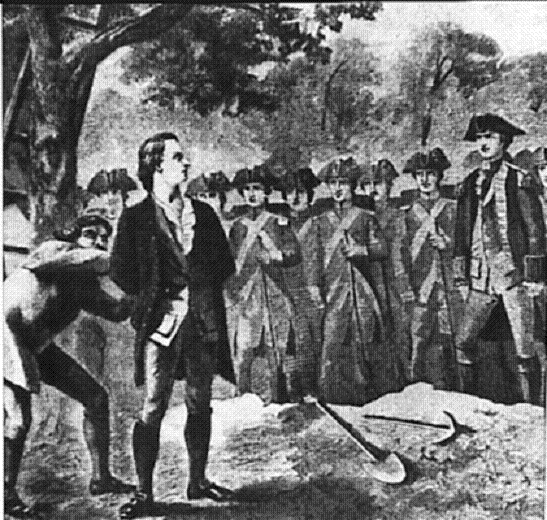
"Nathan Hale hanged by British 1776" / Source: Wikimedia Commons (Public domain).
Nathan Hale was a 21-year-old teacher who became one of the first heroes of the American Revolution. He is remembered for his bravery, his duty as a patriot spy, and his famous last words.
In 1776, American colonists were fighting for freedom from Great Britain. George Washington was the leader of the Continental Army. The British Army was strong and well-trained. The Americans needed information about the enemy’s plans. George Washington asked for a volunteer to go behind British lines and gather intelligence. Nathan Hale answered the call.
Hale left his job as a teacher and disguised himself as a Dutch schoolmaster. He crossed into enemy territory in New York City. He risked his life to gather secret information about British troops. This was very dangerous work, because if he was caught, he could be executed as a spy.
After several days, Nathan Hale was captured by the British. Someone recognized him and reported him to the British soldiers. He was arrested and brought before the British commander. The British found evidence that Hale was spying. They sentenced him to death without a trial.
On September 22, 1776, Nathan Hale was led to the gallows. He was calm and brave. Before he was hanged, he spoke the words that made him famous: “I only regret that I have but one life to lose for my country.” These words showed his deep love for America and his willingness to sacrifice everything for freedom.
Nathan Hale’s courage inspired many people during the Revolution. He became a symbol of patriotism and self-sacrifice. Statues and memorials have been built in his honor. Today, his story reminds us that one person’s bravery can make a difference in history.
Interesting Fact: Nathan Hale’s statue stands in front of City Hall in New York City to honor his sacrifice and bravery.
How old was Nathan Hale?
21311825
Who was the leader of the Continental Army?
George WashingtonNathan HaleKing GeorgeBen Franklin
Where did Nathan Hale gather information?
New York CityBostonPhiladelphiaLondon
Why did Nathan Hale disguise himself?
To hide from the BritishTo become a teacherTo join the armyTo meet George Washington
What was the effect of Hale’s actions?
Inspired others’ braveryWon the warEnded spyingBecame a British hero
What was Nathan Hale’s famous last words about?
His love for his countryHis familyHis job as teacherThe British army
Nathan Hale was a patriot. True or false?
TrueFalse
What does 'sacrifice' mean?
Giving up for a causeCelebrating loudlyWinning a prizeTeaching at a school
Perfect For:
👩🏫 Teachers
• Reading comprehension practice
• Auto-graded assessments
• Literacy skill development
👨👩👧👦 Parents
• Reading practice at home
• Comprehension improvement
• Educational reading time
🏠 Homeschoolers
• Reading curriculum support
• Independent reading practice
• Progress monitoring
Reading Features:
📖
Reading Passage
Engaging fiction or nonfiction text
❓
Comprehension Quiz
Auto-graded questions
📊
Instant Feedback
Immediate results and scoring
📄
Printable Version
Download for offline reading
🔊
Read Aloud
Voice-over with word highlighting
Reviews & Ratings
No reviews yet. Be the first to share your experience!
Related Content
Colonial Trade with England and Africa
This history reading passage explores colonial trade between the American colonies, England, and Africa, focusing on the...
D2.HIS.2.3-5D2.HIS.14.3-5RI.4.3RI.4.4
Building Washington D.C., Our Capital
This history reading passage explores the building of Washington D.C., the capital of the United States. Students will l...
D2.HIS.1-3.3-5D2.HIS.14.3-5RI.4.3RI.4.4
John Adams: Second President
This engaging U.S. history reading passage introduces students to John Adams, the second President of the United States....
D2.HIS.2.3-5D2.HIS.14.3-5RI.4.3RI.4.4
Dolley Madison Saves Washington's Portrait
This engaging history reading passage tells the inspiring story of Dolley Madison and her brave actions during the War o...
D2.HIS.2.3-5D2.HIS.14.3-5RI.4.3RI.4.4
Boomtowns Spring Up Out West
This engaging passage explores the exciting rise of boomtowns in the American West during the 1800s, focusing on the Gol...
D2.HIS.2.3-5D2.HIS.14.3-5RI.4.3RI.4.4
African Americans Fight for the Union
This engaging U.S. history reading passage explores the important role African Americans played in helping the Union dur...
D2.HIS.2.3-5D2.HIS.14.3-5RI.4.3RI.4.4
Franklin D. Roosevelt and the New Deal
This engaging history reading passage explores the life and leadership of Franklin D. Roosevelt and his creation of the ...
D2.HIS.2.3-5D2.HIS.14.3-5RI.4.3RI.4.4
Rationing and Life on the Home Front
This history reading passage explores rationing and life on the home front during World War II, focusing on how American...
D2.HIS.2.3-5D2.HIS.14.3-5RI.4.3RI.4.4
D-Day and the End of World War II
This engaging reading passage explores the key events of D-Day and how it helped bring World War II to a close. Students...
D2.HIS.2.3-5D2.HIS.14.3-5RI.4.3RI.4.4
Martin Luther King Jr. and "I Have a Dream"
This engaging history reading passage introduces students to the life and legacy of Martin Luther King Jr., focusing on ...
D2.HIS.2.3-5D2.HIS.14.3-5RI.4.1RI.4.3.
Ruby Bridges and the Little Rock Nine
This engaging history reading passage explores the stories of Ruby Bridges and the Little Rock Nine, two important group...
D2.HIS.2.3-5D2.HIS.14.3-5RI.4.3RI.4.4
Cesar Chavez and Farm Workers' Rights
This engaging history reading passage explores the life and impact of Cesar Chavez, a key leader in the fight for farm w...
D2.HIS.2.3-5D2.HIS.14.3-5RI.4.3RI.4.4
When Mexico Took Over California
This engaging U.S. history reading passage explores the period when Mexico took over California during the era of Westwa...
D2.HIS.2.3-5D2.HIS.3.3-5D2.HIS.14.3-5RI.4.3
Californios Culture
This history reading passage explores the story of the Californios—Spanish and Mexican settlers who shaped California be...
D2.HIS.2.3-5D2.HIS.3.3-5D2.HIS.14.3-5RI.4.3
The 31st State: California Joins the Union
This engaging U.S. history reading passage explores California's journey to becoming the 31st state in 1850. Students le...
D2.HIS.3.3-5D2.HIS.14.3-5RI.4.3RI.4.4
Routes to the Gold Fields
This engaging history reading passage explores the three main routes people took to reach the California gold fields dur...
D2.HIS.2.3-5D2.HIS.14.3-5RI.4.3RI.4.4
The Golden Spike: Connecting California to the Nation
This engaging U.S. history reading passage teaches students about the Golden Spike and how the first transcontinental ra...
D2.HIS.1.3-5D2.HIS.2.3-5D2.HIS.14.3-5RI.4.3
California Women Win the Vote in 1911
This engaging history reading passage explores how women in California fought and won the right to vote in 1911. Aligned...
D2.HIS.2.3-5D2.HIS.14.3-5RI.4.3RI.4.4
The 1965 Immigration Act
Discover the story of the 1965 Immigration Act with this engaging U.S. history reading passage. Perfect for building rea...
D2.HIS.4.3-5D2.HIS.14.3-5RI.5.3RI.5.4
Protecting California's Environment
This engaging U.S. history reading passage explores the story of how California has worked to protect its unique environ...