This learning resource is available in interactive and printable formats. The interactive worksheet can be played online and assigned to students. The Printable PDF version can be downloaded and printed for completion by hand.
This informational science passage on chemical energy is designed for middle school students and aligns with the NGSS standard MS-PS3-4. It explains how chemical energy is stored in bonds and released during chemical reactions, using age-appropriate language and examples like food, batteries, and burning wood. With a focus on energy transformations and practical applications, the passage promotes reading comprehension and scientific literacy. Students are introduced to key concepts like energy release, storage, and the role of chemical reactions in both natural and man-made systems. The passage includes a fun fact to spark curiosity and is followed by eight multiple-choice questions that target factual recall, critical thinking, inference, and application of knowledge. Ideal for reinforcing core science standards and supporting cross-curricular reading skills.
CONTENT PREVIEW
Expand content preview
Have you ever wondered how your body moves or how a car runs? The answer has to do with chemical energy. Chemical energy is a type of potential energy stored in the bonds between atoms and molecules. When these bonds break or form during a chemical reaction, energy is released or absorbed. This energy can then be used to do work, like making muscles move or powering machines.
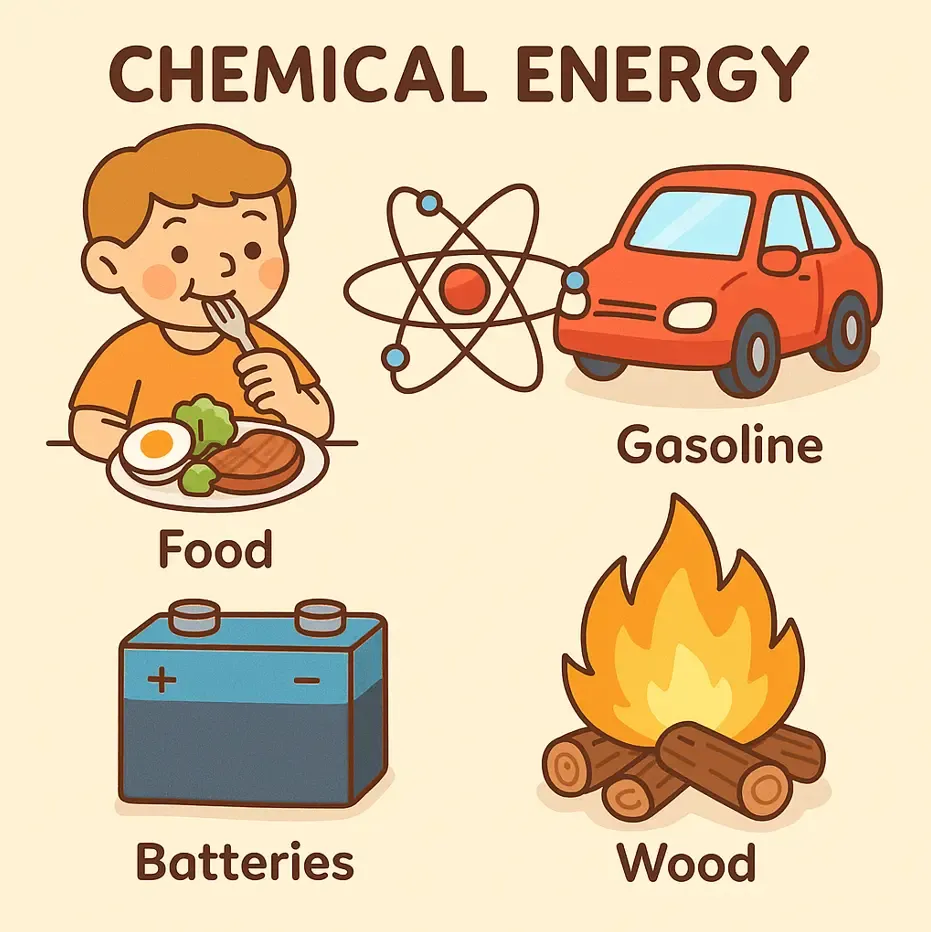
Chemical energy is found in many everyday things. Food, gasoline, batteries, and even wood all store chemical energy. For example, when you eat food, your body breaks it down and releases energy. This energy helps you walk, talk, and even think! Cars burn gasoline, and the chemical energy inside is turned into motion that moves the vehicle.
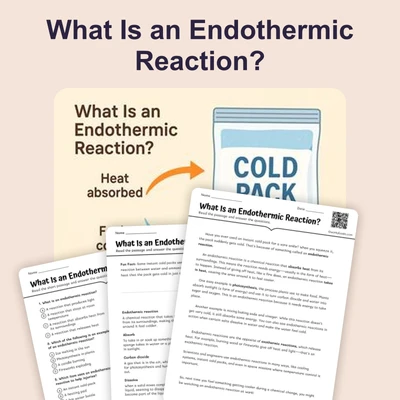
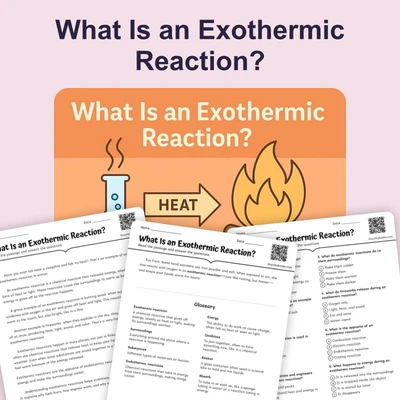
Sometimes, chemical energy is released in the form of heat and light. When wood burns in a campfire, a chemical reaction occurs. The bonds in the wood break, and energy is released. This reaction produces heat to keep you warm and light to help you see. In contrast, a cold pack used for injuries absorbs heat when a chemical reaction happens inside, making the pack feel cold.
Chemical reactions don't just happen in nature—they also power technology. Batteries are a great example. Inside a battery, chemicals react to produce electricity. That electricity powers flashlights, phones, and many other devices. Once the chemicals are used up, the battery runs out of energy and must be replaced or recharged.
Fun Fact: A single peanut contains enough chemical energy to boil about half a cup of water! That’s how powerful chemical energy can be.
What is chemical energy?
Energy from the sunEnergy from movementEnergy stored in chemical bondsEnergy created by magnets
Which of these is NOT an example of something that stores chemical energy?
WoodWaterGasolineFood
What happens when chemical bonds break during a reaction?
Light disappearsEnergy is released or absorbedAtoms vanishThe object gets heavier
Why does your body need chemical energy from food?
To grow plantsTo change weatherTo move and thinkTo charge batteries
What is the main idea of the passage?
Batteries are better than gasolineEnergy is always hotChemical energy is a type of stored energy used in many waysOnly machines use chemical energy
How is a battery similar to a burning log?
Both store light energyBoth create soundBoth involve chemical reactions that release energyBoth work only once
What can you infer about cold packs used for injuries?
They get hot because of chemical energyThey absorb energy and become warmThey use chemical reactions to absorb heatThey are powered by electricity
If a new machine uses food instead of gasoline for energy, what kind of energy is it using?
Electrical energySound energyThermal energyChemical energy
Perfect For:
👩🏫 Teachers
• Reading comprehension practice
• Auto-graded assessments
• Literacy skill development
👨👩👧👦 Parents
• Reading practice at home
• Comprehension improvement
• Educational reading time
🏠 Homeschoolers
• Reading curriculum support
• Independent reading practice
• Progress monitoring
Reading Features:
📖
Reading Passage
Engaging fiction or nonfiction text
❓
Comprehension Quiz
Auto-graded questions
📊
Instant Feedback
Immediate results and scoring
📄
Printable Version
Download for offline reading
🔊
Read Aloud
Voice-over with word highlighting
Reviews & Ratings
No reviews yet. Be the first to share your experience!
Related Content
Energy Sources—Recall Relevant Information
4-PS3-2W.4.8PS3.A
Exploring Energy—Gathering Relevant Information
4-PS3-2W.4.8PS3.A
Types of Energy
4-PS3-2W.4.8PS3.A
What Is an Endothermic Reaction?
This engaging science passage introduces middle school readers to the concept of endothermic reactions, aligned with NGS...
MS-PS3-44-PS3-34-PS3-2
What Is an Exothermic Reaction?
This science passage introduces students to the idea of exothermic reactions—chemical changes that release heat or light...
MS-PS3-44-PS3-34-PS3-2
Is Freezing Endothermic or Exothermic?
This clear and accessible passage helps students understand why freezing is an exothermic process, even though frozen ob...
MS-PS3-44-PS3-34-PS3-2
What Is Thermal Contraction?
This middle school science passage introduces the concept of thermal contraction, aligned with NGSS standard MS-PS1-4. I...
MS-PS3-44-PS3-34-PS3-2
What Is Gravitational Energy?
This engaging science passage for middle school students explores the concept of gravitational energy, a form of potenti...
MS-PS3-44-PS3-34-PS3-2
What Is Kinetic Energy?
This NGSS-aligned reading passage introduces 6th–8th grade students to the concept of kinetic energy—energy that an obje...
MS-PS3-44-PS3-34-PS3-2
Understanding Mechanical Energy
This science passage is crafted for 6th–8th grade students and focuses on mechanical energy—specifically the combination...
MS-PS3-44-PS3-34-PS3-2
Sublimation: The Solid-to-Gas Magic
This engaging NGSS-aligned reading passage explores the science of sublimation, a unique phase change where a solid turn...
MS-PS3-44-PS3-34-PS3-2
Scientific Theories
This reading passage for grades 6-8 introduces students to the concept of scientific theories, emphasizing that these ar...
MS-PS1-1MS-PS1-4MS-PS3-4SCIENCE AND ENGINEERING PRACTICES
Heat and Temperature
This comprehensive passage for grades 6-8 explores the important differences between heat and temperature, emphasizing t...
MS-PS3-3MS-PS3-4
Heat and Changes of State
This grade 6-8 science passage explores the relationship between heat and changes of state, aligning with NGSS standard ...
MS-PS3-4
Specific Heat
This comprehensive middle school science passage explores the concept of specific heat, the amount of energy required to...
MS-PS3-4
Thermal Energy
This comprehensive passage explores the concept of thermal energy, aligning with NGSS standards MS-PS3-3 and MS-PS3-4. S...
MS-PS3-3MS-PS3-4
Renewable vs. Nonrenewable Energy
This engaging passage, aligned with NGSS standards MS-PS3-4, MS-ESS3-3, and MS-ESS3-4, helps middle school students diff...
MS-PS3-4MS-ESS3-3MS-ESS3-4
Fossil Fuels: Coal
This middle school science reading passage explores the science behind coal, a major fossil fuel. Students will learn ho...
MS-PS3-4MS-ESS3-3MS-ESS3-4
Solar Energy
This engaging passage for grades 6-8 explores the science of solar energy, focusing on how sunlight is converted into el...