This learning resource is available in interactive and printable formats. The interactive worksheet can be played online and assigned to students. The Printable PDF version can be downloaded and printed for completion by hand.
This comprehensive passage for grades 6-8 explores the important differences between heat and temperature, emphasizing the mechanisms behind thermal energy transfer and how scientists measure temperature. Aligned with NGSS standards MS-PS3-3 and MS-PS3-4, the text discusses observable phenomena such as melting ice, how thermometers work, and why heat always flows from hot to cold until thermal equilibrium is reached. Students are introduced to temperature scales including Celsius, Fahrenheit, and Kelvin, and learn how these concepts are essential in daily life, technology, and health. The passage includes vocabulary support, differentiated versions, a glossary, Spanish translations, comprehension questions, writing activities, and graphic organizers for deeper learning. With audio integration, it is accessible to a wide range of learners, supporting both reading and listening skills. This resource is ideal for middle school science teachers seeking content that builds critical thinking and connects scientific principles to real-world applications.
CONTENT PREVIEW
Expand content preview
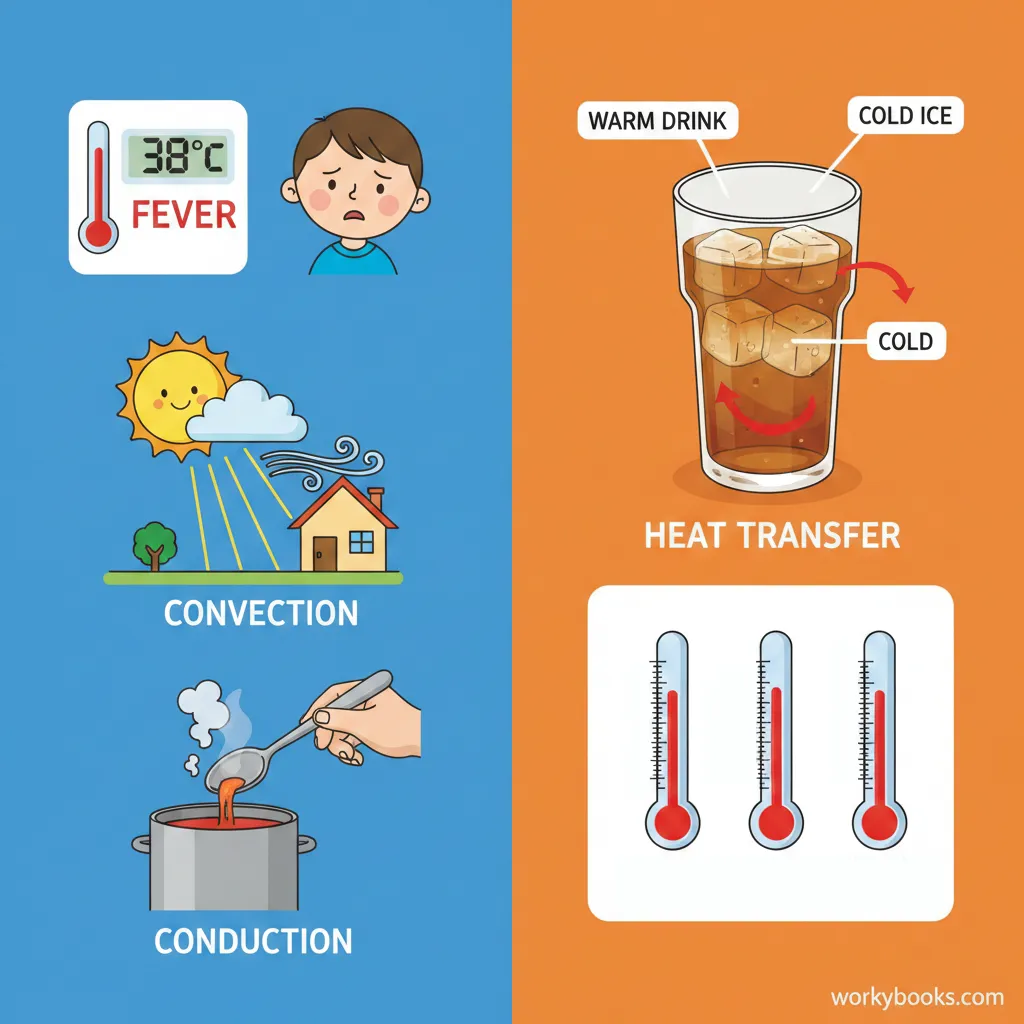
Guide to heat, temperature, and transfer mechanisms like convection and conduction.
Heat and temperature are two concepts that play important roles in science and our daily lives. When ice cubes are added to a warm drink, the ice melts and the drink cools down. This happens because energy moves from the warmer drink to the colder ice, causing the ice to melt and the drink to become cooler. Understanding heat and temperature helps us explain many events, from how weather changes to how our bodies respond to illness. Scientists use these concepts to study energy movement and design technologies that keep us comfortable and safe.
How Heat and Temperature Work
Temperature measures the average kinetic energy of particles in a substance. When particles move faster, the temperature is higher. Heat is not the same as temperature; it is the transfer of thermal energy between objects or substances. Heat always flows from a region of higher temperature to a region of lower temperature. For example, when you touch a metal spoon left in a hot pot, heat moves from the hot spoon to your cooler hand. This transfer continues until both objects reach the same temperature, a state called thermal equilibrium. Scientists have measured that, on average, ice melts at 0°C (32°F), showing a clear link between temperature and energy transfer.
Temperature Scales and Real-World Uses
There are several ways to measure temperature. The Celsius scale is commonly used in science and most countries. Water freezes at 0°C and boils at 100°C. The Fahrenheit scale is mainly used in the United States, where water freezes at 32°F and boils at 212°F. Scientists sometimes use the Kelvin scale, which starts at absolute zero (0 K), the lowest possible temperature where particles stop moving. Thermometers help us measure temperature in all these scales. For example, a fever thermometer might show your body temperature as 38°C (100.4°F), indicating your body is warmer than normal because of extra thermal energy from a fever. Weather reports often use temperature to help us decide what to wear or how to prepare for the day.
Heat Transfer and Its Importance
Heat can move in different ways: conduction (direct contact), convection (movement of fluids), and radiation (energy transfer through waves). For instance, when you place an ice cube in a warm drink, heat transfers from the liquid to the ice by conduction, melting the ice. In weather, convection moves warm air upward and cool air downward, creating wind and clouds. Technological devices, such as refrigerators and air conditioners, use these principles to control temperature and move heat. Understanding the difference between heat and temperature is essential for developing new materials, investigating environmental changes, and protecting human health.
In summary, heat and temperature are closely connected but not identical. Temperature measures how fast particles move, while heat is the transfer of energy from one object to another. Recognizing how heat always flows from hot to cold until equilibrium is reached helps us understand natural phenomena, design technology, and keep ourselves healthy and safe.
Interesting Fact: The coldest possible temperature is called absolute zero (0 K or -273.15°C), where all particle motion nearly stops and no more heat can be removed from a substance!
What does temperature measure in a substance?
The average kinetic energy of its particlesThe total mass of the substanceThe type of substance it isThe color of the substance
How does heat always flow?
From a hotter object to a colder objectFrom a colder object to a hotter objectEqually in both directionsIt does not flow
Which temperature scale is mainly used in the United States?
CelsiusFahrenheitKelvinCentigrade
What is the state called when two objects reach the same temperature?
ConductionThermal equilibriumRadiationKinetic energy
What happens when you put ice cubes in a warm drink?
Heat moves from the drink to the ice, making the ice meltThe ice heats up the drinkNo energy is transferredThe ice and drink both get colder
What is the lowest possible temperature called?
Zero degrees CelsiusAbsolute zeroFreezing pointBoiling point
What is one way heat can transfer through fluids like air or water?
ConductionConvectionRadiationReflection
The Kelvin scale starts at absolute zero. (True/False)
TrueFalse
Heat and temperature are exactly the same thing. (True/False)
TrueFalse
Which device is used to measure temperature?
ThermometerBarometerMicroscopeRuler
Perfect For:
👩🏫 Teachers
• Reading comprehension practice
• Auto-graded assessments
• Literacy skill development
👨👩👧👦 Parents
• Reading practice at home
• Comprehension improvement
• Educational reading time
🏠 Homeschoolers
• Reading curriculum support
• Independent reading practice
• Progress monitoring
Reading Features:
📖
Reading Passage
Engaging fiction or nonfiction text
❓
Comprehension Quiz
Auto-graded questions
📊
Instant Feedback
Immediate results and scoring
📄
Printable Version
Download for offline reading
🔊
Read Aloud
Voice-over with word highlighting
Reviews & Ratings
No reviews yet. Be the first to share your experience!
Related Content
Thermal Insulators and Conductors
This passage for grades 6-8 explores the science of thermal insulators and conductors, aligning with NGSS MS-PS3-3. Stud...
MS-PS3-3
Thermal Energy
This comprehensive passage explores the concept of thermal energy, aligning with NGSS standards MS-PS3-3 and MS-PS3-4. S...
MS-PS3-3MS-PS3-4
Geographic Information Systems (GIS)
This engaging middle school science passage introduces students to Geographic Information Systems (GIS), aligning with N...
MS-ESS3-3MS-ETS1-1MS-ETS1-2MS-ETS1-3
What Is an Endothermic Reaction?
This engaging science passage introduces middle school readers to the concept of endothermic reactions, aligned with NGS...
MS-PS3-44-PS3-34-PS3-2
What Is an Exothermic Reaction?
This science passage introduces students to the idea of exothermic reactions—chemical changes that release heat or light...
MS-PS3-44-PS3-34-PS3-2
Is Freezing Endothermic or Exothermic?
This clear and accessible passage helps students understand why freezing is an exothermic process, even though frozen ob...
MS-PS3-44-PS3-34-PS3-2
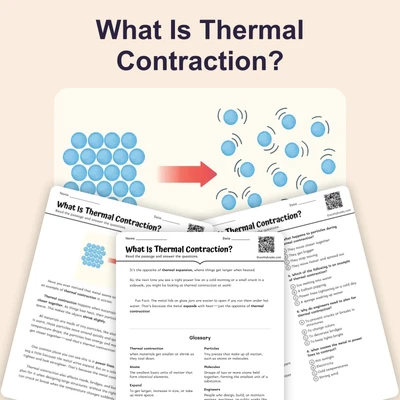
What Is Thermal Contraction?
This middle school science passage introduces the concept of thermal contraction, aligned with NGSS standard MS-PS1-4. I...
MS-PS3-44-PS3-34-PS3-2
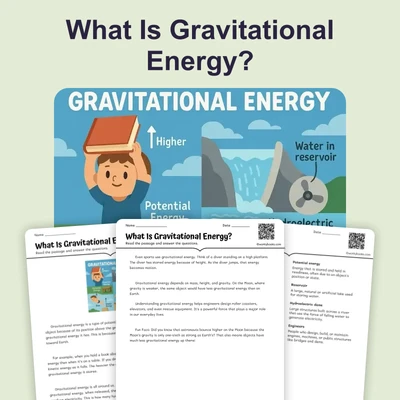
What Is Gravitational Energy?
This engaging science passage for middle school students explores the concept of gravitational energy, a form of potenti...
MS-PS3-44-PS3-34-PS3-2
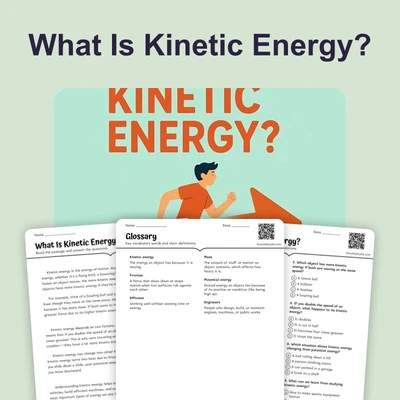
What Is Kinetic Energy?
This NGSS-aligned reading passage introduces 6th–8th grade students to the concept of kinetic energy—energy that an obje...
MS-PS3-44-PS3-34-PS3-2
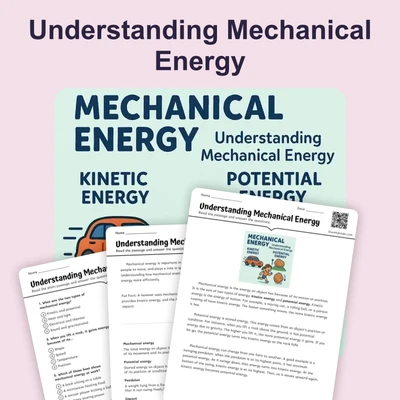
Understanding Mechanical Energy
This science passage is crafted for 6th–8th grade students and focuses on mechanical energy—specifically the combination...
MS-PS3-44-PS3-34-PS3-2
Chemical Energy
This informational science passage on chemical energy is designed for middle school students and aligns with the NGSS st...
MS-PS3-44-PS3-34-PS3-2
Sublimation: The Solid-to-Gas Magic
This engaging NGSS-aligned reading passage explores the science of sublimation, a unique phase change where a solid turn...
MS-PS3-44-PS3-34-PS3-2
Scientific Theories
This reading passage for grades 6-8 introduces students to the concept of scientific theories, emphasizing that these ar...
MS-PS1-1MS-PS1-4MS-PS3-4SCIENCE AND ENGINEERING PRACTICES
Heat and Changes of State
This grade 6-8 science passage explores the relationship between heat and changes of state, aligning with NGSS standard ...
MS-PS3-4
Specific Heat
This comprehensive middle school science passage explores the concept of specific heat, the amount of energy required to...
MS-PS3-4
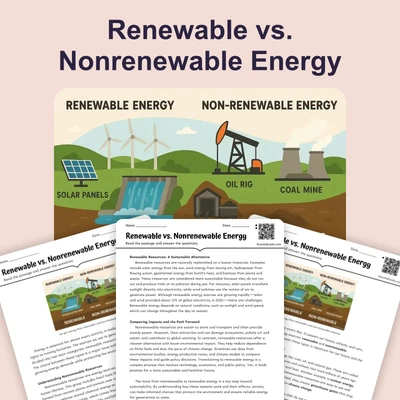
Renewable vs. Nonrenewable Energy
This engaging passage, aligned with NGSS standards MS-PS3-4, MS-ESS3-3, and MS-ESS3-4, helps middle school students diff...
MS-PS3-4MS-ESS3-3MS-ESS3-4
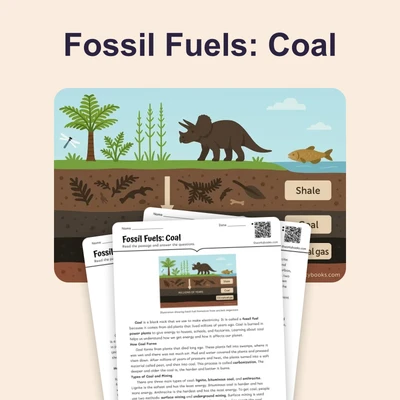
Fossil Fuels: Coal
This middle school science reading passage explores the science behind coal, a major fossil fuel. Students will learn ho...
MS-PS3-4MS-ESS3-3MS-ESS3-4
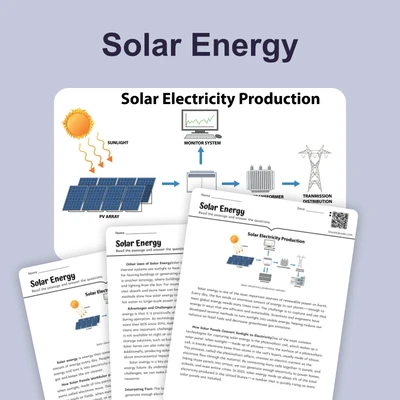
Solar Energy
This engaging passage for grades 6-8 explores the science of solar energy, focusing on how sunlight is converted into el...
MS-PS3-4MS-ESS3-3MS-ESS3-4
Wind Energy
This comprehensive middle school science passage explores the scientific principles behind wind energy and how wind turb...