This learning resource is available in interactive and printable formats. The interactive worksheet can be played online and assigned to students. The Printable PDF version can be downloaded and printed for completion by hand.
This engaging passage for grades 6-8 explores the science of solar energy, focusing on how sunlight is converted into electricity using photovoltaic cells, as well as other solar technologies like solar thermal systems and passive solar design. Students will learn about the mechanisms behind solar panels, including the photovoltaic effect, and will discover the environmental and economic advantages of solar power. The passage also addresses challenges such as energy storage and land use. Aligned with NGSS standards MS-PS3-4, MS-ESS3-3, and MS-ESS3-4, this selection is ideal for middle school science classrooms and comes with interactive activities and audio integration. Key science vocabulary and real-world examples help students connect solar energy to broader scientific principles and issues of sustainability.
CONTENT PREVIEW
Expand content preview
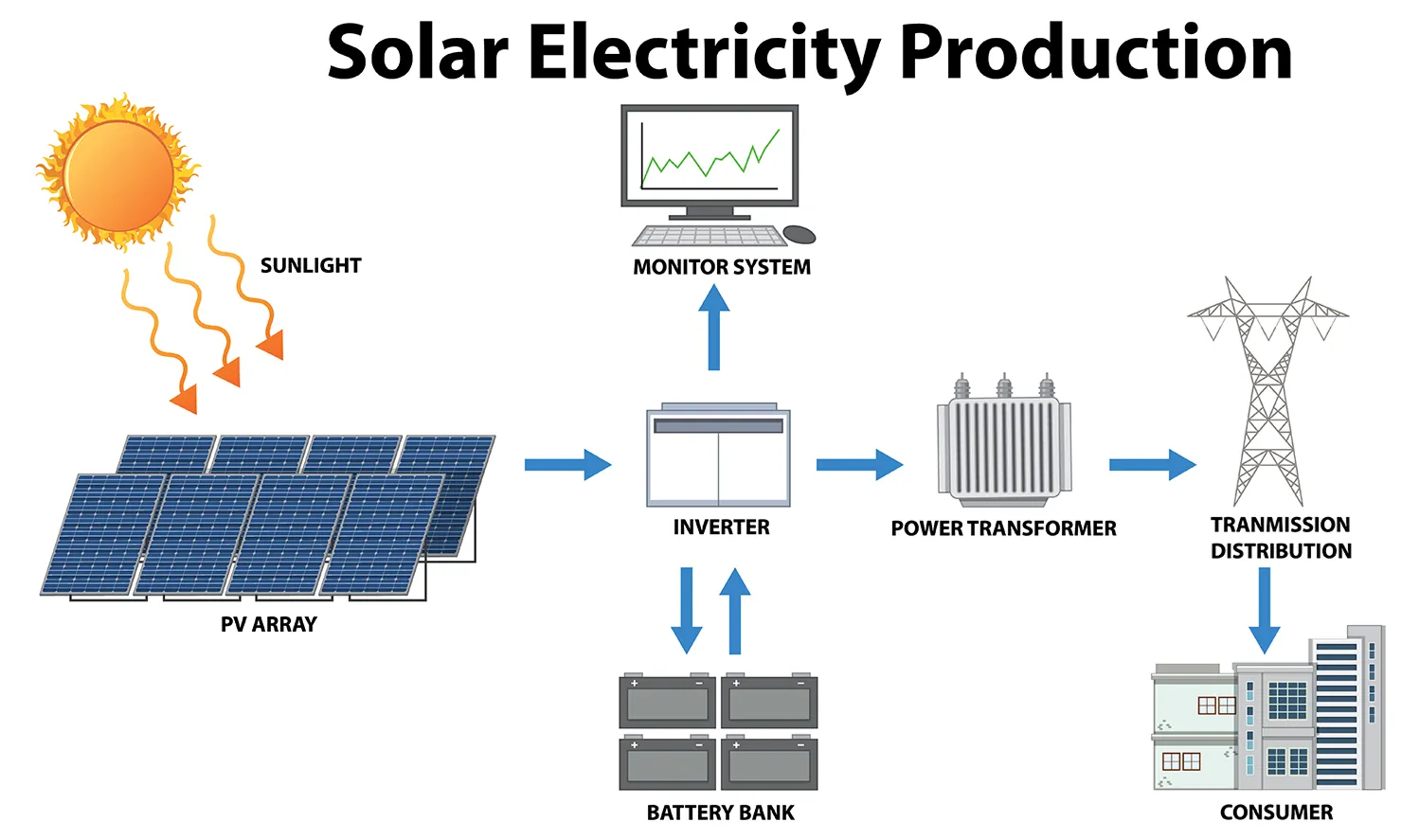
Solar electricity production concept
Solar energy is one of the most important sources of renewable power on Earth. Every day, the Sun sends an enormous amount of energy to our planet—enough to meet global energy needs many times over. The challenge is to capture and use that energy in ways that are efficient and sustainable. Scientists and engineers have developed several methods to turn sunlight into usable energy, helping reduce our reliance on fossil fuels and decrease greenhouse gas emissions.
How Solar Panels Convert Sunlight to Electricity One of the most common technologies for capturing solar energy is the photovoltaic cell, which makes up a solar panel. When sunlight—made up of photons—hits the surface of a photovoltaic cell, it knocks electrons loose from atoms in the cell's layers, usually made of silicon. This process, called the photovoltaic effect, creates an electric current as the electrons flow through the material. By connecting many cells together in panels, and linking those panels into arrays, we can generate enough electricity to power homes, schools, and even entire cities. In 2022, solar energy made up about 4% of the total electricity produced in the United States—a number that is quickly rising as more solar panels are installed.
Other Uses of Solar Energy Solar power is not limited to making electricity. Solar thermal systems use sunlight to heat water or other fluids, which can then be used for heating buildings or generating electricity through turbines. Passive solar design is another strategy, where buildings are constructed to maximize natural heating and lighting from the Sun. For example, large south-facing windows and materials that absorb and store heat can lower the need for artificial heating. These different methods show how solar energy can be adapted for various needs, from household hot water to large-scale power stations.
Advantages and Challenges of Solar Energy One of the main advantages of solar energy is that it is practically unlimited and does not produce harmful emissions during operation. As technology improves, the cost of solar panels has dropped by more than 80% since 2010, making solar power more accessible than ever. However, there are important challenges to overcome. Solar energy is intermittent, meaning it is not available at night or on very cloudy days. This creates a need for energy storage solutions, such as batteries, to provide power when sunlight is not available. Solar farms can also take up large areas of land, which may impact local ecosystems. Additionally, producing solar panels requires energy and materials, raising questions about environmental impacts during manufacturing.
Solar energy is a key part of our transition to a cleaner and more sustainable energy future. By understanding how solar technologies work and addressing their challenges, we can make better decisions about how to use this powerful natural resource.
Interesting Fact: The largest solar power plant in the world, located in India, can generate enough electricity to power over 700,000 homes!
What is the main function of a photovoltaic cell?
To convert sunlight directly into electricityTo store sunlight for later useTo heat water using the SunTo block harmful sunlight from entering buildings
Which of the following is NOT a use of solar energy mentioned in the passage?
Powering cars using gasolineHeating water with solar thermal systemsGenerating electricity with solar panelsProviding natural lighting in buildings
According to the passage, what percentage of the United States' electricity was generated by solar energy in 2022?
About 4%About 20%About 50%About 80%
What does 'intermittent' mean as used in the passage?
Not continuous or only available at certain timesAlways available and reliableVery expensive to produceEasy to store for later use
What is one environmental challenge of solar energy described in the passage?
Solar farms can take up large areas of land and affect ecosystemsIt produces a lot of greenhouse gases during operationIt uses up fossil fuels quicklyIt cannot be used in any buildings
Why do solar thermal systems use sunlight?
To heat water or fluids for use in buildings or to make electricityTo cool buildings at nightTo charge electric cars directlyTo block sunlight from entering homes
What is a benefit of passive solar design?
It uses the Sun’s natural heat and light to make buildings more comfortableIt uses fossil fuels to heat buildingsIt replaces all windows with wallsIt makes buildings colder in the winter
Which of the following best summarizes the main idea of the passage?
Solar energy is a renewable source with many advantages and some challenges, and it can be used in different ways.Solar panels cannot work at night or on cloudy days.Solar energy is the only way to make electricity.Fossil fuels are good for the environment.
Solar energy is available at all times, even at night. (True/False)
FalseTrue
Solar energy does not create harmful emissions while being used. (True/False)
TrueFalse
Perfect For:
👩🏫 Teachers
• Reading comprehension practice
• Auto-graded assessments
• Literacy skill development
👨👩👧👦 Parents
• Reading practice at home
• Comprehension improvement
• Educational reading time
🏠 Homeschoolers
• Reading curriculum support
• Independent reading practice
• Progress monitoring
Reading Features:
📖
Reading Passage
Engaging fiction or nonfiction text
❓
Comprehension Quiz
Auto-graded questions
📊
Instant Feedback
Immediate results and scoring
📄
Printable Version
Download for offline reading
🔊
Read Aloud
Voice-over with word highlighting
Reviews & Ratings
No reviews yet. Be the first to share your experience!
Related Content
Natural Disaster: Volcanic Eruptions
Volcanoes can erupt with lava and ash, changing the landscape. While dangerous, they also create fertile land and new la...
RI.3.1RI.4.4RI.4.2RI.5.2
Human Impacts: Pollution
This middle school science reading passage, aligned with NGSS standards MS-LS2-4 and MS-ESS3-3, examines the mechanisms ...
MS-LS2-4MS-ESS3-3
Human Impacts: Habitat Destruction
This grade 6-8 science passage explores human impacts on ecosystems, focusing on habitat destruction as the leading caus...
MS-LS2-4MS-LS2-5MS-ESS3-3
Ecosystem Services
This engaging middle school science passage introduces students to the concept of ecosystem services, the vital benefits...
MS-LS2-5MS-ESS3-3
Environmental Problems and Solutions
This passage for grades 6-8 introduces major environmental problems such as habitat loss, pollution, climate change, inv...
MS-LS2-4MS-ESS3-3MS-ESS3-4
Remote Sensing
This middle school science passage introduces students to the concept of remote sensing—the collection of information ab...
MS-ESS3-3MS-PS4-2MS-ETS1-1MS-ETS1-3
Geographic Information Systems (GIS)
This engaging middle school science passage introduces students to Geographic Information Systems (GIS), aligning with N...
MS-ESS3-3MS-ETS1-1MS-ETS1-2MS-ETS1-3
Renewable vs. Nonrenewable Energy
This engaging passage, aligned with NGSS standards MS-PS3-4, MS-ESS3-3, and MS-ESS3-4, helps middle school students diff...
MS-PS3-4MS-ESS3-3MS-ESS3-4
Fossil Fuels: Coal
This middle school science reading passage explores the science behind coal, a major fossil fuel. Students will learn ho...
MS-PS3-4MS-ESS3-3MS-ESS3-4
Wind Energy
This comprehensive middle school science passage explores the scientific principles behind wind energy and how wind turb...
MS-PS3-4MS-ESS3-3MS-ESS3-4
Hydroelectric Energy
This comprehensive passage introduces middle school students to the science behind hydroelectric energy, directly aligni...
MS-PS3-4MS-ESS3-3MS-ESS3-4
Geothermal Energy
This comprehensive science passage introduces middle school students to the mechanisms and applications of geothermal en...
MS-PS3-4MS-ESS3-3MS-ESS3-4
Biomass and Biofuels
This NGSS-aligned passage introduces grades 6-8 students to the science of biomass and biofuels, explaining how organic ...
MS-PS3-4MS-ESS3-3MS-ESS3-4
Nuclear Energy as a Resource
This NGSS-aligned informational science passage, designed for grades 6-8, explores nuclear energy as a resource in the c...
MS-PS3-4MS-ESS3-3MS-ESS3-4
Water Quality
This middle school science reading passage covers the topic of water quality, aligned with NGSS standards MS-ESS3-1 and ...
MS-ESS3-1MS-ESS3-3
Florida Everglades
This comprehensive passage introduces middle school students to the Florida Everglades, a distinctive wetland ecosystem ...
MS-LS2-1MS-LS2-4MS-ESS3-3MS-ESS3-4
Congo Rainforest
This middle school science passage explores the Congo Rainforest—Earth’s second-largest rainforest, located in Central A...
MS-LS2-1MS-ESS3-3
Nuclear Power Plants
This comprehensive reading passage introduces middle school students (grades 6-8) to the science of nuclear power plants...
MS-PS3-4MS-ESS3-3
Nuclear Safety and Waste
This middle school science passage explores the critical topic of nuclear safety and waste management, aligned with NGSS...