What Is an Endothermic Reaction
Interactive passage with audio narration, comprehension questions, and printable PDF.
What's included
What Is an Endothermic Reaction preview and details
About this printable What Is an Endothermic Reaction science reading passage, NGSS-aligned (Grades 5-8)
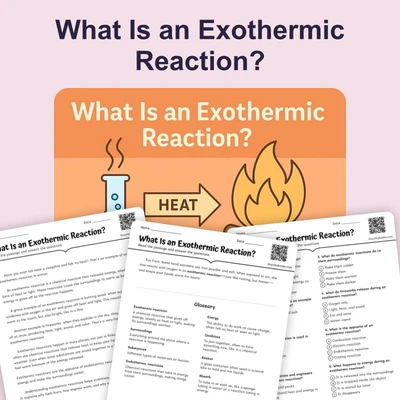
Sample passage and quiz from What Is an Endothermic Reaction
Reading passage and comprehension quiz preview
What Is an Endothermic Reaction?

Have you ever used an instant cold pack for a sore ankle? When you squeeze it, the pack suddenly gets cold. That’s because of something called an endothermic reaction.
An endothermic reaction is a chemical reaction that absorbs heat from its surroundings. This means the reaction needs energy—usually in the form of heat—to happen. Instead of giving off heat, like a fire does, an endothermic reaction takes in heat, causing the area around it to feel cooler.
One easy example is photosynthesis, the process plants use to make food. Plants absorb sunlight (a form of energy) and use it to turn carbon dioxide and water into sugar and oxygen. This is an endothermic reaction because it needs energy to take place.
Another example is mixing baking soda and vinegar. While this reaction doesn’t get very cold, it still absorbs some energy. You can also see endothermic reactions in action when certain salts dissolve in water and make the water feel cold.
Endothermic reactions are the opposite of exothermic reactions, which release heat. For example, burning wood or fireworks give off heat and light—that’s an exothermic reaction.
Scientists and engineers use endothermic reactions in many ways, like cooling systems, instant cold packs, and even in space missions where temperature control is important.
So, next time you feel something getting cooler during a chemical change, you might be watching an endothermic reaction at work!
Fun Fact: Some instant cold packs used by athletes work because of an endothermic reaction between water and ammonium nitrate—when mixed, they absorb so much heat that the pack gets cold in just seconds without needing a freezer!
Comprehension quiz (8 questions)
1. What is an endothermic reaction?
2. What happens to the area around an endothermic reaction?
3. Which of the following is an example of an endothermic reaction?
4. What kind of energy does photosynthesis absorb?
5. Which item uses an endothermic reaction to help injuries?
6. What is the opposite of an endothermic reaction?
7. What do endothermic and exothermic reactions both involve?
8. Why is photosynthesis important as an endothermic reaction?
Perfect for the way you teach
- Build comprehension skills
- Auto-graded quiz
- Differentiated reading
- Read together at home
- Improve fluency
- Quiet reading time
- Reading curriculum support
- Independent practice
- Track Lexile growth