What Is Thermal Contraction
Interactive passage with audio narration, comprehension questions, and printable PDF.
By completing this purchase you agree to our Terms of Use and Privacy Policy. Your subscription renews automatically until you cancel. You can cancel anytime from your account settings. All sales are final and non-refundable. Digital content is available for download in your account immediately upon purchase.
What's included
What Is Thermal Contraction preview and details
About this printable What Is Thermal Contraction science reading passage, NGSS-aligned (Grades 5-8)
Sample passage and quiz from What Is Thermal Contraction
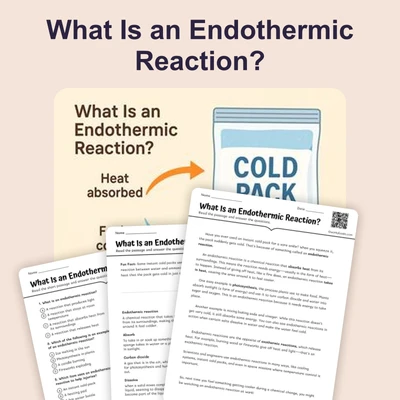
Reading passage and comprehension quiz preview
What Is Thermal Contraction?
Have you ever noticed that metal seems to shrink a little when it gets cold? That’s an example of thermal contraction in action!
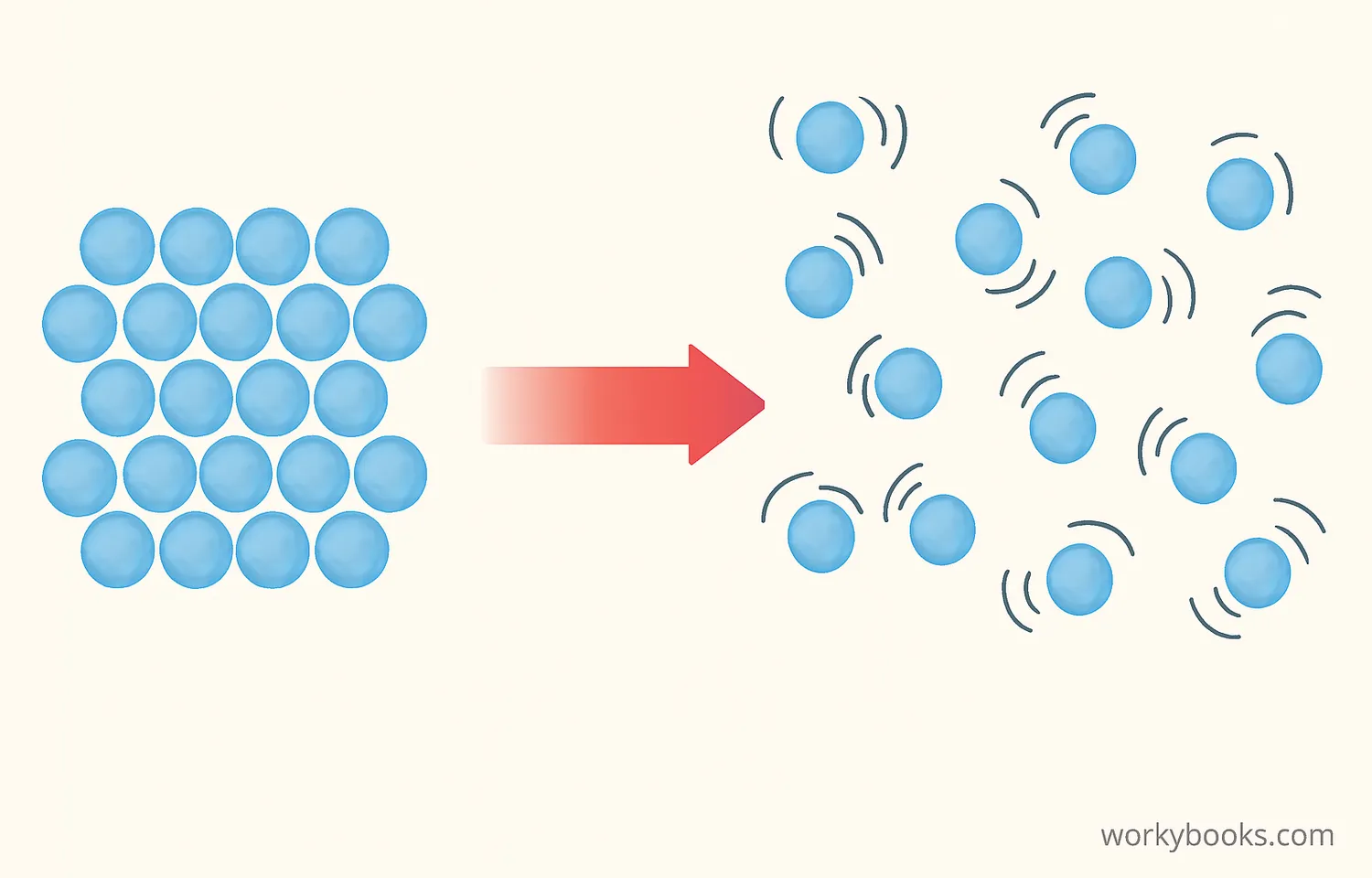
Thermal contraction happens when materials cool down and their particles move closer together. As things lose heat, their particles slow down and take up less space. This makes the object shrink slightly.
All materials are made of tiny particles, like atoms or molecules. When something is warm, those particles move around quickly and spread out. But when the temperature drops, the particles lose energy and move more slowly. As a result, they get closer together—and that’s thermal contraction!
One common place you can see this is in power lines. On a hot day, the lines may sag a little because the metal wires expand. But on a cold day, those same wires tighten and look straighter. That’s because the metal contracts as it cools.
Thermal contraction also affects roads, bridges, and buildings. Engineers must plan for it when designing large structures. Without the right gaps or joints, parts can crack or break when the temperature changes suddenly.
It’s the opposite of thermal expansion, where things get larger when heated.
So, the next time you see a tight power line on a cold morning or a small crack in a sidewalk, you might be looking at thermal contraction at work!
Fun Fact: The metal lids on glass jars are easier to open if you run them under hot water. That’s because the metal expands with heat—just the opposite of thermal contraction!
Comprehension quiz (8 questions)
1. What is thermal contraction?
2. What happens to particles during thermal contraction?
3. Why do materials shrink when they get cold?
4. Which of the following is an example of thermal contraction?
5. What is the opposite of thermal contraction?
6. Why do engineers need to plan for thermal contraction?
7. What do particles do when something cools down?
8. What causes the metal in power lines to contract?
Perfect for the way you teach
- Build comprehension skills
- Auto-graded quiz
- Differentiated reading
- Read together at home
- Improve fluency
- Quiet reading time
- Reading curriculum support
- Independent practice
- Track Lexile growth