This learning resource is available in interactive and printable formats. The interactive worksheet can be played online and assigned to students. The Printable PDF version can be downloaded and printed for completion by hand.
This engaging history reading passage explores the life and legacy of Cicero, one of ancient Rome’s most influential statesmen, orators, and authors. Students will learn about Cicero’s rise through the Roman political system, his defense of the Republic against corrupt leaders, and his lasting impact on government and law. The passage incorporates key academic vocabulary and primary source references to help students analyze cause and effect, social hierarchy, and the significance of Cicero’s actions in the broader context of Roman and world history. Activities include a multiple-choice quiz, writing prompts, and graphic organizers that encourage critical thinking. A Spanish translation and read aloud audio support diverse learners. This resource aligns with California HSS 6.7 and Common Core ELA RH.6-8.2 standards, making it ideal for classrooms studying ancient civilizations and the foundations of democratic government.
CONTENT PREVIEW
Expand content preview
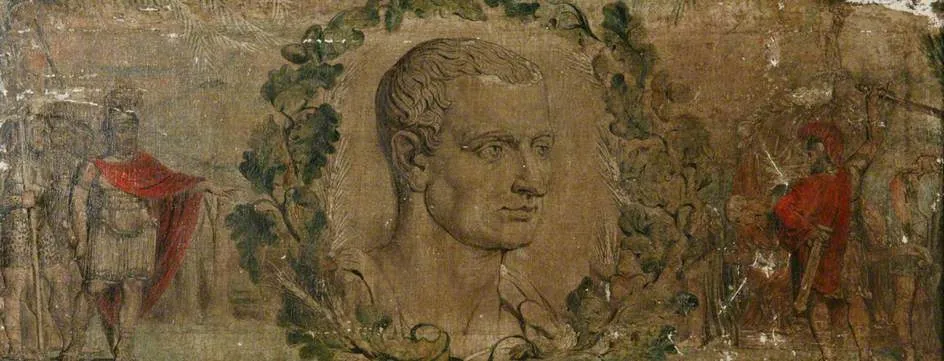
"Marcus Tullius Cicero - Tempera on canvas c 1800" by William Blake / Wikimedia Commons.
Cicero was a leading figure in the late Roman Republic, known for his skill as an orator, statesman, and writer. Born Marcus Tullius Cicero in 106 BCE in Arpinum, a town southeast of Rome, he rose to become a symbol of the Roman Senate and the ideals of the Republic. Cicero’s life and actions provide a window into the political struggles and changing values of ancient Rome.
As a young man, Cicero studied law and philosophy in Rome and Greece. He became famous for his powerful speeches in the law courts, defending citizens against corrupt officials. One of his most famous cases was in 70 BCE, when he prosecuted Gaius Verres, a former governor accused of extortion in Sicily. Cicero’s speeches, called the Verrine Orations, included detailed evidence and persuaded the jury to convict Verres. This case established Cicero’s reputation for defending justice and the rule of law.
Cicero’s political career advanced rapidly. In 63 BCE, he was elected consul, the highest office in the Republic. During his consulship, he uncovered and stopped the Catiline Conspiracy, a plot led by Lucius Sergius Catilina to overthrow the government. Cicero gave a series of speeches, known as the Catilinarian Orations, to the Senate, exposing the danger and rallying support to defend the Republic. Ancient sources, such as Sallust’s account and Cicero’s own letters, describe how Cicero’s actions prevented civil war, though some criticized his harsh treatment of the conspirators. The event highlights the tensions between security and individual rights in Roman politics.
The late Republic was marked by conflict between the Senate and powerful generals like Julius Caesar. Cicero supported the traditional government and tried to protect the constitution from dictatorship. After Caesar’s assassination in 44 BCE, Cicero opposed Mark Antony, delivering the Philippics—a series of speeches attacking Antony’s ambitions. This made Cicero a target. In 43 BCE, he was executed on the orders of Antony and his ally Octavian, ending a career devoted to public service.
Cicero’s legacy endures through his writings on law, philosophy, and government, which influenced later thinkers such as Thomas Jefferson. His efforts to balance tradition and change, and his belief in civic duty, remain central to the study of Roman history. Cicero’s life shows how individuals can shape society through words and actions, even in times of crisis.
Many themes from Cicero’s era, such as debates over power, justice, and the rights of citizens, continue to influence modern governments and political systems today.
Interesting Fact: Cicero coined many Latin phrases still used in law and politics, such as “status quo.”
What year was Cicero born?
106 BCE44 BCE70 BCE63 BCE
Who did Cicero prosecute in Sicily?
Gaius VerresMark AntonyJulius CaesarOctavian
What office did Cicero hold in 63 BCE?
ConsulGeneralGovernorEmperor
Why were the Catilinarian Orations important?
Stopped a plot against RomeCelebrated the RepublicPraised Julius CaesarSupported Mark Antony
What happened after Cicero opposed Mark Antony?
He was executedHe became emperorHe moved to SicilyHe retired
How did Cicero influence later thinkers?
Through his writingsBy fighting warsBy becoming emperorBy building cities
Cicero was a famous orator. True or false?
TrueFalse
What does 'status quo' mean?
The current state of thingsA type of speechA Roman lawAn enemy of Rome
Perfect For:
👩🏫 Teachers
• Reading comprehension practice
• Auto-graded assessments
• Literacy skill development
👨👩👧👦 Parents
• Reading practice at home
• Comprehension improvement
• Educational reading time
🏠 Homeschoolers
• Reading curriculum support
• Independent reading practice
• Progress monitoring
Reading Features:
📖
Reading Passage
Engaging fiction or nonfiction text
❓
Comprehension Quiz
Auto-graded questions
📊
Instant Feedback
Immediate results and scoring
📄
Printable Version
Download for offline reading
🔊
Read Aloud
Voice-over with word highlighting
Reviews & Ratings
No reviews yet. Be the first to share your experience!
Related Content
Ancient Law Codes: Hammurabi to Rome
This passage explores how ancient civilizations like Babylon and Rome used law codes to govern people, maintain social o...
Geography and Early Rome
This passage, aligned to HSS 6.7 and CCSS RH.6-8.2, explores the rise of Ancient Rome with a focus on its geographical s...
Rome's Lasting Legacy
This passage explores the profound legacy of Ancient Rome and how its beliefs, innovations, and systems continue to shap...
Evidence in Ancient History
This engaging history reading passage investigates how archaeologists and historians discover clues about how ancient pe...
Livy: Historian of Early Rome
This passage introduces students to Livy, one of Ancient Rome's most significant historians, whose writings help us unde...
Germanic Invasions of Rome
This engaging history reading passage explores the causes and effects of the Germanic tribes’ invasions of the Western R...
Slavery in Ancient Rome and in the Americas
This educational passage examines the history of slavery in two distinct regions and eras: Ancient Rome and Colonial Ame...
Ancient Theocracy
This engaging history reading passage explores the concept of theocracy in ancient civilizations, where priests and reli...
Slavery in Ancient World
This passage explores the complex history of slavery in the ancient world, examining its presence in societies such as M...
Life in the Roman Empire
This rigorous history reading passage explores Life in the Roman Empire, guiding students through the social hierarchy, ...
Ancient Canaan
This educational passage explores the land of Canaan, the historical homeland of the ancient Israelites. Students will l...
Ancient Literature
This passage explores the importance of ancient stories and poems from civilizations such as Greece, India, and Israel. ...
Geography of Ancient Israel
This passage explores the rich geography of Ancient Israel, focusing on how landforms, climate, and natural resources sh...
The Etruscans
This engaging history reading passage explores the vital role of the Etruscans in shaping Ancient Rome. Students will di...
Ancient Writing Systems
This engaging history reading passage explores the origins and evolution of ancient writing systems, including cuneiform...
Ancient Agriculture Farming
This passage explores the transformative impact of farming on ancient societies, examining how the Neolithic Revolution ...
Cincinnatus
This rigorous history reading passage explores the story of Cincinnatus, a Roman farmer who became a dictator in a time ...
Ancient Mathematics
This passage explores the essential role of mathematics in ancient civilizations, including Mesopotamia, Egypt, Greece, ...
Trade Across Ancient India
This history reading passage explores Ancient India's trade networks and their impact on global connections. Students wi...
The Roman Republic
This passage explores the structure and significance of government and law in the Roman Republic, focusing on how Roman ...