Constantine and Christianity
Interactive passage with audio narration, comprehension questions, and printable PDF.
By completing this purchase you agree to our Terms of Use and Privacy Policy. Your subscription renews automatically until you cancel. You can cancel anytime from your account settings. All sales are final and non-refundable. Digital content is available for download in your account immediately upon purchase.
What's included
Constantine and Christianity preview and details
About this printable Constantine and Christianity reading passage (Grades 5-8)
Sample passage and quiz from Constantine and Christianity
Reading passage and comprehension quiz preview
Constantine and Christianity
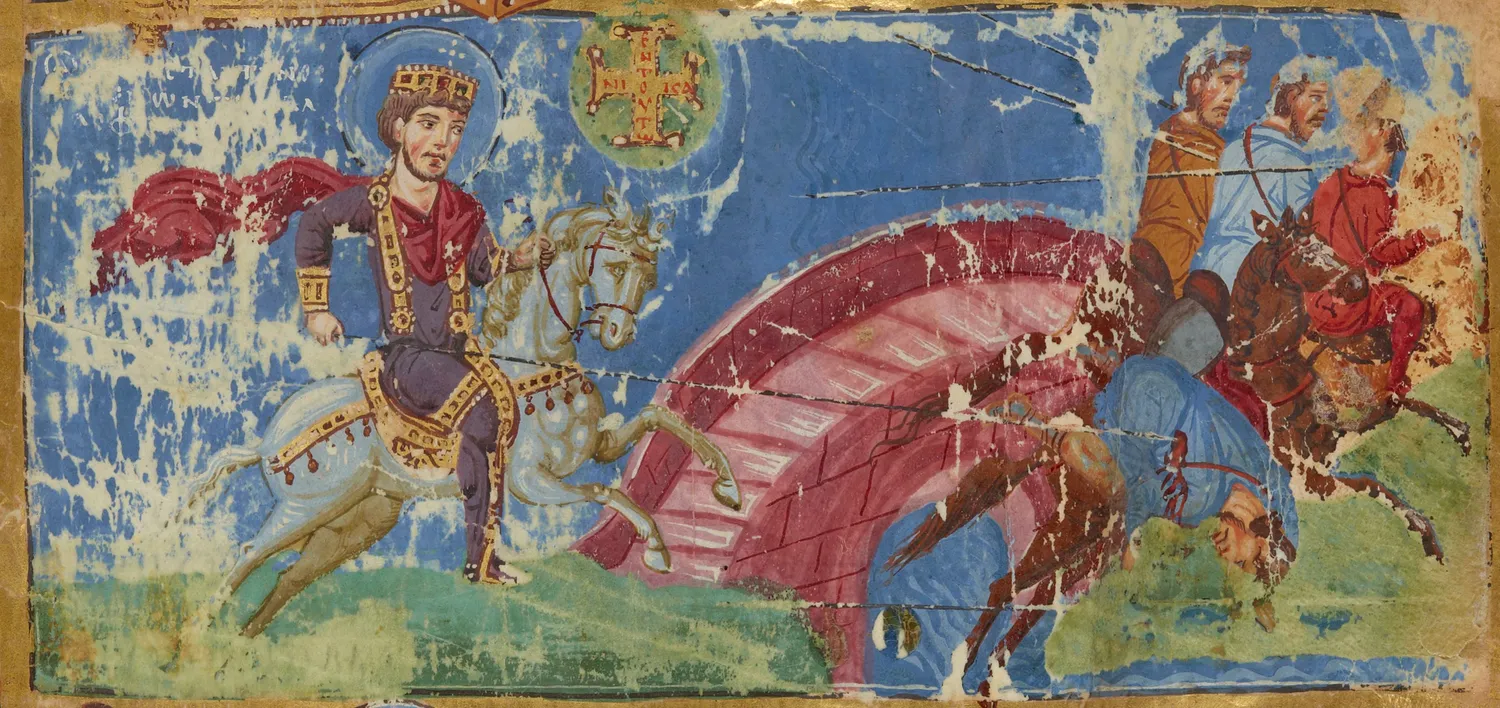
Constantine's Vision and the Battle of the Milvian Bridge / Wikimedia Commons
In 313 CE, Emperor Constantine made a decision that would change the Roman Empire and the course of world history. By issuing the Edict of Milan, Constantine officially declared that Christians could freely practice their faith within the empire. This was a turning point that ended centuries of persecution and began a new era for both Christianity and Ancient Rome.
For many years, Christians in the Roman Empire faced harsh treatment. The Roman government considered Christianity a threat because Christians refused to worship the traditional Roman gods or honor the emperor as a god. As a result, Christians were sometimes arrested, imprisoned, or even executed. Archaeological evidence, such as inscriptions in the Roman catacombs, shows the struggles and secret gatherings of early Christians. One famous primary source, a letter from the Roman governor Pliny the Younger, describes how he punished Christians for their beliefs around 112 CE. Despite the risks, Christianity continued to spread, especially in large cities like Rome and Alexandria.
Constantine's rise to power marked a dramatic shift. According to the ancient historian Eusebius, Constantine claimed to have seen a vision before a major battle in 312 CE—the Battle of the Milvian Bridge. He reportedly saw a symbol of the cross and heard the words, “In this sign, conquer.” After winning the battle, Constantine credited his victory to the Christian God. The following year, in 313 CE, he and his co-emperor Licinius issued the Edict of Milan, granting religious tolerance throughout the empire. This meant that Christianity was now legal and Christians could build churches openly. Archaeological discoveries, such as the remains of early basilicas in Rome, provide evidence of this new freedom.
Constantine’s decision had far-reaching effects. He supported the church by donating land and helping to build important places of worship, such as the Church of the Holy Sepulchre in Jerusalem. The emperor’s new policies allowed Christianity to grow rapidly, attracting people from all social classes. Over time, Christian leaders gained more influence in government and society. However, not all Romans welcomed these changes. Some traditionalists worried that abandoning the old gods would anger them. Despite this, Christianity continued to gain followers and eventually became the dominant religion of the Roman Empire.
The acceptance of Christianity by Constantine is significant because it marks a major change in Roman culture, politics, and daily life. It shows how a single leader’s choices can shape the beliefs and practices of millions. This event also set the stage for Christianity’s spread throughout Europe after the fall of Rome, connecting ancient history to the development of the modern world.
This moment links to the broader themes of religious change, leadership, and the rise and fall of empires that you will study throughout ancient history.
Interesting Fact: Constantine was baptized as a Christian only shortly before his death in 337 CE, making him the first Roman emperor to do so.
Comprehension quiz (8 questions)
1. What law did Constantine issue in 313 CE?
2. Why were Christians persecuted before Constantine?
3. Which battle did Constantine win after his vision?
4. What did the Edict of Milan allow?
5. What is a basilica?
6. How did Constantine support the church?
7. Constantine was baptized as a Christian. True or false?
8. What does 'persecution' mean?
Perfect for the way you teach
- Build comprehension skills
- Auto-graded quiz
- Differentiated reading
- Read together at home
- Improve fluency
- Quiet reading time
- Reading curriculum support
- Independent practice
- Track Lexile growth