Ferdinand Magellan: Sailing Around the World
Interactive passage with audio narration, comprehension questions, and printable PDF.
By completing this purchase you agree to our Terms of Use and Privacy Policy. Your subscription renews automatically until you cancel. You can cancel anytime from your account settings. All sales are final and non-refundable. Digital content is available for download in your account immediately upon purchase.
What's included
Ferdinand Magellan: Sailing Around the World preview and details
About this printable Ferdinand Magellan: Sailing Around the World reading passage (Grades 3-5)
Sample passage and quiz from Ferdinand Magellan: Sailing Around the World
Reading passage and comprehension quiz preview
Ferdinand Magellan
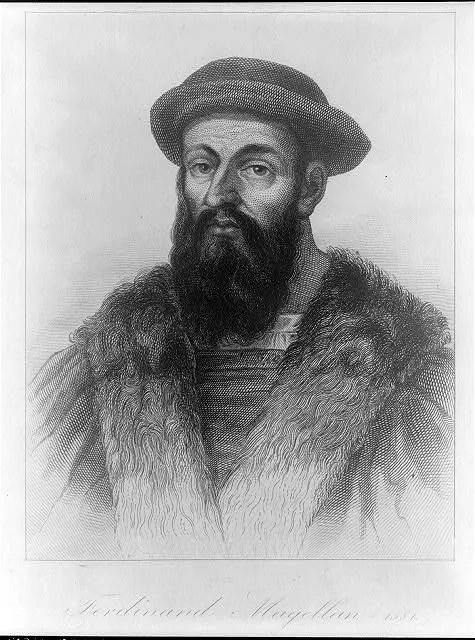
Source: Library of Congress
Ferdinand Magellan was a Portuguese explorer who changed world history. In 1519, he set out from Spain with five ships and about 270 men. Magellan wanted to find a new way to reach Asia by sailing west, instead of east. He hoped to bring back spices and riches for Spain.
The journey was long and hard. The ships first crossed the Atlantic Ocean to South America. There, Magellan searched for a passage through the land. He found a narrow waterway at the tip of South America. Today, it is called the Strait of Magellan. This passage allowed his ships to enter the Pacific Ocean.
The Pacific Ocean was bigger and more dangerous than anyone had guessed. The sailors faced storms, hunger, and disease. Many men became sick from lack of food and clean water. Some died, but Magellan kept the crew moving forward. He named the new ocean "Pacific" because it seemed peaceful at first.
After months at sea, Magellan’s ships reached the islands now called the Philippines. There, Magellan tried to help a local leader in a battle. Sadly, Magellan was killed in the fight. Even though their captain was lost, the crew did not give up. They chose a new leader and continued the journey home.
Only one ship, called the Victoria, made it back to Spain in 1522. Just 18 men survived to finish the first circumnavigation of the world. This means they sailed completely around the Earth. Their voyage proved that the world is round and that it is possible to sail all the way around it.
Magellan’s expedition changed people’s ideas about the world. It showed the size of the Earth and connected different lands and cultures. The bravery and teamwork of Magellan and his crew helped shape history.
Interesting Fact: The crew on the Victoria was so hungry at times that they ate leather and sawdust to survive.
Comprehension quiz (8 questions)
1. Who led the first trip around the world?
2. What ocean did Magellan name?
3. Where was Magellan killed?
4. Why did Magellan want to sail west?
5. What did the voyage prove?
6. What was the main effect of the journey?
7. Magellan survived the whole voyage. True or false?
8. What does circumnavigation mean?
Common Core standards for Ferdinand Magellan: Sailing Around the World
Explain events, procedures, ideas, or concepts in a historical, scientific, or technical text, including what happened and why, based on specific information in the text.
Determine the meaning of general academic and domain-specific words or phrases in a text relevant to a grade 4 topic or subject area.
Write informative/explanatory texts to examine a topic and convey ideas and information clearly.
Perfect for the way you teach
- Build comprehension skills
- Auto-graded quiz
- Differentiated reading
- Read together at home
- Improve fluency
- Quiet reading time
- Reading curriculum support
- Independent practice
- Track Lexile growth