This learning resource is available in interactive and printable formats. The interactive worksheet can be played online and assigned to students. The Printable PDF version can be downloaded and printed for completion by hand.
This comprehensive world history reading passage explores the Russian Revolution and how Russia exited World War I. Students will examine the causes and major events of the Russian Revolution, including the fall of the Romanov dynasty and the rise of the Bolsheviks, as well as the signing of the Treaty of Brest-Litovsk. The passage uses primary sources, analyzes cause and effect, and connects to geography and social changes. Activities include a multiple-choice quiz, explanatory writing prompts, graphic organizers, and a detailed timeline. Spanish translations and a simplified version are provided for accessibility. This resource is aligned with HSS 10.5.1 and RH.6-8.1, supporting both history and ELA standards. A read aloud audio option is available for enhanced comprehension.
CONTENT PREVIEW
Expand content preview
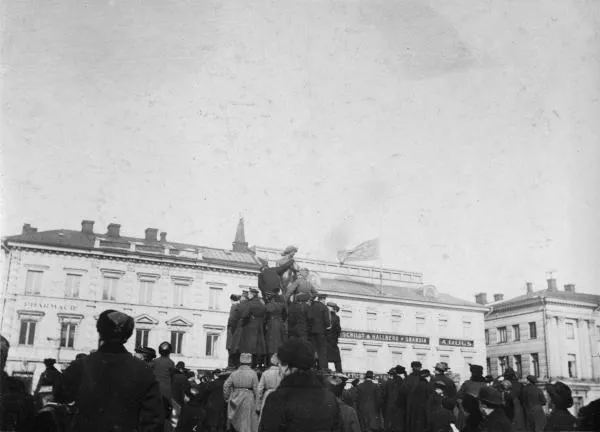
"Russian Soldiers during Russian Revolution"/ Wikimedia Commons (Public domain).
The Russian Revolution began in 1917, transforming the government and society of Russia. As World War I strained the Russian Empire, unrest grew among workers, peasants, and soldiers. Many Russians were suffering from hunger, poverty, and the loss of millions of lives in the war. The revolution brought dramatic change to Russia, ending centuries of rule by the Tsar and leading to the creation of a communist state led by the Bolsheviks.
One of the main causes of the revolution was the hardship caused by World War I. By 1917, Russian soldiers faced poor conditions and heavy losses on the Eastern Front. The government, led by Tsar Nicholas II, was unable to provide enough food or supplies. In February 1917, protests broke out in Petrograd (now St. Petersburg) over food shortages and government failures. The Tsar abdicated, ending the Romanov dynasty that had ruled Russia for over 300 years. The new provisional government tried to continue the war, but it remained unpopular.
In October 1917, the Bolsheviks, a revolutionary group led by Vladimir Lenin, seized power in Petrograd. They promised "peace, land, and bread" to the people. The Bolsheviks took over government buildings and arrested leaders of the provisional government. They issued the Decree on Peace, calling for Russia to exit World War I. Soon after, they faced fierce opposition from other political groups and foreign powers, leading to a civil war within Russia.
The Treaty of Brest-Litovsk was signed in March 1918 between Russia and Germany. This treaty officially ended Russia's involvement in World War I. Russia gave up large territories, including parts of Ukraine, Poland, and the Baltic states. This decision was controversial and caused hardship for many Russians, but it allowed the Bolsheviks to focus on solidifying their control at home. According to the diary of a Russian soldier in 1918, "The war is over for us, but the struggle in our own land has just begun." The revolution and treaty changed the political and social structure of Russia forever.
The Russian Revolution had a major impact on world history. It inspired other revolutionary movements and led to the creation of the Soviet Union. The exit from World War I weakened the Allied Powers but allowed the Bolsheviks to establish a communist regime. The events in Russia showed how war, hardship, and social divisions could lead to dramatic change.
This topic connects to broader themes of revolution, government change, and the influence of war on society.
Interesting Fact: After the revolution, the Russian royal family was moved to Siberia and eventually executed, marking the end of the Romanov dynasty.
Who led the Bolsheviks?
Vladimir LeninTsar Nicholas IIJoseph StalinLeon Trotsky
What treaty ended Russia's WWI involvement?
Treaty of VersaillesTreaty of Brest-LitovskTreaty of ParisTreaty of Tordesillas
Which city was called Petrograd in 1917?
MoscowSt. PetersburgKievOdessa
Why did Russians protest in 1917?
Food shortagesToo much landHigh taxesReligious reasons
What was the promise of the Bolsheviks?
"Peace, land, and bread""Victory and riches""More war""No change"
What happened after the Tsar abdicated?
Provisional government formedCivil war started immediatelyPeace with GermanyBolsheviks took power
The Bolsheviks were a revolutionary group. True or false?
TrueFalse
What does "Tsar" mean?
King or emperorSoldierWorkerVillage
Perfect For:
👩🏫 Teachers
• Reading comprehension practice
• Auto-graded assessments
• Literacy skill development
👨👩👧👦 Parents
• Reading practice at home
• Comprehension improvement
• Educational reading time
🏠 Homeschoolers
• Reading curriculum support
• Independent reading practice
• Progress monitoring
Reading Features:
📖
Reading Passage
Engaging fiction or nonfiction text
❓
Comprehension Quiz
Auto-graded questions
📊
Instant Feedback
Immediate results and scoring
📄
Printable Version
Download for offline reading
🔊
Read Aloud
Voice-over with word highlighting
Reviews & Ratings
No reviews yet. Be the first to share your experience!
Related Content
Causes of World War I
This comprehensive history reading passage explores the complex causes of World War I, focusing on alliances, nationalis...
World War I Impact on America
This engaging history reading passage explores World War I's impact on society and culture, highlighting key changes in ...
Trench Warfare in World War I
This comprehensive history reading passage explores the realities of life in the trenches during World War I, aligned to...
Events Leading to World War II
This passage explores the complex causes of World War II, focusing on the interwar period, the Treaty of Versailles, the...
The Western Front in World War I
This engaging history reading passage explores the major battles of the Western Front during World War I, focusing on th...
War Bonds: Financing World War II
This passage examines the critical role of war bonds in financing World War II, focusing on how the U.S. government enco...
D2.HIS.2.3-5D2.HIS.3.3-5RI.4.3RI.4.4
America Enters the War: 1917
This comprehensive history reading passage explores America’s entry into World War I in 1917, examining the causes, even...
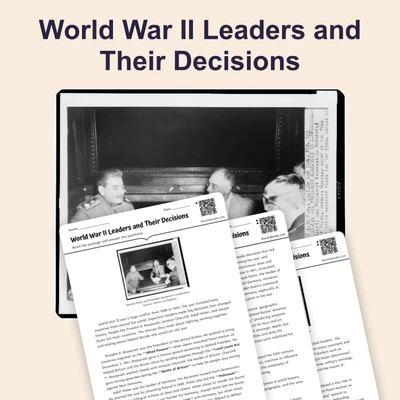
Leaders and Decisions in World War II
This passage explores the major leaders of World War II and the critical decisions they made that shaped the course of g...
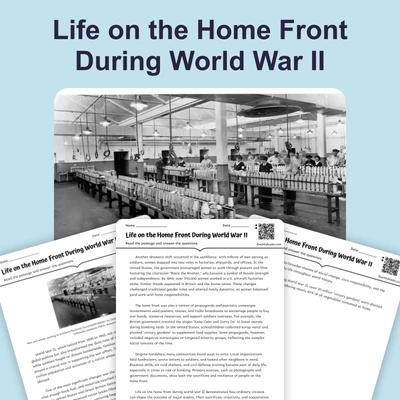
American Life During World War II
This history reading passage explores life on the home front during World War II, focusing on the experiences of ordinar...
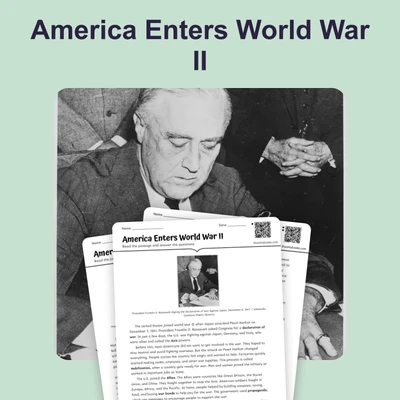
America Enters World War II
This history reading passage analyzes America’s entry into World War II, focusing on the causes, perspectives, and conse...
D2.HIS.2.3-5D2.HIS.3.3-5RI.4.3RI.4.4
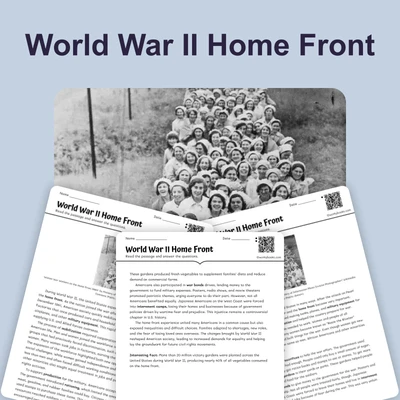
World War II Home Front
This rigorous U.S. history reading passage explores the complexities and challenges of the World War II Home Front, focu...
D2.HIS.2.3-5D2.HIS.3.3-5RI.6.3RI.6.4
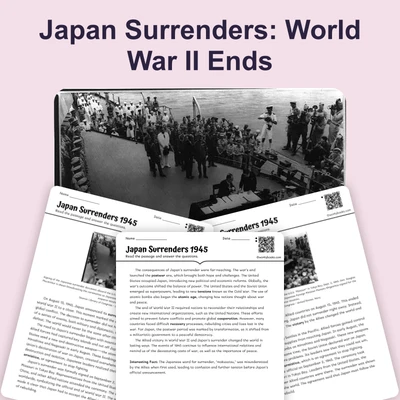
Japan Surrenders: World War II Ends
This comprehensive history reading passage examines the pivotal moment when Japan surrendered in August 1945, bringing W...
D2.HIS.2.3-5D2.HIS.3.3-5RI.4.3RI.4.4
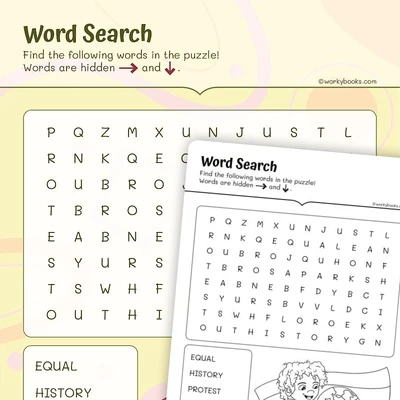
Black History Month Word Search
RF.4.3RF.5.3L.4.4L.5.4
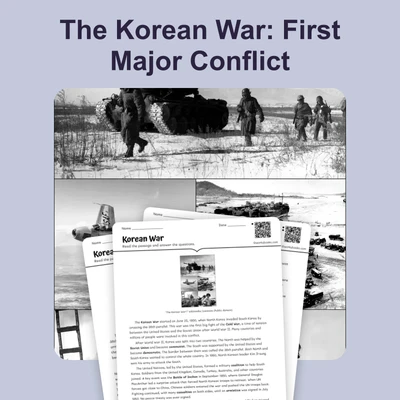
The Korean War
This comprehensive history reading passage explores the causes, events, and impact of the Korean War, the first major co...
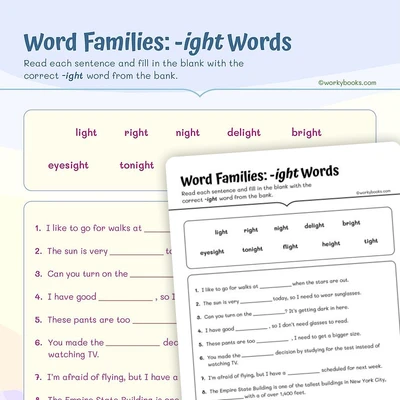
Word Families: —ight Words
This word families worksheet focuses on -ight words and is designed to help 4th-grade students practice their reading an...
RF.4.4
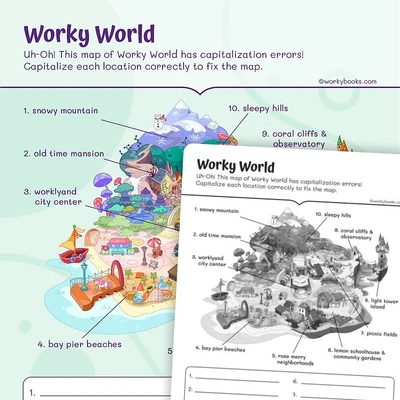
Worky World! Capitalize Locations
This capitalization sheet will help students to practice capitalizing geographic locations. Illustrated on the sheet is ...
L.2.2.AL.2.2
Easy Black History Month Word Search
RF.4.3RF.5.3L.4.4L.5.4
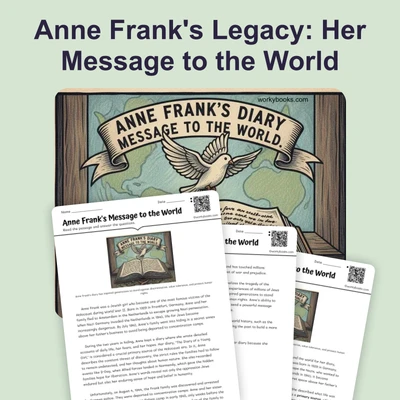
Anne Frank's Message to the World
This reading passage explores the life and legacy of Anne Frank, a Jewish teenager who documented her experiences during...
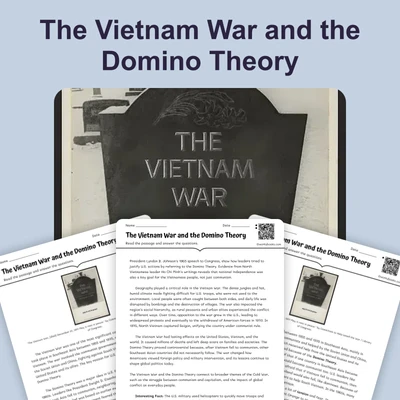
America Fights in the Vietnam War
This engaging world history reading passage explores the Vietnam War and the Domino Theory, a key idea that shaped U.S. ...