World War I Impact on America
Interactive passage with audio narration, comprehension questions, and printable PDF.
By completing this purchase you agree to our Terms of Use and Privacy Policy. Your subscription renews automatically until you cancel. You can cancel anytime from your account settings. All sales are final and non-refundable. Digital content is available for download in your account immediately upon purchase.
What's included
World War I Impact on America preview and details
About this printable World War I Impact on America reading passage (Grades 5-8)
Sample passage and quiz from World War I Impact on America
Reading passage and comprehension quiz preview
World War I Impact on America
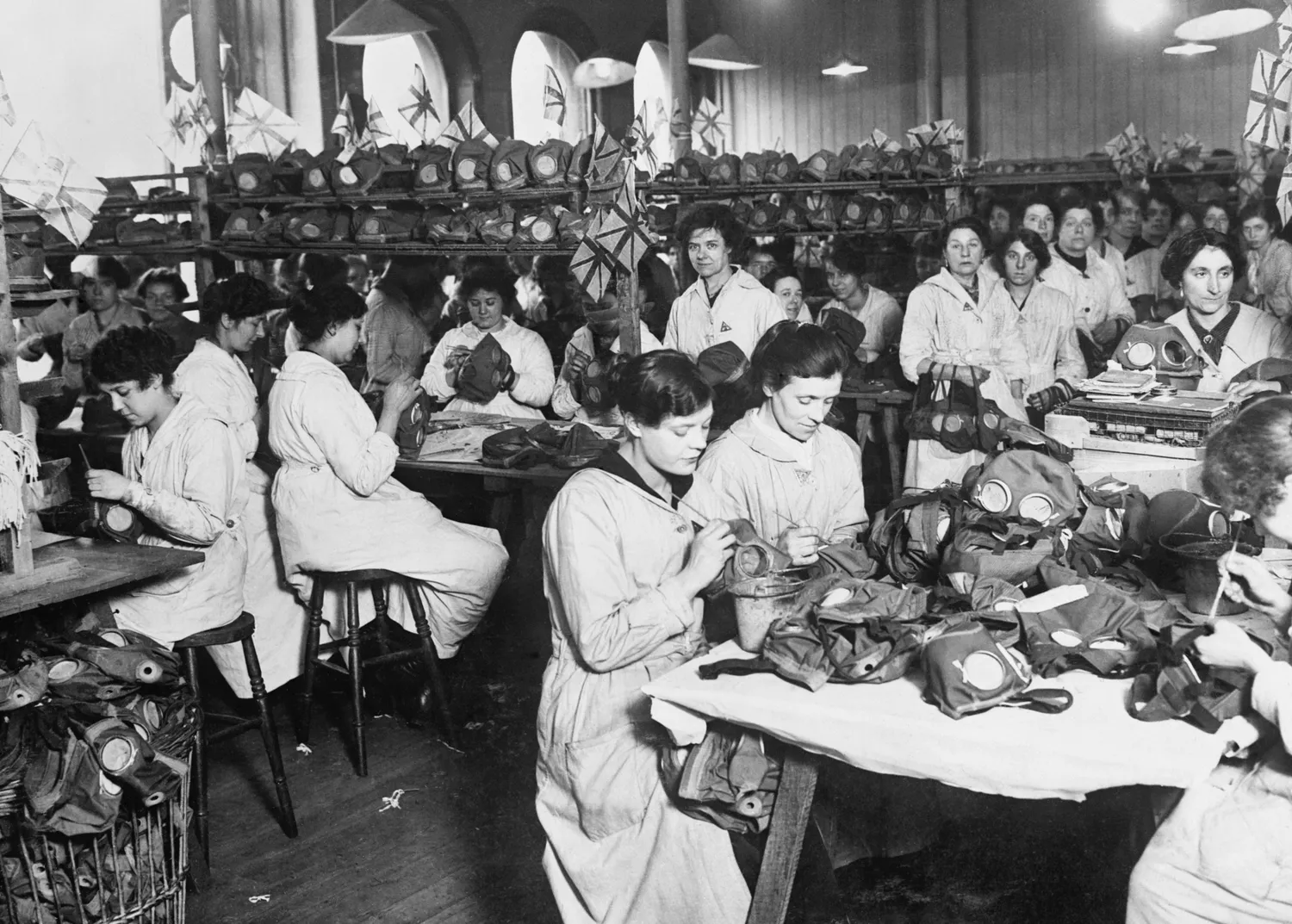
"Women war workers in the doping room of a gas-mask factory during the First World War. Q28587" by George P. Lewis / Wikimedia Commons (Public domain).
World War I, which lasted from 1914 to 1918, brought dramatic changes to societies and cultures across Europe, Asia, Africa, and beyond. The war not only altered the political map of the world, but also changed the daily lives, beliefs, and roles of millions of people. These transformations occurred both on the battlefront and the home front, affecting soldiers, workers, families, and communities.
One major impact of World War I was the shifting role of women in society. With millions of men fighting as soldiers, women entered the workforce in unprecedented numbers. They took on jobs in factories, offices, and transportation, such as working as munition workers or tram conductors. A British government poster from 1916 famously urged women to “do their bit” by joining war industries. This shift not only challenged traditional gender roles, but also contributed to women gaining the right to vote in several countries after the war, including Britain and Germany. While some women returned to earlier roles after the war, the idea of women as capable workers and citizens had taken root in many societies.
The war also deeply affected daily life through shortages and rationing. Civilians often faced limited access to food, fuel, and goods because resources were redirected to the military. Letters from French and German families describe the struggle to find enough bread or coal during harsh winters. In cities like Berlin and Paris, people stood in long lines for basic necessities. Governments used propaganda—information designed to influence people’s beliefs and actions—to encourage citizens to support the war effort and accept sacrifices. Posters, newspapers, and films portrayed the war as noble and necessary, shaping public opinion and morale.
World War I’s violence and scale led to a sense of disillusionment and changed attitudes towards authority and tradition. The horrors of trench warfare, described in diaries by soldiers such as Wilfred Owen, inspired new forms of art and literature. The Lost Generation of writers and artists expressed feelings of loss, confusion, and questioning of old values in their work. Modernist art movements, including Dada and Surrealism, rejected realistic depictions in favor of expressing emotional and psychological experiences. Meanwhile, returning soldiers and civilians demanded political and social reforms, leading to changes in government and society.
In conclusion, World War I transformed societies by reshaping gender roles, altering daily life, and inspiring new cultural movements. The war’s effects extended far beyond the battlefield, influencing how people worked, thought, and created for decades to come.
This topic connects to broader themes in world history, such as how major conflicts drive social change and cultural innovation.
Interesting Fact: During World War I, the first widespread use of plastic surgery was developed to treat facial injuries of wounded soldiers.
Comprehension quiz (8 questions)
1. When did World War I begin?
2. Which job did women take during WWI?
3. What did governments use to influence people?
4. How did shortages affect daily life?
5. Why did women gain voting rights after WWI?
6. What was a result of trench warfare?
7. World War I inspired new art styles.
8. What does 'rationing' mean?
Perfect for the way you teach
- Build comprehension skills
- Auto-graded quiz
- Differentiated reading
- Read together at home
- Improve fluency
- Quiet reading time
- Reading curriculum support
- Independent practice
- Track Lexile growth