Inuit Snow Goggles
Interactive passage with audio narration, comprehension questions, and printable PDF.
By completing this purchase you agree to our Terms of Use and Privacy Policy. Your subscription renews automatically until you cancel. You can cancel anytime from your account settings. All sales are final and non-refundable. Digital content is available for download in your account immediately upon purchase.
What's included
Inuit Snow Goggles preview and details
About this printable Inuit Snow Goggles reading passage (Grades 5-8)
Sample passage and quiz from Inuit Snow Goggles
Reading passage and comprehension quiz preview
Inuit Snow Goggles
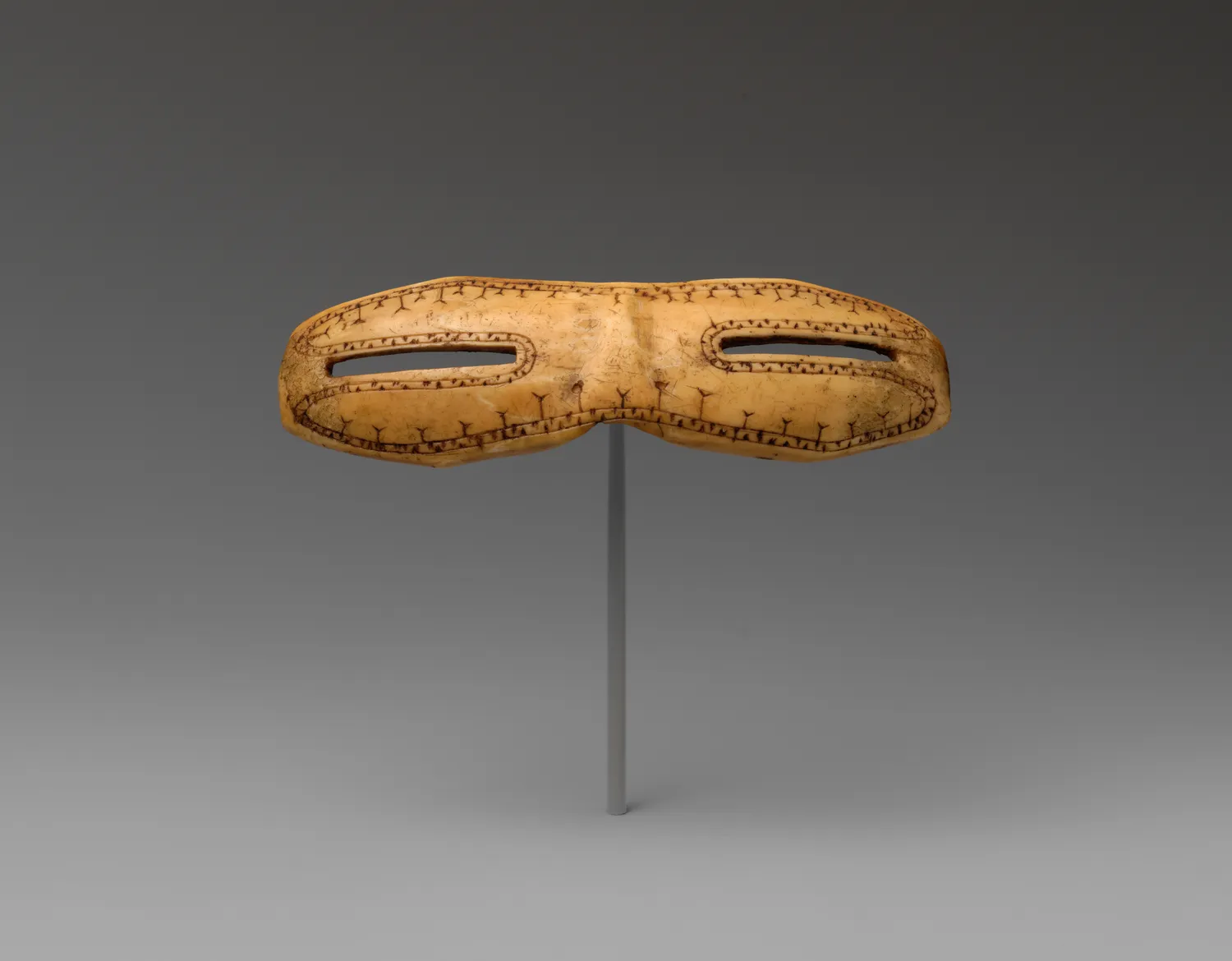
Inuit Snow goggles / Wikimedia Commons
The Inuit people of the Arctic developed snow goggles, a vital invention for survival in extreme environments. These goggles, carved from materials such as bone, wood, or caribou antler, protected their eyes from snow blindness caused by intense sunlight reflecting off snow and ice. Snow blindness, a painful condition, can temporarily rob people of their sight and make it dangerous to hunt or travel. Archaeological evidence shows that snow goggles have been used for hundreds, if not thousands, of years by Arctic cultures across Alaska, Canada, and Greenland.
The design of Inuit snow goggles demonstrates a sophisticated understanding of both the environment and the science of light, or optics. The goggles feature narrow horizontal slits that limit the amount of sunlight entering the eyes. This reduces glare and helps focus vision, much like modern sunglasses. Some goggles were even darkened with soot to further block harmful rays. Primary sources such as artifacts found at ancient Inuit sites, like those on Baffin Island dated to over 800 years ago, show variations in style based on local materials and needs. For example, snow goggles from western Alaska were often made from driftwood, while those from northern Canada used caribou antler.
The use of snow goggles was closely tied to daily life and social hierarchy within Inuit communities. Skilled carvers, often elders or respected hunters, crafted the goggles, passing down knowledge through generations. Wearing the goggles enabled hunters to travel long distances over bright snowfields in search of food, which was essential for survival. The goggles also reflected adaptation to the harsh geographic context of the Arctic, where the sun shines for long periods during certain seasons. This innovation shows continuity in technological skills, as similar designs have been found across different time periods and Arctic peoples.
The significance of Inuit snow goggles extends beyond their function. They represent human ingenuity and the ability to solve environmental health challenges. By studying archaeological finds and oral histories, historians see how the Inuit were not only skilled toolmakers but also scientists in their own right, understanding cause and effect in their environment. The technology of snow goggles influenced later designs of protective eyewear, and modern Arctic residents still use similar principles today.
Snow goggles connect to broader themes in world history: how people adapt to their surroundings, use local resources, and develop technologies to overcome challenges.
Interesting Fact: Some Inuit snow goggles were decorated with carvings or personal symbols, showing that even essential tools could be works of art.
Comprehension quiz (8 questions)
1. What material were Inuit snow goggles made from?
2. What did snow goggles protect against?
3. Where have ancient Inuit snow goggles been found?
4. How did narrow slits help?
5. Why were skilled carvers important?
6. What does the passage show about Inuit culture?
7. Snow goggles are still used today. True or false?
8. What does 'ingenuity' mean?
Perfect for the way you teach
- Build comprehension skills
- Auto-graded quiz
- Differentiated reading
- Read together at home
- Improve fluency
- Quiet reading time
- Reading curriculum support
- Independent practice
- Track Lexile growth