Neolithic Tools
Interactive passage with audio narration, comprehension questions, and printable PDF.
By completing this purchase you agree to our Terms of Use and Privacy Policy. Your subscription renews automatically until you cancel. You can cancel anytime from your account settings. All sales are final and non-refundable. Digital content is available for download in your account immediately upon purchase.
What's included
Part of this bundle

Neolithic Tools preview and details
About this printable Neolithic Tools reading passage (Grades 6-8)
Sample passage and quiz from Neolithic Tools
Reading passage and comprehension quiz preview
Neolithic Tools
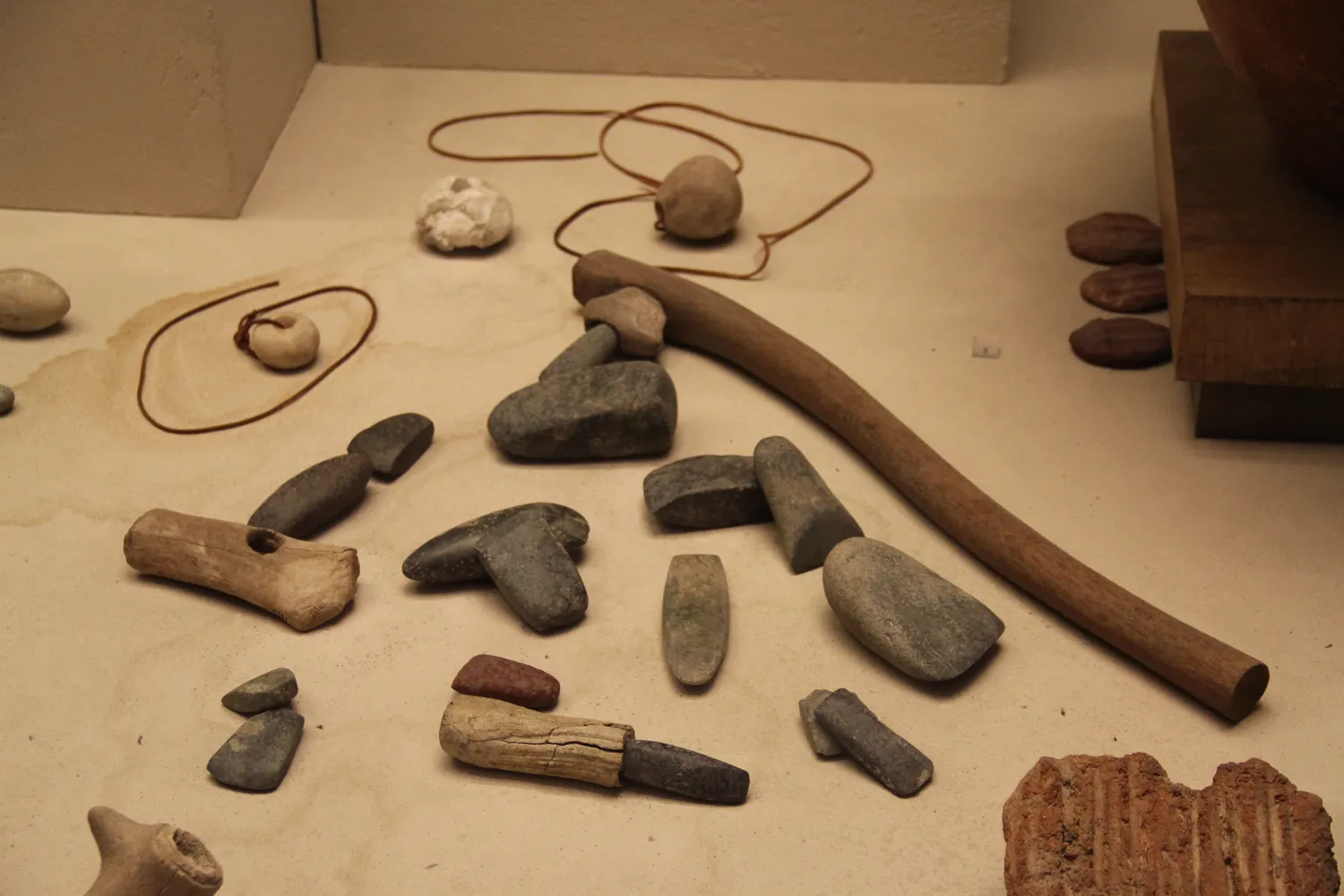
"Ancient Greece Neolithic Stone Tools & Weapons" by Gary Todd / Wikimedia Commons (CC0).
The Neolithic period, starting about 10,000 BCE, marked a turning point in human history. During this era, early humans developed agriculture and began settling in permanent villages. One of the most important innovations was the creation of new stone tools that helped people farm and prepare food more efficiently.
Before the Neolithic period, people relied on simple, chipped stone implements for hunting and gathering. However, as groups started to plant crops and domesticate animals, they needed better tools. Neolithic people invented smoother and more specialized tools, such as adzes for chopping wood and grinding stones for processing grain. Archaeologists have discovered stone grinders and mortars at sites like Çatalhöyük in modern-day Turkey, dating to around 7,500 BCE. These tools made it possible for families to grind wheat and barley into flour, which could then be used to bake bread. The use of polished stone blades also improved farming, as they could clear land and harvest crops more efficiently.
The adoption of these new tools led to major changes in daily life. With grinding stones, people could store and process large amounts of grain, which supported larger populations and permanent settlements. Tools like sickles and plows allowed farmers to cultivate bigger fields and increase food production. This agricultural surplus contributed to the rise of social hierarchies, as some individuals controlled more resources than others. Tools also became important for trade, with communities exchanging finely crafted axes and blades over long distances. Evidence from archaeological digs shows that some stone tools were made from materials brought from far away, indicating early trade networks.
Geography played a key role in these innovations. Societies living near fertile river valleys, like the Nile or Tigris-Euphrates, benefited from rich soils that made farming more productive. In these places, stone tools were essential for clearing land and building irrigation systems. The spread of new technologies across regions shows how human adaptation to different environments encouraged creativity and problem-solving. Over time, the skills needed to make and use these tools were passed down, shaping the development of early civilizations.
The creation of new stone tools during the Neolithic period represents a major step in human progress. These innovations allowed people to produce more food, build larger communities, and develop complex societies. As a result, Neolithic tools are considered a foundation of ancient history and a key factor in the story of human civilization.
Interesting Fact: Some Neolithic grinding stones still contain traces of ancient grains, helping archaeologists learn what people ate thousands of years ago. This study of Neolithic tools connects to broader themes of human innovation and adaptation in world history.
Comprehension quiz (8 questions)
1. When did the Neolithic period begin?
2. What was a grinding stone used for?
3. Where is Çatalhöyük located?
4. Why were new stone tools important?
5. What effect did surplus food have?
6. How did geography affect tool use?
7. Neolithic people used sickles to harvest crops. (true/false)
8. What does 'hierarchy' mean?
Perfect for the way you teach
- Build comprehension skills
- Auto-graded quiz
- Differentiated reading
- Read together at home
- Improve fluency
- Quiet reading time
- Reading curriculum support
- Independent practice
- Track Lexile growth