Paleolithic Cultures Around the World — Reading Comprehension
Rate this
Premium Resource
Present
Present in classroom. No work saved
Assign
Classroom with student accounts, Track progress
Quick Play
No student accounts, assign with a link
Grades
6
7
8
PRINT+DIGITAL RESOURCE
This learning resource is available in interactive and printable formats. The interactive worksheet can be played online and assigned to students. The Printable PDF version can be downloaded and printed for completion by hand.
This passage explores Paleolithic cultures around the world, focusing on the regional differences in tools, food, clothing, shelter, and social organization among early humans. Students will learn how geographic environments shaped daily life, technological advances, and social structures from Africa to Europe, Asia, and the Americas. Using archaeological evidence like cave paintings and stone tools, the passage compares how adaptations enabled survival in diverse climates. The text aligns with CA HSS 6.1 and CCSS RH.6-8.1, and includes a glossary, timeline, comprehension quiz, writing activity, and graphic organizers. A full Spanish translation and read aloud audio enhance accessibility. This resource supports critical thinking about cause and effect, change over time, and the significance of human innovation in world history.
CONTENT PREVIEW
Expand content preview
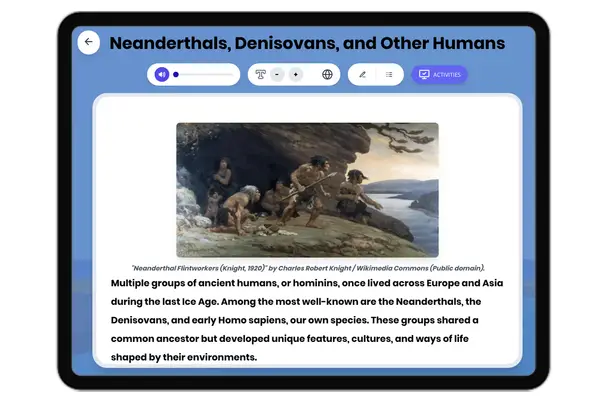
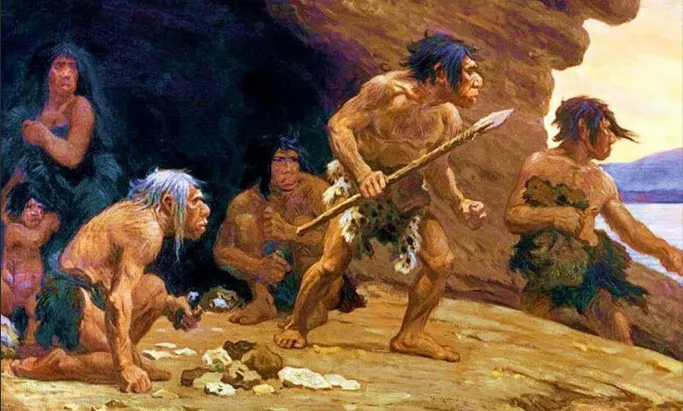
"Paleolithic period" by Charles Robert Knight / Source: Wikimedia Commons (Public domain).
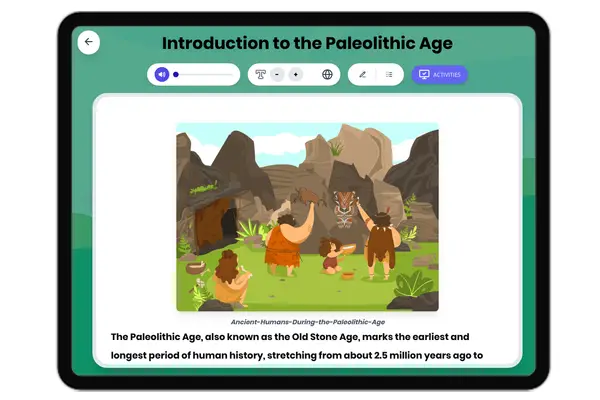
The Paleolithic period, also called the Old Stone Age, began about 2.6 million years ago and ended around 10,000 BCE. During this era, humans lived as hunter-gatherers, moving from place to place in search of food. The Paleolithic period is marked by the development of the first stone tools, which allowed early humans to adapt to many environments across the globe.
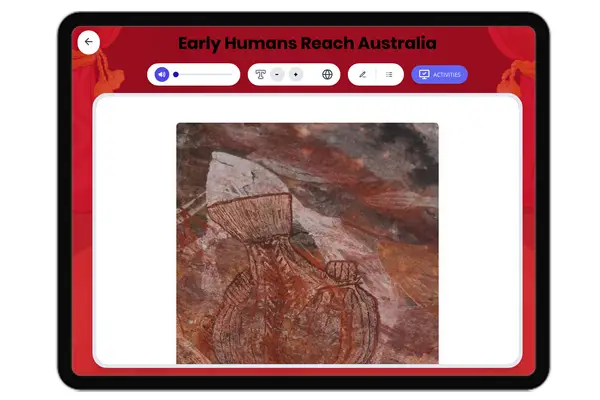
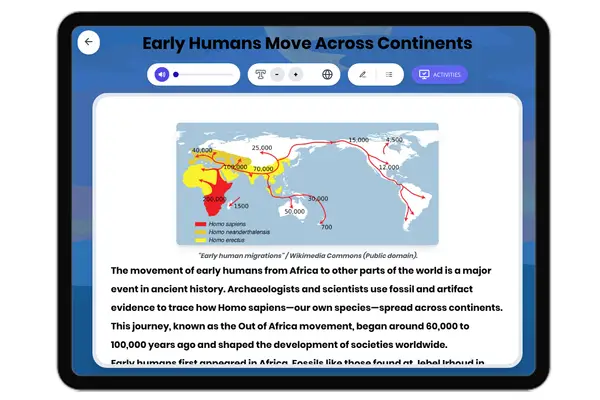
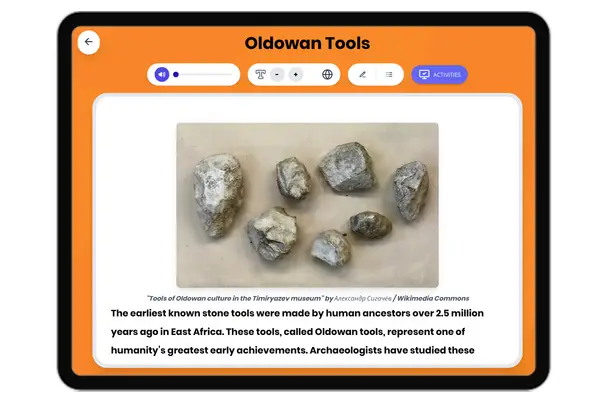
Paleolithic cultures varied greatly depending on their region. In Africa, where humans first appeared, archaeologists have found some of the oldest stone tools at Olduvai Gorge in Tanzania, dating back nearly 2 million years. These simple tools, such as sharp flakes and hand axes, helped people cut meat and process plants. In Europe, evidence from the Lascaux Caves in France, created around 17,000 years ago, shows not only advanced hunting tools but also complex cave art that reveals the importance of animals like bison and horses to daily life. In Asia, at sites like Zhoukoudian in China, early humans used fire for warmth and cooking as early as 700,000 years ago, showing adaptation to colder climates.
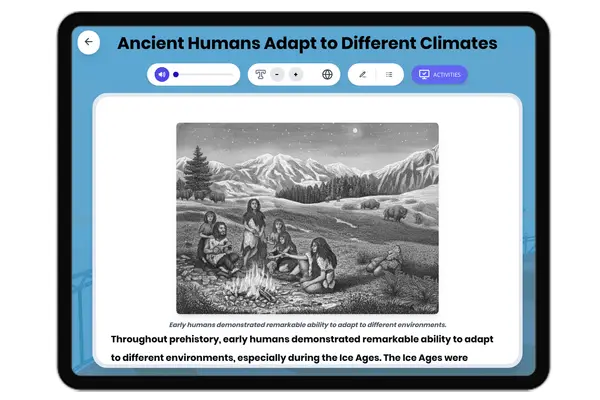
The environment strongly influenced Paleolithic life. People living in colder areas, such as Ice Age Europe, wore clothing made from animal skins, built shelters from bones and hide, and relied heavily on hunting large game. In warmer regions, gathering wild plants and fishing were more common. Archaeological discoveries, like the remains of mammoth bone huts in Ukraine, provide evidence of how shelter designs responded to environmental challenges. The types of artifacts found in different regions, such as spear points in North America or shell ornaments in coastal Africa, demonstrate how geography shaped technology and culture.
Social organization during the Paleolithic era was typically based on small bands or groups. These groups shared resources and made decisions together, with some evidence of division of labor by age and gender. Although social hierarchies were less pronounced than in later societies, cooperation was essential for survival. Over time, humans developed more sophisticated tools and symbolic expressions, as seen in art and burial practices. These changes reflect both continuity and innovation in response to new challenges and environments.
The study of Paleolithic cultures teaches us how early humans used creativity and cooperation to survive and thrive in diverse environments. By analyzing archaeological evidence, historians can better understand the roots of human society and the enduring impact of early human adaptation on world history.
This exploration of Paleolithic cultures connects to broader themes of human migration, technological change, and the ways people shape—and are shaped by—their environment.
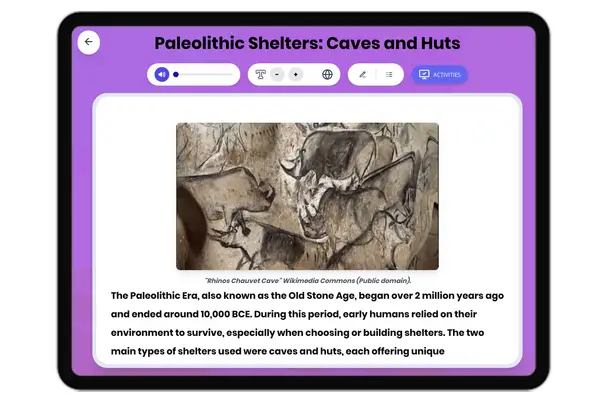
Interesting Fact: Some Paleolithic cave paintings, like those in Chauvet Cave, France, are over 30,000 years old and show animals that are now extinct, such as woolly rhinoceroses.
When did the Paleolithic period begin?
About 2.6 million years ago10,000 years agoOne thousand years ago500 years ago