Primary and Secondary Sources
Interactive passage with audio narration, comprehension questions, and printable PDF.
By completing this purchase you agree to our Terms of Use and Privacy Policy. Your subscription renews automatically until you cancel. You can cancel anytime from your account settings. All sales are final and non-refundable. Digital content is available for download in your account immediately upon purchase.
What's included
Part of this bundle

Primary and Secondary Sources preview and details
About this printable Primary and Secondary Sources reading passage (Grades 6-8)
Sample passage and quiz from Primary and Secondary Sources
Reading passage and comprehension quiz preview
Artifacts and Primary Sources
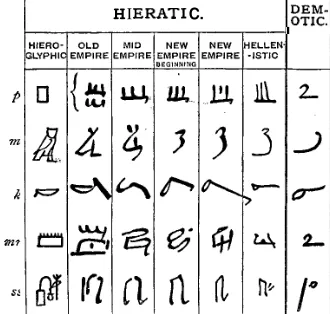
"Ancient hieroglyphic symbols" / Wikimedia Commons.
Archaeologists and historians study ancient inscriptions and manuscripts to learn about early civilizations. These sources are found on stone monuments, clay tablets, temple walls, and scraps of papyrus. They provide important evidence about how people lived, what they believed, and how they organized their societies.
One significant example is the Rosetta Stone, discovered in Egypt in 1799. The Rosetta Stone contains the same text written in three scripts: Greek, Demotic, and Egyptian hieroglyphics. By comparing the Greek, which scholars could read, with the hieroglyphs, experts finally unlocked the meaning of ancient Egyptian writing. This breakthrough allowed historians to translate thousands of records left by the Egyptians, revealing details about their rulers, religious beliefs, and daily life. The discovery connected the ancient world to modern understanding and changed the study of history.
In Mesopotamia, archaeologists have uncovered clay tablets covered in cuneiform script, some dating back over 4,000 years. These tablets recorded laws, business transactions, myths, and even school exercises. For example, the Code of Hammurabi, created around 1754 BCE in Babylon, lists laws and punishments, showing how laws shaped social order and justice. The tablets also describe how rivers and geography affected farming and trade in the region.
Different civilizations used their own writing systems to record information. The ancient Maya of Central America used glyphs carved into stone monuments to record royal events, battles, and religious ceremonies. These inscriptions are valuable primary sources, providing direct evidence from the time. However, not all ancient writings have survived. Many manuscripts decayed or were destroyed by war, conquest, or weather. This means that historians must piece together evidence from what remains.
Reading ancient stones and writings helps us understand how societies changed and developed over time. By studying these sources, historians can trace how writing systems spread, how laws and beliefs evolved, and how geography influenced cultures. The work of archaeologists and historians connects us to people of the past and helps explain the roots of modern civilization.
These discoveries remind us that physical evidence and written records are both crucial to studying ancient history, and that our understanding can grow as new evidence is found.
Interesting Fact: Did you know? The word "hieroglyph" comes from the Greek for "sacred carving," and only a small group of ancient Egyptians could read and write these symbols.
Comprehension quiz (8 questions)
1. When was the Rosetta Stone found?
2. What script is NOT on the Rosetta Stone?
3. Who created the Code of Hammurabi?
4. Why was the Rosetta Stone important?
5. What do primary sources provide?
6. What do cuneiform tablets record?
7. Only a few Egyptians could write hieroglyphs.
8. What is a glyph?
Perfect for the way you teach
- Build comprehension skills
- Auto-graded quiz
- Differentiated reading
- Read together at home
- Improve fluency
- Quiet reading time
- Reading curriculum support
- Independent practice
- Track Lexile growth