Stone Age Settlements
Interactive passage with audio narration, comprehension questions, and printable PDF.
By completing this purchase you agree to our Terms of Use and Privacy Policy. Your subscription renews automatically until you cancel. You can cancel anytime from your account settings. All sales are final and non-refundable. Digital content is available for download in your account immediately upon purchase.
What's included
Part of this bundle

Stone Age Settlements preview and details
About this printable Stone Age Settlements reading passage (Grades 6-8)
Sample passage and quiz from Stone Age Settlements
Reading passage and comprehension quiz preview
Stone Age Settlements
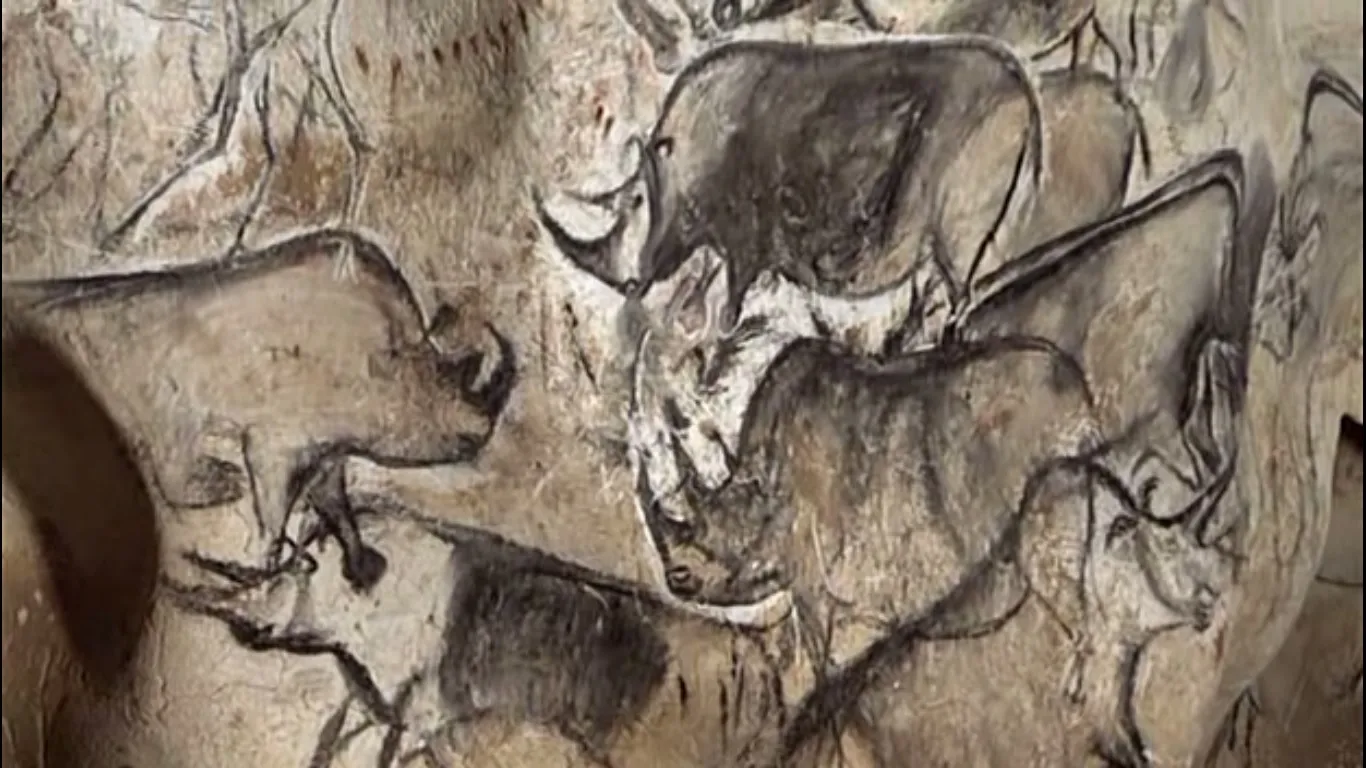
"Rhinos Chauvet Cave" Wikimedia Commons (Public domain).
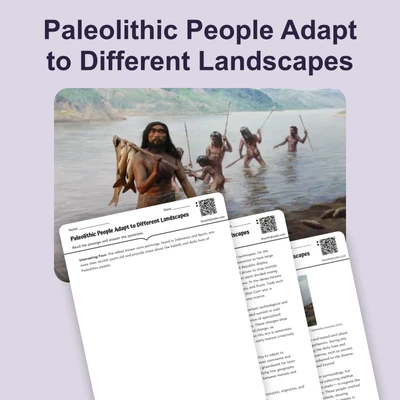
The Paleolithic Era, also known as the Old Stone Age, began over 2 million years ago and ended around 10,000 BCE. During this period, early humans relied on their environment to survive, especially when choosing or building shelters. The two main types of shelters used were caves and huts, each offering unique advantages for protection, climate adaptation, and daily life.
Caves served as some of the earliest natural shelters for humans. Archaeological evidence from sites like Lascaux in France and Altamira in Spain shows that people lived in caves as early as 17,000 BCE. These shelters provided safety from predators and harsh weather. In addition to protection, caves often became social centers, as shown by the famous cave paintings, which may have had spiritual or communal purposes. However, caves were not always available in every region, especially in open grasslands or deserts.
In areas without caves, early humans constructed huts using materials found in their surroundings. Archaeologists have discovered remains of Paleolithic huts at sites such as Mezhirich in Ukraine, dating back about 15,000 years. These huts were built from mammoth bones, wood, animal hides, and grass. The construction of huts required innovation and teamwork. Huts could be moved or rebuilt, allowing people to follow animal herds and adapt to changing environments. The choice of shelter depended greatly on geography and local resources, showing the close relationship between humans and their environment.
Both caves and huts also influenced clothing and technology. People living in cold regions developed warm clothing from animal skins, while those in milder climates used lighter materials. The need to survive in different environments led to the creation of tools for building, hunting, and preparing food. Archaeological artifacts such as needles, scrapers, and fire pits reveal how daily life was organized around shelter. Shelters also created spaces for families and social groups, supporting the development of early human communities and a simple form of social hierarchy.
The study of Paleolithic shelters helps historians understand how humans adapted to their world and developed new ways to survive. While much has been learned from archaeological discoveries, some evidence remains limited or open to interpretation. The design and use of shelters during the Paleolithic Era highlight human adaptation and lay the foundation for later advances in architecture and society.
Shelters are a key example of how humans used their environment to solve problems, which is a theme seen throughout ancient history.
Interesting Fact: Some Paleolithic huts at Mezhirich were made entirely from mammoth bones and could be as large as a small modern room!
Comprehension quiz (8 questions)
1. What was the Paleolithic Era?
2. Where are famous cave shelters found?
3. What materials were used for huts in Mezhirich?
4. Why did humans build huts?
5. How did shelters affect clothing?
6. What do artifacts like needles show?
7. Paleolithic huts were always permanent. True or false?
8. What is 'adaptation'?
Perfect for the way you teach
- Build comprehension skills
- Auto-graded quiz
- Differentiated reading
- Read together at home
- Improve fluency
- Quiet reading time
- Reading curriculum support
- Independent practice
- Track Lexile growth