René Descartes
Interactive passage with audio narration, comprehension questions, and printable PDF.
By completing this purchase you agree to our Terms of Use and Privacy Policy. Your subscription renews automatically until you cancel. You can cancel anytime from your account settings. All sales are final and non-refundable. Digital content is available for download in your account immediately upon purchase.
What's included
René Descartes preview and details
About this printable René Descartes reading passage (Grades 5-8)
Sample passage and quiz from René Descartes
Reading passage and comprehension quiz preview
René Descartes: Father of Modern Philosophy
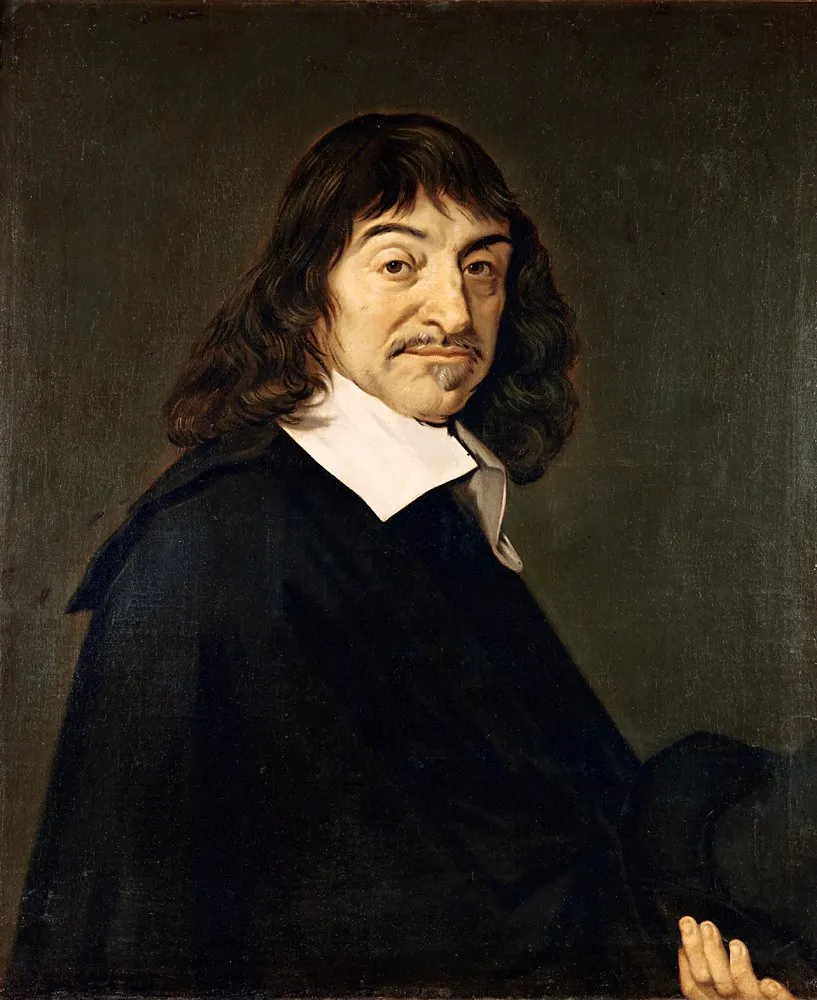
"Frans Hals - Portrait of René Descartes" by After Frans Hals / Wikimedia Commons.
René Descartes was a French philosopher and mathematician who lived during the Renaissance period in Europe. Born in 1596 in La Haye en Touraine, France, Descartes is often called the 'father of modern philosophy' because of his revolutionary ideas about knowledge and reason. During the Renaissance, many thinkers began to question old beliefs and rely more on logical thinking, and Descartes became a leader in this movement.
One of Descartes' most famous contributions was his method of doubt. In his book "Meditations on First Philosophy" (1641), Descartes argued that people should doubt everything that can be questioned, including their own senses, until they find something absolutely certain. He wrote, "I think, therefore I am" (in Latin: "Cogito, ergo sum"). This statement means that the very act of thinking proves one's existence. Descartes used this idea as a foundation to build all other knowledge. His rationalism—the belief that reason is the best way to gain knowledge—challenged older traditions that relied more on authority or religious teachings.
Descartes’ ideas greatly influenced science and mathematics. He developed analytical geometry, which linked algebra and geometry, changing how people studied math. He also believed that the natural world could be understood through observation and logical reasoning. This was a major shift from the medieval period, when scholars mostly accepted what ancient authorities said. Descartes worked in places like the University of Leiden in the Netherlands, where he was part of a lively community of scientists and thinkers. Letters he wrote to Princess Elisabeth of Bohemia show how he explained difficult ideas to others and debated about the mind and body.
The impact of Descartes’ philosophy was significant. His approach encouraged people to think for themselves and to question traditional beliefs. This new attitude supported the rise of the scientific method, which uses careful observation and experiments to study the world. Descartes’ ideas spread across Europe and influenced other philosophers, such as John Locke and Baruch Spinoza. Over time, his method of doubt became a model for critical thinking in many fields.
Today, Descartes is remembered not only for his famous phrase but also for changing how people understand knowledge and truth. His insistence on reason and evidence helped shape modern science, philosophy, and education. Descartes’ work shows the power of questioning and rational analysis in the search for truth.
Interesting Fact: Descartes’ writings were once placed on the Catholic Church’s list of banned books because his ideas challenged traditional beliefs.
This study of Descartes connects to broader themes in history, such as how new ideas can transform societies and influence the development of science and culture.
Comprehension quiz (8 questions)
1. When was René Descartes born?
2. What is Descartes’ famous statement?
3. Where did Descartes work with scientists?
4. What did Descartes’ method encourage?
5. Which subject did Descartes change with new ideas?
6. What was the effect of Descartes’ philosophy?
7. The Catholic Church accepted all Descartes' ideas. True or false?
8. What does 'rationalism' mean?
Perfect for the way you teach
- Build comprehension skills
- Auto-graded quiz
- Differentiated reading
- Read together at home
- Improve fluency
- Quiet reading time
- Reading curriculum support
- Independent practice
- Track Lexile growth