How Computer Models Help Scientists Predict Earth Events
Interactive passage with audio narration, comprehension questions, and printable PDF.
By completing this purchase you agree to our Terms of Use and Privacy Policy. Your subscription renews automatically until you cancel. You can cancel anytime from your account settings. All sales are final and non-refundable. Digital content is available for download in your account immediately upon purchase.
What's included
How Computer Models Help Scientists Predict Earth Events preview and details
About this printable How Computer Models Help Scientists Predict Earth Events science reading passage, NGSS-aligned (Grades 6-8)
Sample passage and quiz from How Computer Models Help Scientists Predict Earth Events
Reading passage and comprehension quiz preview
How Computer Models Help Scientists Predict Earth Events
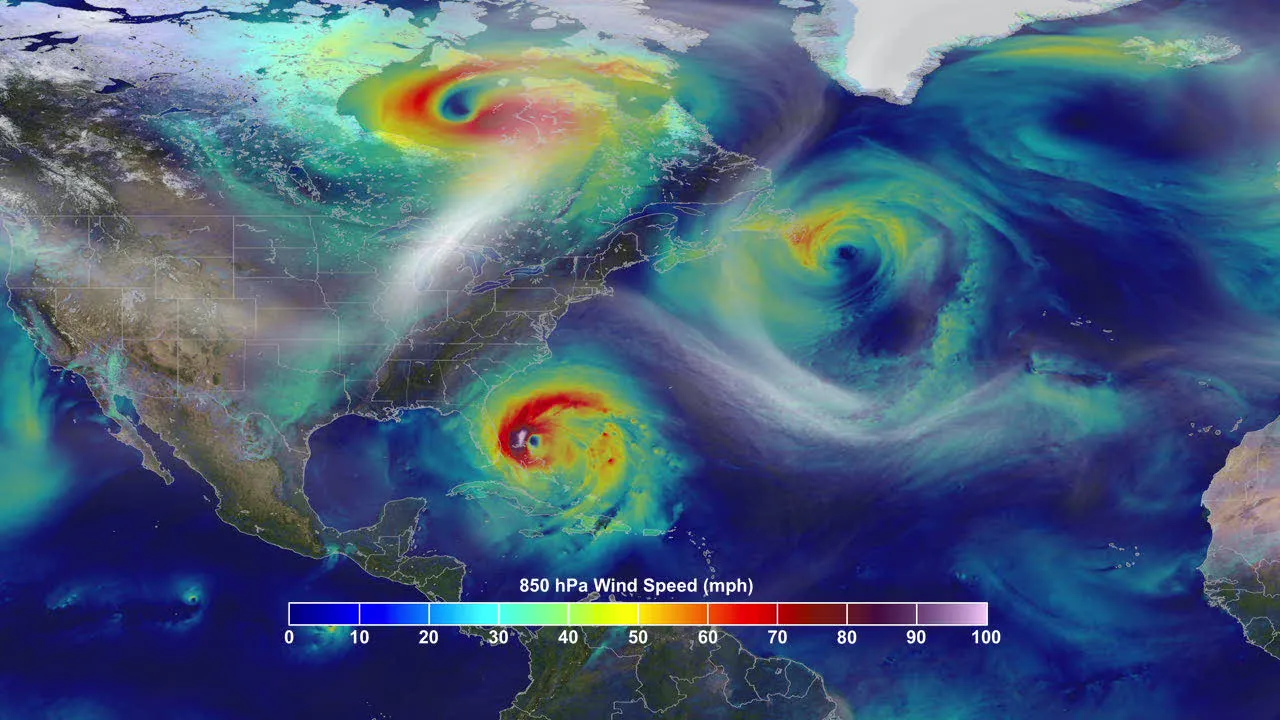
A NASA computer model simulates the astonishing track and forceful winds of Hurricane Sandy."Tracking a Superstorm (hd video) (8970128995)" by NASA Goddard Space Flight Center from Greenbelt, MD, USA / Wikimedia Commons
Scientists use computer models to understand and predict Earth events. A computer model is a program that uses mathematical equations to simulate how natural systems work. These models help scientists study weather patterns, volcanic eruptions, earthquakes, and sea level changes. By entering real data into these models, scientists can test ideas and make predictions about future events.
Building a computer model starts with collecting data from the real world. For weather prediction, scientists gather information about temperature, air pressure, humidity, and wind speed from thousands of locations. Weather satellites, ocean buoys, and ground stations send this data to computers every few minutes. Scientists use this information to create a digital version of Earth's atmosphere. The computer model then calculates how air masses will move and interact based on the laws of physics. This process is called simulation, which means creating a copy of a real system to study how it behaves.
Computer models work by dividing Earth into a grid of small boxes. Each box contains data about conditions in that location. The model calculates what happens in each box over time, then combines all the boxes to show the big picture. For example, a hurricane model tracks ocean temperatures, wind patterns, and air pressure to predict where a storm will move. Scientists run the model many times with slightly different starting conditions to see a range of possible outcomes. This helps them understand the uncertainty in their predictions.
Scientists also use computer models to study volcanic eruptions and earthquakes. Seismic data from instruments that detect ground movement helps scientists identify patterns in earthquake activity. By analyzing where earthquakes have occurred in the past, models can estimate the probability of future earthquakes in certain regions. Volcano models use data about gas emissions, ground swelling, and past eruption patterns to forecast when a volcano might erupt. While these models cannot predict the exact time of an earthquake or eruption, they help scientists identify areas at higher risk.
One important use of computer models is predicting sea level rise. Scientists enter data about ocean temperatures, ice sheet melting, and thermal expansion into models. Thermal expansion occurs when water warms and takes up more space. The models calculate how much oceans will rise over decades or centuries under different conditions. Scientists test different scenarios, such as various amounts of greenhouse gas emissions, to see how human activities might affect future sea levels. These predictions help coastal communities plan for changes.
Computer models are valuable tools, but they have limitations. Models are only as good as the data scientists put into them. If data is incomplete or measurements contain errors, predictions will be less accurate. Models also simplify complex Earth systems because computers cannot calculate every tiny detail. Scientists constantly improve models by adding more data, using faster computers, and refining mathematical equations. They compare model predictions with actual events to identify where models need improvement.
Despite their limitations, computer models have greatly improved our ability to predict Earth events. Weather forecasts are now accurate several days in advance, giving people time to prepare for storms. Tsunami warning systems use models to predict wave arrival times after underwater earthquakes. Climate models help scientists understand how Earth's temperature and precipitation patterns are changing. By testing hypotheses and analyzing trends in data, computer models help scientists protect communities and understand our dynamic planet.
Interesting Fact: The world's most powerful weather forecasting computers can perform over 20 quadrillion calculations per second, processing data from more than 100 million observations each day to predict weather patterns around the globe.
Comprehension quiz (10 questions)
1. What is a computer model?
2. Which of the following data sources do scientists use to build weather prediction models?
3. What does the term 'simulation' mean in the context of computer models?
4. Why do scientists run computer models many times with slightly different starting conditions?
5. What is thermal expansion?
6. According to the passage, computer models can predict the exact time and location of every earthquake.
7. What is one major limitation of computer models mentioned in the passage?
8.
9. Scientists use computer models to test different scenarios of greenhouse gas emissions to predict sea level rise.
10. What do scientists do to improve computer models over time?
Perfect for the way you teach
- Build comprehension skills
- Auto-graded quiz
- Differentiated reading
- Read together at home
- Improve fluency
- Quiet reading time
- Reading curriculum support
- Independent practice
- Track Lexile growth