Thomas Hobbes
Interactive passage with audio narration, comprehension questions, and printable PDF.
By completing this purchase you agree to our Terms of Use and Privacy Policy. Your subscription renews automatically until you cancel. You can cancel anytime from your account settings. All sales are final and non-refundable. Digital content is available for download in your account immediately upon purchase.
What's included
Thomas Hobbes preview and details
About this printable Thomas Hobbes reading passage (Grades 5-8)
Sample passage and quiz from Thomas Hobbes
Reading passage and comprehension quiz preview
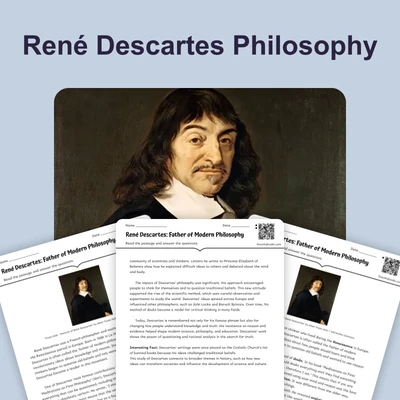
Thomas Hobbes
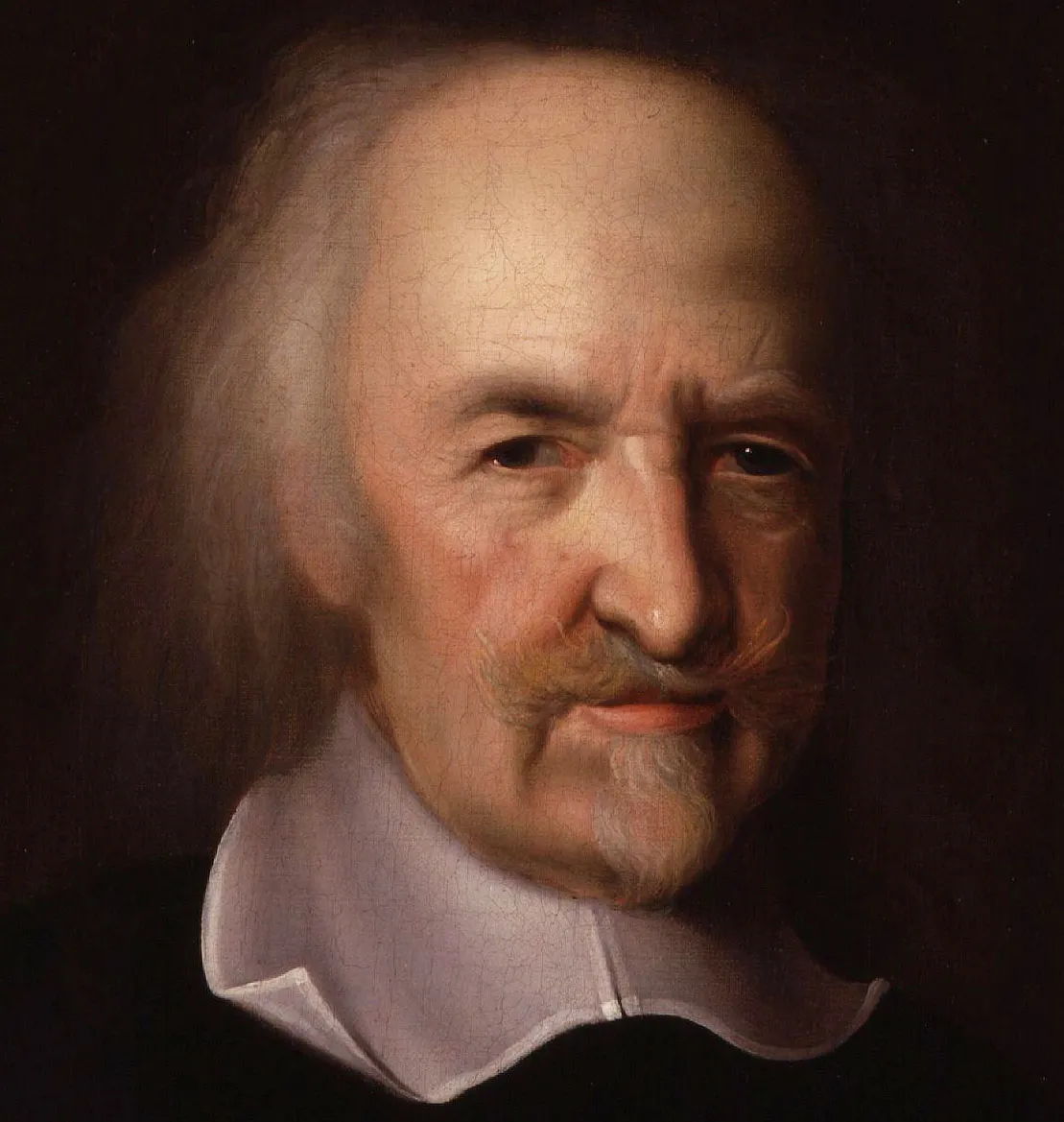
"Thomas Hobbes" by John Michael Wright / Wikimedia Commons.
Thomas Hobbes was an English philosopher born in 1588, a time of great change during the Renaissance. He is famous for his ideas about government, power, and the nature of human beings. Hobbes wrote his most important book, Leviathan, in 1651, during a period of civil war in England. His work marked a turning point in the way people thought about political authority and the social contract.
Hobbes believed that humans are naturally self-interested and, without a strong government, life would be "solitary, poor, nasty, brutish, and short." He argued that people are motivated by a desire for self-preservation and personal gain. In his view, humans left alone would compete for resources, leading to conflict and chaos. To avoid this, Hobbes proposed the idea of the social contract: people agree to give up some freedoms and obey a ruler in exchange for security and order. This ruler, or sovereign, holds absolute power to make laws and keep peace.
In Leviathan, Hobbes used the image of a giant made up of many people to represent the state. This symbolized how individuals come together to create a powerful government. He based his ideas on observations of the English Civil War (1642-1651), where the lack of a strong central authority led to violence and instability. Hobbes wrote, "during the time men live without a common power to keep them all in awe, they are in that condition which is called war." This primary source shows how his personal experience of war shaped his beliefs.
Hobbes' ideas about absolute power were controversial. Some agreed that a strong ruler could prevent disorder, while others feared tyranny. His theory influenced later philosophers such as John Locke, who believed in more limited government. Hobbes also inspired debates about rights, law, and the role of citizens. Despite criticism, his arguments laid the groundwork for modern political science and the study of government systems.
Thomas Hobbes’ work remains significant because it changed the way people think about authority, society, and human nature. By connecting political ideas to real-world events and human behavior, Hobbes helped create a new field of study that still affects us today.
Today, Hobbes' social contract theory is central to debates about democracy, freedom, and the power of the state. His work connects to the broader history of the Renaissance, when thinkers across Europe began to question tradition and seek rational explanations for society and government.
Interesting Fact: Hobbes’ Leviathan was one of the first books to argue that rulers got their power from the people, not from God or birthright.
Comprehension quiz (8 questions)
1. When was Leviathan published?
2. What event influenced Hobbes' ideas?
3. What is a social contract?
4. What did Hobbes believe about people?
5. Why did Hobbes think government was needed?
6. Who was influenced by Hobbes' ideas?
7. Hobbes' Leviathan said rulers get power from people.
8. What does 'sovereign' mean in the passage?
Perfect for the way you teach
- Build comprehension skills
- Auto-graded quiz
- Differentiated reading
- Read together at home
- Improve fluency
- Quiet reading time
- Reading curriculum support
- Independent practice
- Track Lexile growth