Medieval to Modern Transition
Interactive passage with audio narration, comprehension questions, and printable PDF.
By completing this purchase you agree to our Terms of Use and Privacy Policy. Your subscription renews automatically until you cancel. You can cancel anytime from your account settings. All sales are final and non-refundable. Digital content is available for download in your account immediately upon purchase.
What's included
Medieval to Modern Transition preview and details
About this printable Medieval to Modern Transition reading passage (Grades 5-8)
Sample passage and quiz from Medieval to Modern Transition
Reading passage and comprehension quiz preview
Medieval to Modern: The Changing World of the Middle Ages
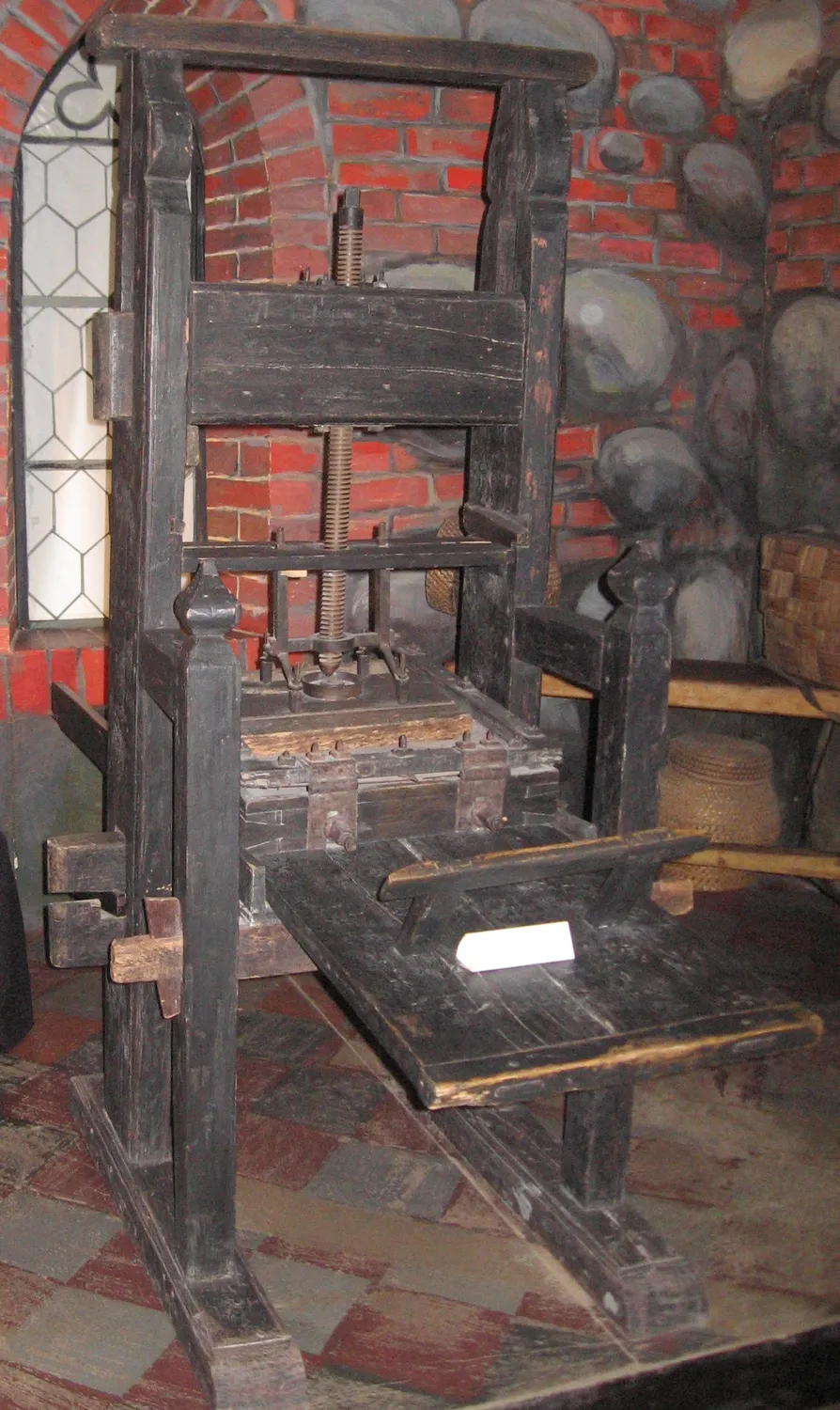
"Printing machine of Johanes Gutenbrg" by Gruszecki / Wikimedia Commons.
The Middle Ages in Europe lasted from about 500 to 1500 CE, but the world began to change rapidly in the final centuries of this period. Important inventions, fresh ideas, and new ways of organizing society helped Europe move from "medieval" times into the early modern era. This transition was marked by the invention of the printing press, the spread of Renaissance thinking, increased exploration, and the rise of powerful nation-states.
One of the most important inventions was Johannes Gutenberg’s printing press, created around 1440 in Mainz, Germany. Before this, books were copied by hand, making them rare and expensive. Gutenberg’s press used movable metal type, allowing books to be produced quickly and cheaply. A primary source from 1455, a page of the "Gutenberg Bible," shows how detailed and uniform printed books became. The printing press allowed ideas to travel across Europe faster than ever before. It helped scholars, like Erasmus, share their writings with many people, making education and knowledge more accessible to different social classes.
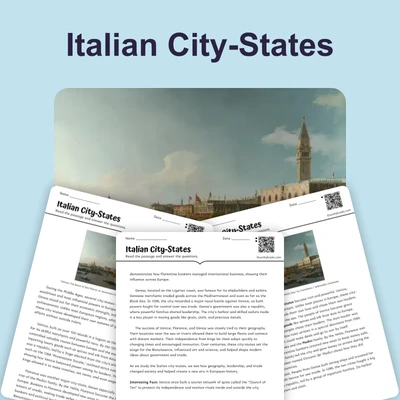
At the same time, the Renaissance began in Italian city-states such as Florence and Venice. This movement focused on the study of classical ideas from ancient Greece and Rome. Artists like Leonardo da Vinci and scientists like Galileo explored new ways of thinking about art, science, and humanity. For example, da Vinci’s notebooks show detailed sketches of the human body and machines. The Renaissance encouraged people to question old traditions and seek new knowledge, leading to more individual freedom and creativity. The geographic location of Italian city-states, with access to trade routes, made them centers of wealth and cultural exchange.
The Age of exploration soon followed. In the late 1400s and early 1500s, explorers such as Christopher Columbus and Vasco da Gama sailed beyond Europe’s borders. They searched for new trade routes to Asia and discovered new continents. Columbus’s 1492 voyage to the Americas, described in his own journal, had a huge impact on world history. Exploration led to the exchange of goods, plants, animals, and ideas across continents, but also brought challenges, including conflicts and changes for indigenous peoples.
During this time, nation-states began to replace medieval kingdoms and city-states. Powerful rulers like Ferdinand and Isabella of Spain unified their lands and established strong governments. This centralization of power allowed rulers to collect taxes, maintain armies, and support exploration and the arts. Daily life for ordinary people also began to change, as trade increased and cities grew larger.
The transition from the Middle Ages to the modern era was shaped by inventions, ideas, exploration, and new forms of government. These changes influenced not just Europe, but the entire world, setting the stage for future revolutions in science, politics, and culture.
Interesting Fact: In the first fifty years after Gutenberg’s invention, more than 20 million books were printed in Europe, making information available to more people than ever before.
This transition connects to larger themes in world history, such as how new technology and ideas can transform societies and create lasting global change.
Comprehension quiz (8 questions)
1. Who invented the printing press?
2. What year was the Gutenberg Bible printed?
3. Which city-states led the Renaissance?
4. What effect did the printing press have?
5. How did the Renaissance change thinking?
6. Why did nation-states become important?
7. Columbus sailed to the Americas in 1492. True or false?
8. What is a nation-state?
Perfect for the way you teach
- Build comprehension skills
- Auto-graded quiz
- Differentiated reading
- Read together at home
- Improve fluency
- Quiet reading time
- Reading curriculum support
- Independent practice
- Track Lexile growth