Robert Hooke and the Naming of 'Cells' — Reading Comprehension
Rate this
Present
Present in classroom. No work saved
Assign
Classroom with student accounts, Track progress
Quick Play
No student accounts, assign with a link
Grades
5
6
7
8
Standards
MS-LS1-1
MS-LS1-2
PRINT+DIGITAL RESOURCE
This learning resource is available in interactive and printable formats. The interactive worksheet can be played online and assigned to students. The Printable PDF version can be downloaded and printed for completion by hand.
This NGSS-aligned reading passage introduces middle school students to Robert Hooke's discovery and naming of 'cells' in 1665. Aligned with MS-LS1-1, the passage explains how Hooke used a compound microscope to observe cork and named the tiny structures he saw 'cells' because they reminded him of rooms in a monastery. Though he was looking at dead plant cells, his discovery launched the study of cell biology and influenced later scientists who developed cell theory. With clear scientific vocabulary, historical context, and real-world significance, this engaging passage supports reading comprehension and deepens understanding of life science and NGSS standards.
CONTENT PREVIEW
Expand content preview
In 1665, English scientist Robert Hooke made an important discovery that helped shape our understanding of biology. While examining a thin slice of cork under a microscope, he noticed that it was made up of many tiny, box-like shapes. These shapes reminded him of the small rooms, or cells, that monks lived in at monasteries. Because of this, he named them “cells,” a term we still use in science today.
Hooke was using one of the earliest compound microscopes, which used more than one lens to magnify objects. The microscope was not very powerful by today’s standards, but it allowed him to see what others could not. Cork is made from the bark of a tree, and Hooke discovered that it was made up of a grid of tiny, empty compartments. He did not realize at the time that what he was seeing were the walls of dead plant cells—the insides had dried up.
Although Hooke didn’t understand the full meaning of his discovery, it started scientists on a path to learning more about the structure of living things. Later scientists like Antonie van Leeuwenhoek, Matthias Schleiden, and Theodor Schwann would expand on his work to form cell theory, the idea that all living things are made of cells.
Robert Hooke’s work showed how important observation is in science. By looking closely at everyday objects, he opened a door to the microscopic world. Today, the word “cell” is used to describe the basic building blocks of all living organisms, thanks to Hooke’s sharp eye and curiosity.
Fun Fact: Robert Hooke’s book Micrographia included detailed drawings of what he saw under the microscope—and it became one of the first bestsellers in scientific history!
What material was Robert Hooke observing when he discovered “cells”?
LeafCorkBoneCloth
What did Hooke think the tiny box-like structures looked like?
HousesBooksMonks’ roomsGlass jars
What tool did Hooke use for his discovery?
TelescopeRulerMicroscopeMagnifying glass
What were the cells in the cork actually made of?
Water and bloodLiving animalsDead plant cell wallsPieces of wood
Why was Hooke’s discovery important to biology?
It showed light moves in wavesIt helped prove atoms existIt began the study of cellsIt explained how energy is made
How did Hooke’s work lead to cell theory?
He named bacteriaHe found atomsHe saw the cell structure in corkHe studied space
What is the main idea of the passage?
Hooke became famous for drawingsHooke’s observations helped start cell biologyHooke worked in a monasteryCork is used in science
If Hooke had not looked at cork under a microscope, what might have happened?
Cells would be squareMicroscopes wouldn’t be builtThe word “cell” may not existPlants wouldn’t grow
Perfect For:
👩🏫 Teachers
• Reading comprehension practice
• Auto-graded assessments
• Literacy skill development
👨👩👧👦 Parents
• Reading practice at home
• Comprehension improvement
• Educational reading time
🏠 Homeschoolers
• Reading curriculum support
• Independent reading practice
• Progress monitoring
Reading Features:
📖
Reading Passage
Engaging fiction or nonfiction text
❓
Comprehension Quiz
Auto-graded questions
📊
Instant Feedback
Immediate results and scoring
📄
Printable Version
Download for offline reading
🔊
Read Aloud
Voice-over with word highlighting
Reviews & Ratings
No reviews yet. Be the first to share your experience!
Related Content
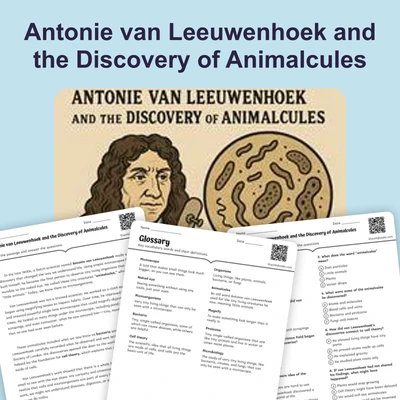
Antonie van Leeuwenhoek and the Discovery of Animalcules
This NGSS-aligned science passage explores the groundbreaking work of Antonie van Leeuwenhoek, a pioneer in microscopic ...
MS-LS1-1MS-LS1-2
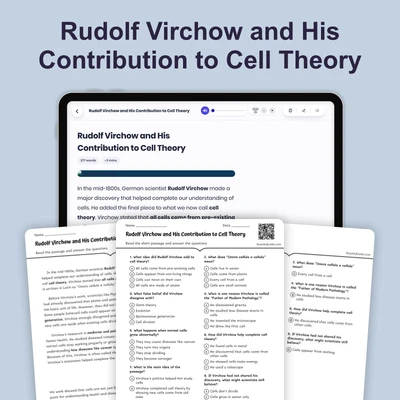
Rudolf Virchow and His Contribution to Cell Theory
This NGSS-aligned science reading passage introduces students to Rudolf Virchow, a key historical figure in cell biology...
MS-LS1-1MS-LS1-2
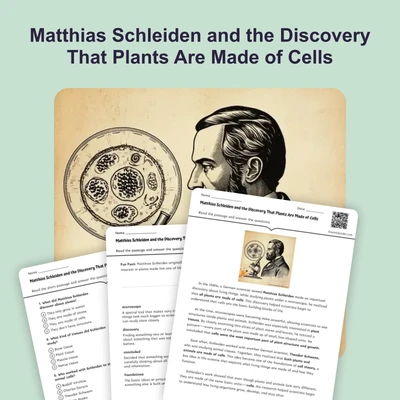
Matthias Schleiden and the Discovery That Plants Are Made of Cells
This NGSS-aligned science passage explains how Matthias Schleiden, a German scientist in the 1830s, discovered that all ...
MS-LS1-1MS-LS1-2
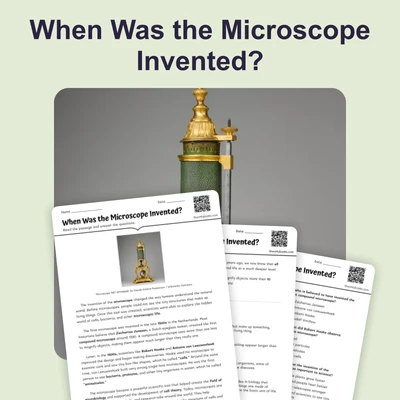
When Was the Microscope Invented?
This NGSS-aligned reading passage introduces students to the invention of the microscope, an essential scientific tool. ...
MS-LS1-1MS-LS1-2
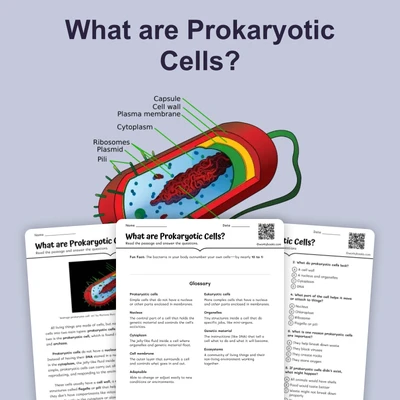
What are Prokaryotic Cells?
This NGSS-aligned science reading passage explains prokaryotic cells, the simplest type of cells found in single-celled ...
MS-LS1-1MS-LS1-2
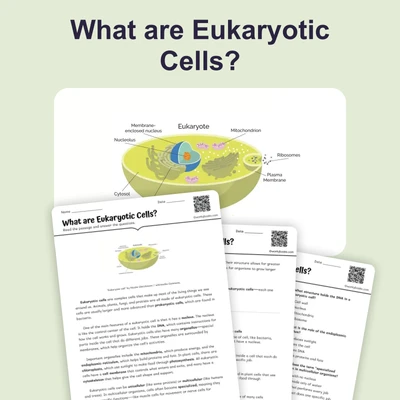
What are Eukaryotic Cells?
This NGSS-aligned reading passage introduces middle school students to eukaryotic cells, which are complex cells found i...
MS-LS1-1MS-LS1-2
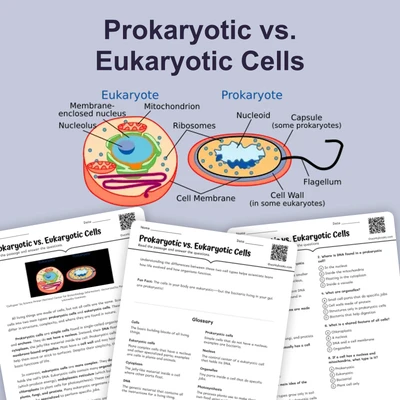
Prokaryotic vs. Eukaryotic Cells
This NGSS-aligned reading passage helps middle school students compare prokaryotic and eukaryotic cells. Supporting stan...
MS-LS1-1MS-LS1-2
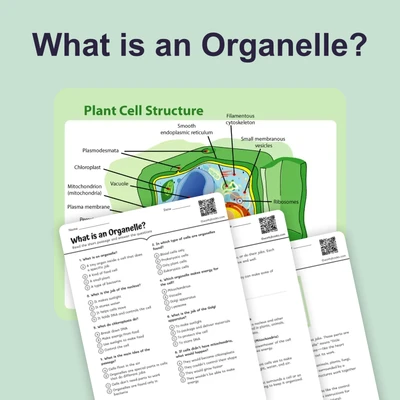
What is an Organelle?
This NGSS-aligned reading passage introduces middle school students to the concept of organelles. Supporting MS-LS1-
MS-LS1-1MS-LS1-2
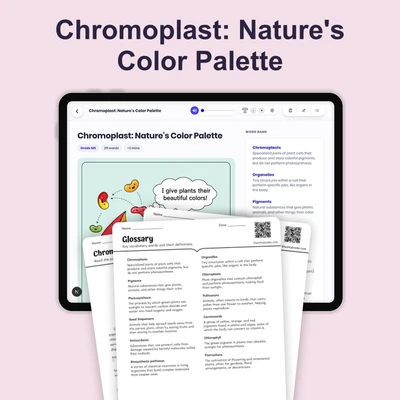
Chromoplast: Nature's Color Palette
This passage details chromoplast functions in pigment production, ecological signaling, and nutrition. Aligned with NGSS...
MS-LS1-1MS-LS1-2MS-LS1-6LS1.C
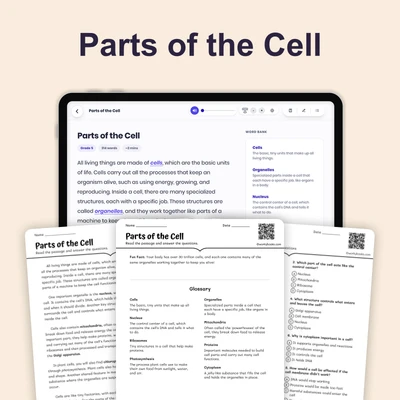
Parts of the Cell
This informational science passage, aligned with NGSS standard MS-LS1-1, introduces students to the parts of the cell an...
MS-LS1-1MS-LS1-2
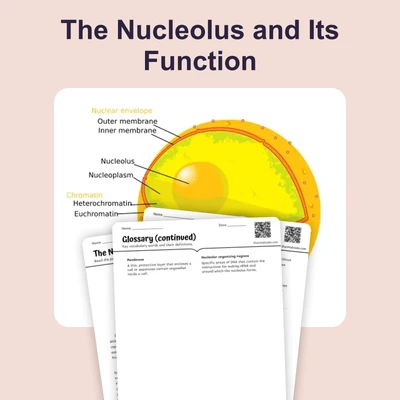
The Nucleolus and Its Function
This NGSS-aligned reading passage focuses on the nucleolus, a key structure inside the cell’s nucleus responsible for ma...
MS-LS1-1MS-LS1-2
What Is Vapor Pressure?
This NGSS-aligned science passage explains the concept of vapor pressure in an age-appropriate, engaging way for middle ...
MS-PS1-4MS-LS1-2
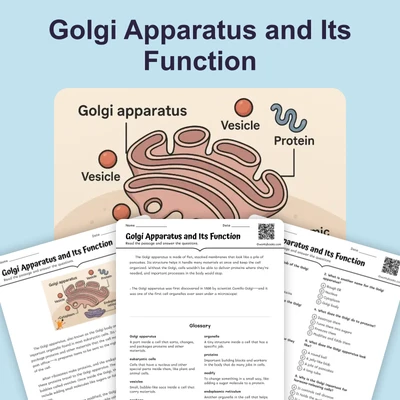
Golgi Apparatus and Its Function
This NGSS-aligned reading passage introduces middle school students to the structure and function of the Golgi apparatus...
MS-LS1-1
Is a Platypus a Mammal?
This interactive science reading passage, titled "Is a Platypus a Mammal? The Monotreme Mystery!", delves into the uniqu...
MS-LS1-1
Where Do Platypus Live?
This engaging science reading passage, titled "Where Do Platypus Live? Finding Australia's Elusive Swimmer," explores th...
MS-LS1-1
The Amazing Red Panda
This engaging science reading passage, titled "The Amazing Red Panda: A Fluffy Tree Dweller," introduces students to one...
MS-LS1-1MS-LS4-D
Where Do Red Pandas Live?
This science reading passage, titled "Where Do Red Pandas Live? In the Mountain Forests," explores the specific habitat ...
MS-LS1-1
Przewalski's Horse
This engaging science reading passage, titled "Przewalski's Horse: A Wild Comeback Story," introduces students to the tr...
MS-LS4-DMS-LS1-1
The Quokka
This engaging science reading passage, titled "The Quokka: The Happiest Animal on Earth?", introduces students to one of...