This learning resource is available in interactive and printable formats. The interactive worksheet can be played online and assigned to students. The Printable PDF version can be downloaded and printed for completion by hand.
This NGSS-aligned reading passage introduces middle school students to the concept of organelles. Supporting MS-LS1-
CONTENT PREVIEW
Expand content preview
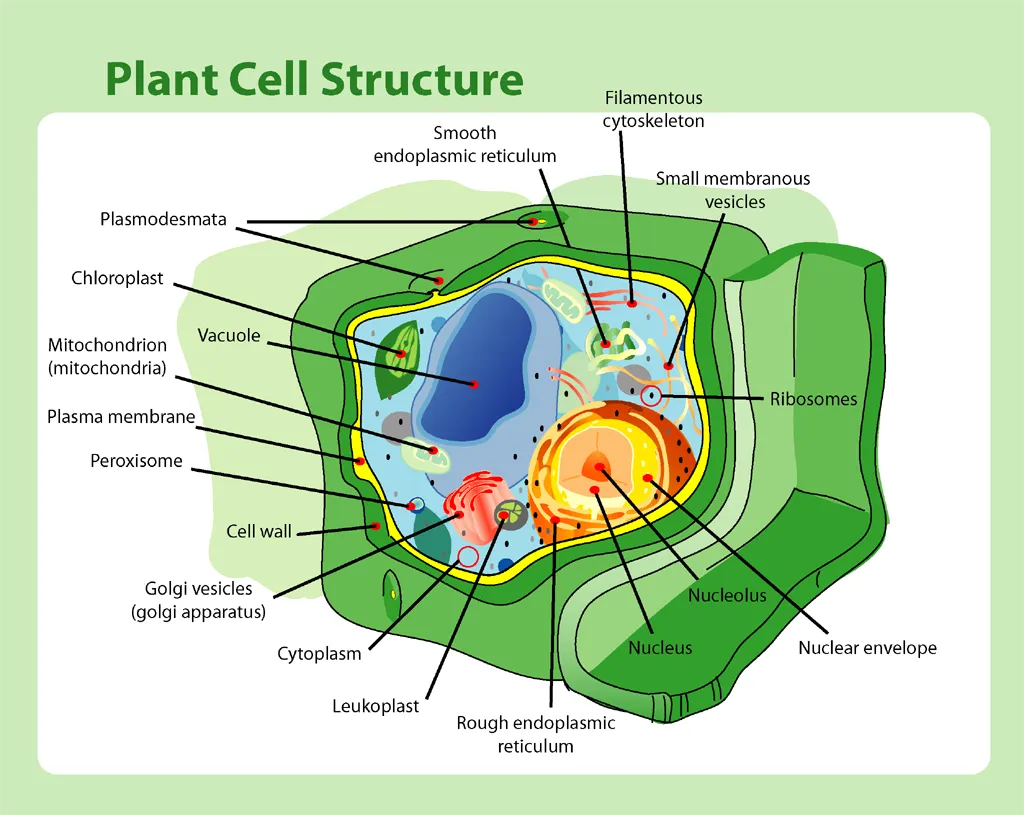
"Plant cell structure" / Wikimedia Commons.
Inside every cell, there are special parts that do important jobs. These parts are called organelles (pronounced or-guh-nells). The word “organelle” means “little organ,” and just like organs in your body have specific functions—like the heart pumping blood—organelles help the cell stay alive and carry out its work.
Organelles are found in eukaryotic cells, such as those in animals, plants, fungi, and protists. Each organelle has a different job and most are surrounded by a membrane, which helps keep the cell organized. These tiny structures work together to keep the cell healthy and functioning.
One of the most important organelles is the nucleus. It acts like the control center of the cell and holds the cell’s DNA, which contains the instructions for everything the cell does. Another organelle is the mitochondrion (plural: mitochondria), which is known as the “powerhouse” of the cell because it makes energy. Plant cells also have chloroplasts, which use sunlight to make food in a process called photosynthesis.
Other organelles include the endoplasmic reticulum (ER), which helps make proteins and fats, and the Golgi apparatus, which packages and delivers materials the cell needs. The vacuole stores water, food, or waste, and the lysosome breaks down unwanted materials.
Without organelles, cells wouldn’t be able to survive, grow, or do their jobs. Each one plays a part in keeping the cell—and the organism—alive and well.
Fun Fact: Mitochondria have their own DNA, which means they can make some of their own proteins!
What is an organelle?
A small plantA tiny organ inside a cell that does a specific jobA type of bacteriaA kind of food cell
In which type of cells are organelles found?
Eukaryotic cellsOnly plant cellsProkaryotic cellsBlood cells only
What is the job of the nucleus?
It stores waterIt helps cells moveIt holds DNA and controls the cellIt makes sunlight
Which organelle makes energy for the cell?
Golgi apparatusLysosomeMitochondrionVacuole
What do chloroplasts do?
Make energy from foodControl the cellUse sunlight to make foodBreak down DNA
What is the job of the Golgi apparatus?
To store DNATo package and deliver materialsTo protect the cellTo make sunlight
What is the main idea of the passage?
Cells don’t need parts to workOrganelles are found only in bacteriaOrganelles are special parts in cells that do different jobsCells float in the air
If cells didn’t have mitochondria, what would happen?
They couldn’t control their shapeThey wouldn’t be able to make energyThey would grow fasterThey would become chloroplasts
Perfect For:
👩🏫 Teachers
• Reading comprehension practice
• Auto-graded assessments
• Literacy skill development
👨👩👧👦 Parents
• Reading practice at home
• Comprehension improvement
• Educational reading time
🏠 Homeschoolers
• Reading curriculum support
• Independent reading practice
• Progress monitoring
Reading Features:
📖
Reading Passage
Engaging fiction or nonfiction text
❓
Comprehension Quiz
Auto-graded questions
📊
Instant Feedback
Immediate results and scoring
📄
Printable Version
Download for offline reading
🔊
Read Aloud
Voice-over with word highlighting
Reviews & Ratings
No reviews yet. Be the first to share your experience!
Related Content
Antonie van Leeuwenhoek and the Discovery of Animalcules
This NGSS-aligned science passage explores the groundbreaking work of Antonie van Leeuwenhoek, a pioneer in microscopic ...
MS-LS1-1MS-LS1-2
Robert Hooke and the Naming of 'Cells'
This NGSS-aligned reading passage introduces middle school students to Robert Hooke's discovery and naming of 'cells' in...
MS-LS1-1MS-LS1-2
Rudolf Virchow and His Contribution to Cell Theory
This NGSS-aligned science reading passage introduces students to Rudolf Virchow, a key historical figure in cell biology...
MS-LS1-1MS-LS1-2
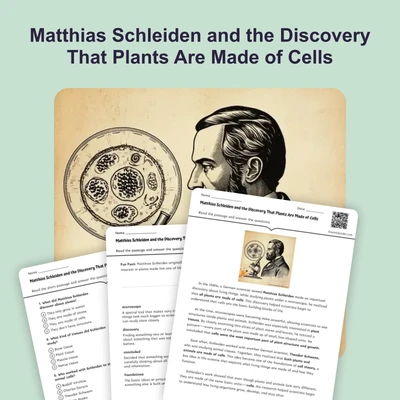
Matthias Schleiden and the Discovery That Plants Are Made of Cells
This NGSS-aligned science passage explains how Matthias Schleiden, a German scientist in the 1830s, discovered that all ...
MS-LS1-1MS-LS1-2
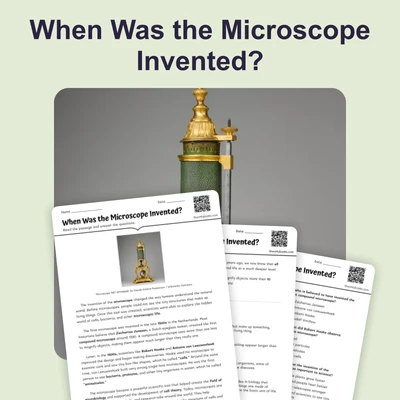
When Was the Microscope Invented?
This NGSS-aligned reading passage introduces students to the invention of the microscope, an essential scientific tool. ...
MS-LS1-1MS-LS1-2
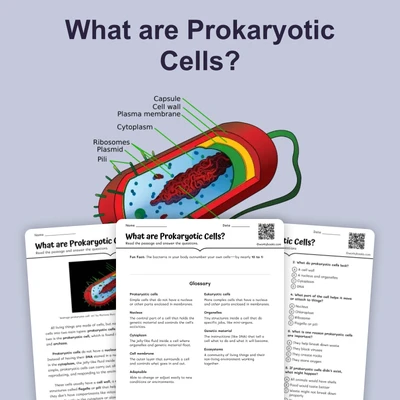
What are Prokaryotic Cells?
This NGSS-aligned science reading passage explains prokaryotic cells, the simplest type of cells found in single-celled ...
MS-LS1-1MS-LS1-2
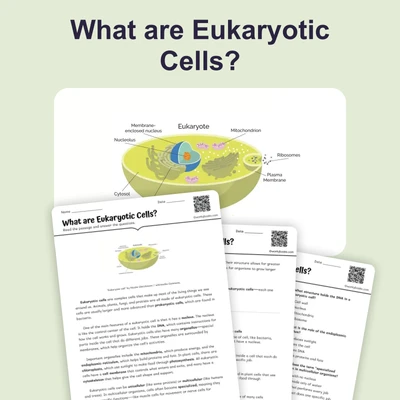
What are Eukaryotic Cells?
This NGSS-aligned reading passage introduces middle school students to eukaryotic cells, which are complex cells found i...
MS-LS1-1MS-LS1-2
Prokaryotic vs. Eukaryotic Cells
This NGSS-aligned reading passage helps middle school students compare prokaryotic and eukaryotic cells. Supporting stan...
MS-LS1-1MS-LS1-2
Chromoplast: Nature's Color Palette
This passage details chromoplast functions in pigment production, ecological signaling, and nutrition. Aligned with NGSS...
MS-LS1-1MS-LS1-2MS-LS1-6LS1.C
Parts of the Cell
This informational science passage, aligned with NGSS standard MS-LS1-1, introduces students to the parts of the cell an...
MS-LS1-1MS-LS1-2
The Nucleolus and Its Function
This NGSS-aligned reading passage focuses on the nucleolus, a key structure inside the cell’s nucleus responsible for ma...
MS-LS1-1MS-LS1-2
What Is Vapor Pressure?
This NGSS-aligned science passage explains the concept of vapor pressure in an age-appropriate, engaging way for middle ...
MS-PS1-4MS-LS1-2
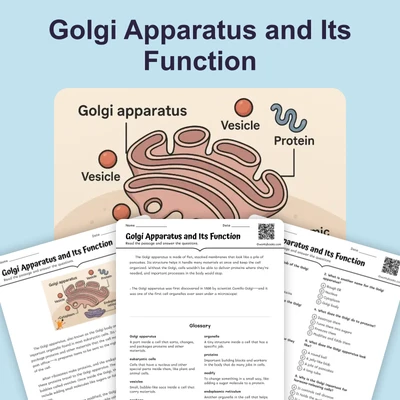
Golgi Apparatus and Its Function
This NGSS-aligned reading passage introduces middle school students to the structure and function of the Golgi apparatus...
MS-LS1-1
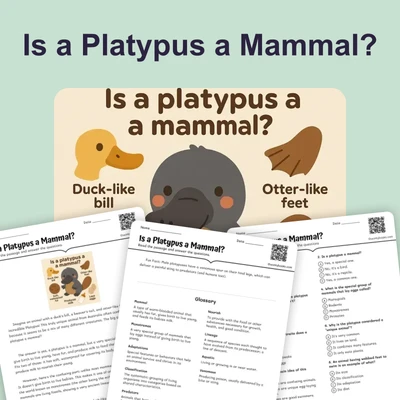
Is a Platypus a Mammal?
This interactive science reading passage, titled "Is a Platypus a Mammal? The Monotreme Mystery!", delves into the uniqu...
MS-LS1-1
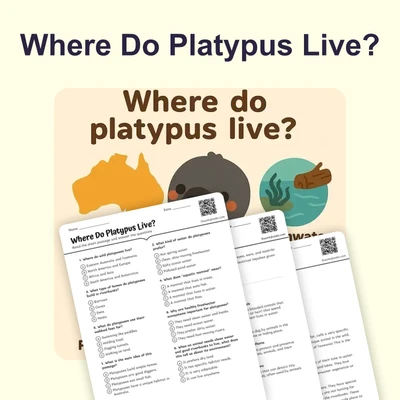
Where Do Platypus Live?
This engaging science reading passage, titled "Where Do Platypus Live? Finding Australia's Elusive Swimmer," explores th...
MS-LS1-1
The Amazing Red Panda
This engaging science reading passage, titled "The Amazing Red Panda: A Fluffy Tree Dweller," introduces students to one...
MS-LS1-1MS-LS4-D
Where Do Red Pandas Live?
This science reading passage, titled "Where Do Red Pandas Live? In the Mountain Forests," explores the specific habitat ...
MS-LS1-1
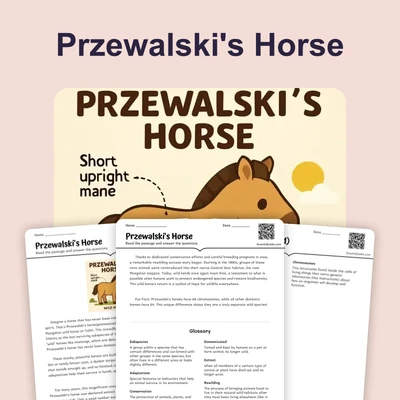
Przewalski's Horse
This engaging science reading passage, titled "Przewalski's Horse: A Wild Comeback Story," introduces students to the tr...
MS-LS4-DMS-LS1-1
The Quokka
This engaging science reading passage, titled "The Quokka: The Happiest Animal on Earth?", introduces students to one of...