Parts of the Cell
Interactive passage with audio narration, comprehension questions, and printable PDF.
What's included
Parts of the Cell preview and details
About this printable Parts of the Cell science reading passage, NGSS-aligned (Grades 5-8)
Sample passage and quiz from Parts of the Cell
Reading passage and comprehension quiz preview
Parts of the Cell
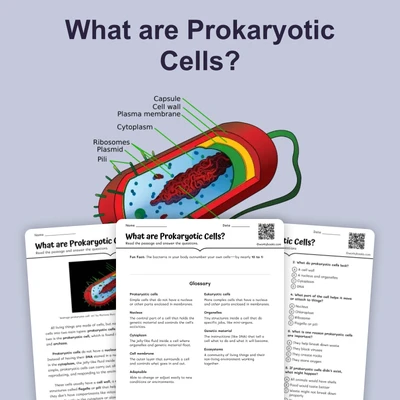
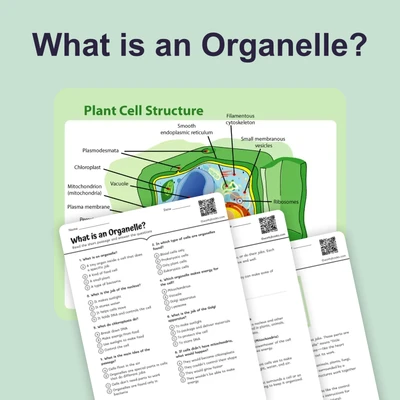
All living things are made of cells, which are the basic units of life. Cells carry out all the processes that keep an organism alive, such as using energy, growing, and reproducing. Inside a cell, there are many specialized structures, each with a specific job. These structures are called organelles, and they work together like parts of a machine to keep the cell functioning properly.
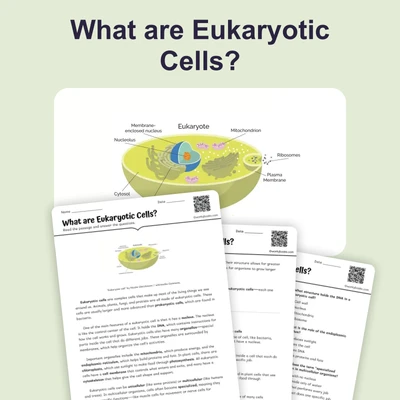
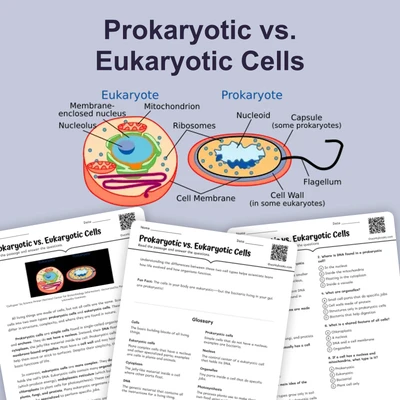
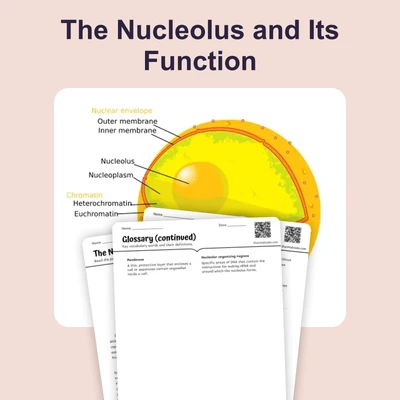
One important organelle is the nucleus, which acts like the control center of the cell. It contains the cell’s DNA, which holds the instructions for how the cell works and when it should divide. Another key structure is the cell membrane, which surrounds the cell and controls what enters and leaves. This helps maintain balance inside the cell.
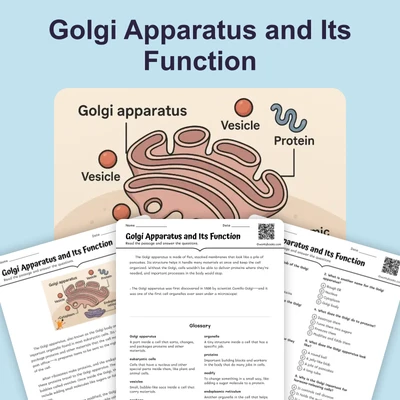
Cells also contain mitochondria, often called the "powerhouses" of the cell. They break down food and release energy the cell can use. Ribosomes are another important part; they help make proteins, which are needed for building cell parts and carrying out many of the cell’s functions. Proteins are assembled in the ribosomes and then processed and transported by the endoplasmic reticulum and the Golgi apparatus.
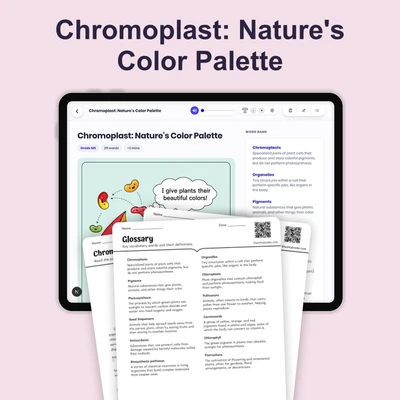
In plant cells, you will also find chloroplasts, which use sunlight to make food through photosynthesis. Plant cells also have a cell wall that gives them extra support and shape. Another shared feature in many cells is the cytoplasm—a jelly-like substance where the organelles are suspended and where many chemical reactions occur.
Cells are like tiny factories, with each part working to keep the whole system running. Understanding the parts of the cell helps scientists learn how living things grow, respond to their environment, and stay healthy.
Fun Fact: Your body has over 30 trillion cells, and each one contains many of the same organelles working together to keep you alive!
Comprehension quiz (8 questions)
1. What is the basic unit of life in all living things?
2. Which part of the cell acts like the control center?
3. What is the main function of mitochondria?
4. What structure controls what enters and leaves the cell?
5. Which organelles are involved in protein production and transport?
6. Why is cytoplasm important in a cell?
7. What is the main idea of the passage?
8. How would a cell be affected if the cell membrane didn’t work?
Perfect for the way you teach
- Build comprehension skills
- Auto-graded quiz
- Differentiated reading
- Read together at home
- Improve fluency
- Quiet reading time
- Reading curriculum support
- Independent practice
- Track Lexile growth