Where Do Platypus Live?
Interactive passage with audio narration, comprehension questions, and printable PDF.
By completing this purchase you agree to our Terms of Use and Privacy Policy. Your subscription renews automatically until you cancel. You can cancel anytime from your account settings. All sales are final and non-refundable. Digital content is available for download in your account immediately upon purchase.
What's included
Where Do Platypus Live? preview and details
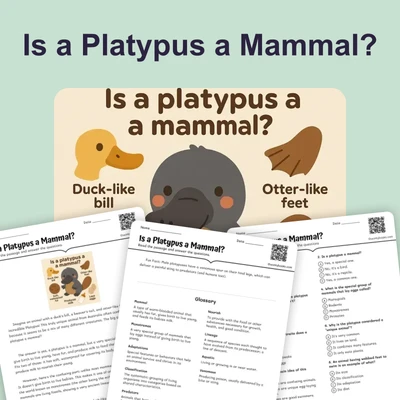
About this printable Where Do Platypus Live? science reading passage, NGSS-aligned (Grades 3-8)
Sample passage and quiz from Where Do Platypus Live?
Reading passage and comprehension quiz preview
Where Do Platypus Live?
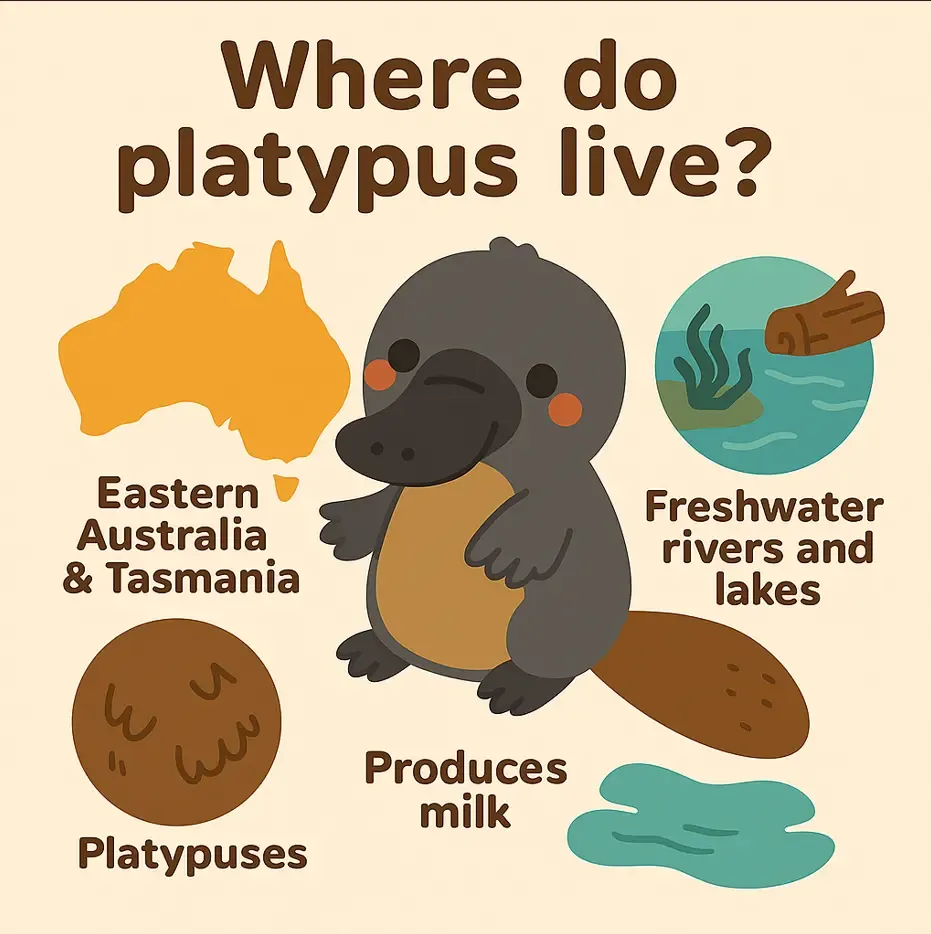
The amazing Platypus, with its unique bill and waterproof fur, calls a very specific part of the world home. If you want to spot this elusive and unique animal in the wild, you'll need to travel to Eastern Australia and the island state of Tasmania! This is the only place on Earth where wild platypuses live.
Platypuses are aquatic mammals, meaning they spend a lot of their time in water. Their preferred habitat includes freshwater rivers, streams, and lakes. They love clear, slow-moving water with muddy banks and plenty of underwater vegetation or fallen logs where they can find food and hide.
These fascinating creatures are expert swimmers and divers. They have special webbed feet that act like paddles when they swim. When they are not hunting for food underwater, they build complex homes called burrows in the riverbanks. These burrows can be very long, with many tunnels and chambers, providing a safe place to sleep, raise their young, and escape from predators.
The health of the freshwater ecosystems in Australia is vital for the platypus. They need clean water and intact riverbanks to thrive. Due to habitat destruction and pollution, the platypus population is facing challenges, making conservation efforts extremely important to protect this extraordinary part of biodiversity.
Fun Fact: When a platypus dives underwater, it closes its eyes, ears, and nostrils! It uses special electroreceptors in its bill to sense the tiny electrical impulses given off by its prey.
Comprehension quiz (8 questions)
1. Where do wild platypuses live?
2. What kind of water do platypuses prefer?
3. What type of homes do platypuses build in riverbanks?
4. What does "aquatic mammal" mean?
5. What do platypuses use their webbed feet for?
6. Why are healthy freshwater ecosystems important for platypuses?
7. What is the main idea of this passage?
8. When an animal needs clean water and good riverbanks to live, what does this tell us about its environment?
Perfect for the way you teach
- Build comprehension skills
- Auto-graded quiz
- Differentiated reading
- Read together at home
- Improve fluency
- Quiet reading time
- Reading curriculum support
- Independent practice
- Track Lexile growth