Is a Platypus a Mammal
Interactive passage with audio narration, comprehension questions, and printable PDF.
By completing this purchase you agree to our Terms of Use and Privacy Policy. Your subscription renews automatically until you cancel. You can cancel anytime from your account settings. All sales are final and non-refundable. Digital content is available for download in your account immediately upon purchase.
What's included
Is a Platypus a Mammal preview and details
About this printable Is a Platypus a Mammal science reading passage, NGSS-aligned (Grades 3-8)
Sample passage and quiz from Is a Platypus a Mammal
Reading passage and comprehension quiz preview
Is a Platypus a Mammal?
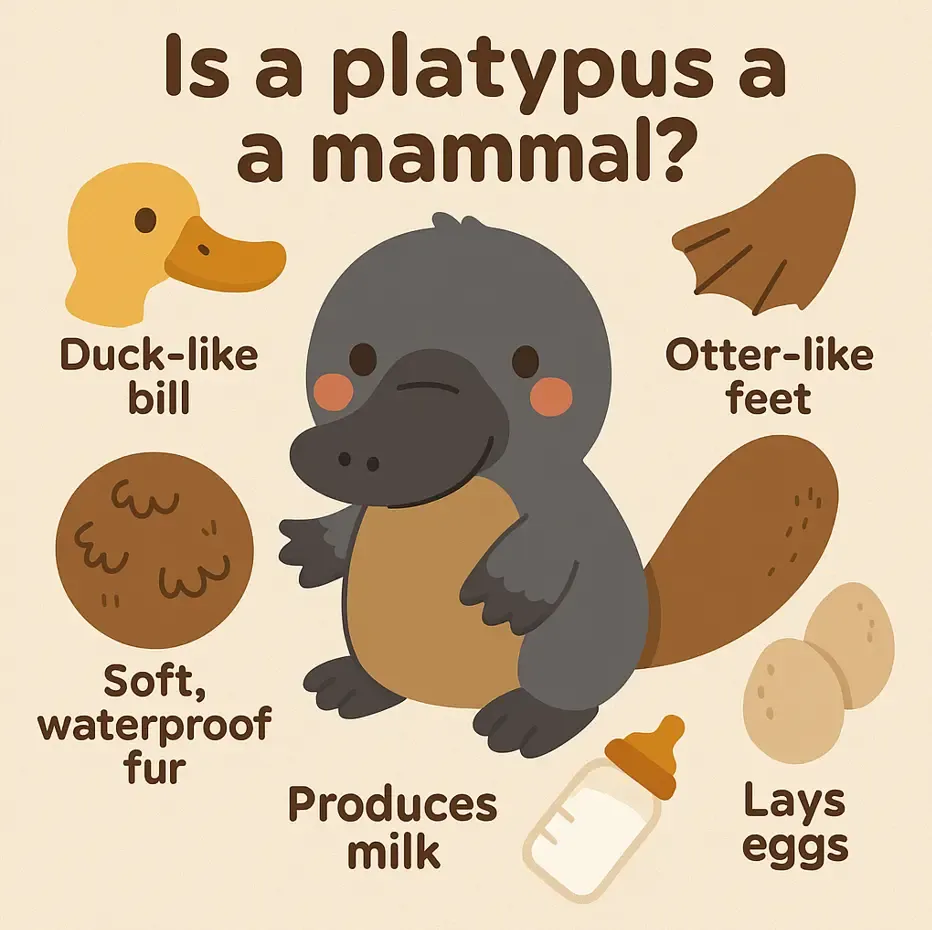
Imagine an animal with a duck's bill, a beaver's tail, and otter-like feet. That's the incredible Platypus! This truly unique animal from Australia often confuses people because it seems to be a mix of many different creatures. The big question is: Is a platypus a mammal?
The answer is yes, a platypus is a mammal, but a very special kind! Most mammals give birth to live young, have fur, and produce milk to feed their babies. The platypus fits two of those: it has soft, waterproof fur covering its body, and female platypuses produce milk to nourish their young.
However, here's the confusing part: unlike most mammals, the platypus lays eggs! It doesn't give birth to live babies. This makes it one of only two types of mammals in the world known as monotremes (the other being the echidna). These egg-laying mammals are living fossils, showing a very ancient lineage of mammals.
The platypus's mix of features – like its duck-like bill for sensing prey underwater, and its webbed feet for swimming – are amazing adaptations that help it survive in its aquatic home. Its classification as a monotreme makes it a fascinating subject in animal classification and a wonder of biodiversity.
Fun Fact: Male platypuses have a venomous spur on their hind legs, which can deliver a painful sting to predators (and humans too!).
Comprehension quiz (8 questions)
1. What three animals does the platypus look like a mix of?
2. Is a platypus a mammal?
3. What unique thing does a platypus do that most mammals don't?
4. What is the special group of mammals that lay eggs called?
5. What two mammal traits does a platypus have?
6. Why is the platypus considered a "unique animal"?
7. What is the main idea of this passage?
8. An animal having webbed feet to swim is an example of what?
Perfect for the way you teach
- Build comprehension skills
- Auto-graded quiz
- Differentiated reading
- Read together at home
- Improve fluency
- Quiet reading time
- Reading curriculum support
- Independent practice
- Track Lexile growth