When Was the Microscope Invented? — Reading Comprehension
Rate this
Premium Resource
Present
Present in classroom. No work saved
Assign
Classroom with student accounts, Track progress
Quick Play
No student accounts, assign with a link
Grades
5
6
7
8
Standards
MS-LS1-1
MS-LS1-2
PRINT+DIGITAL RESOURCE
This learning resource is available in interactive and printable formats. The interactive worksheet can be played online and assigned to students. The Printable PDF version can be downloaded and printed for completion by hand.
This NGSS-aligned reading passage introduces students to the invention of the microscope, an essential scientific tool. Aligned to MS-LS1-1, the text explains how Zacharias Janssen likely created the first compound microscope around 1590. It also describes how Robert Hooke and Antonie van Leeuwenhoek made early discoveries using microscopes, such as cork cells and microorganisms. The passage supports science reading comprehension and builds understanding of how microscopes led to cell theory and the field of microbiology. This is an ideal resource for middle school life science and Next Generation Science Standards instruction.
CONTENT PREVIEW
Expand content preview
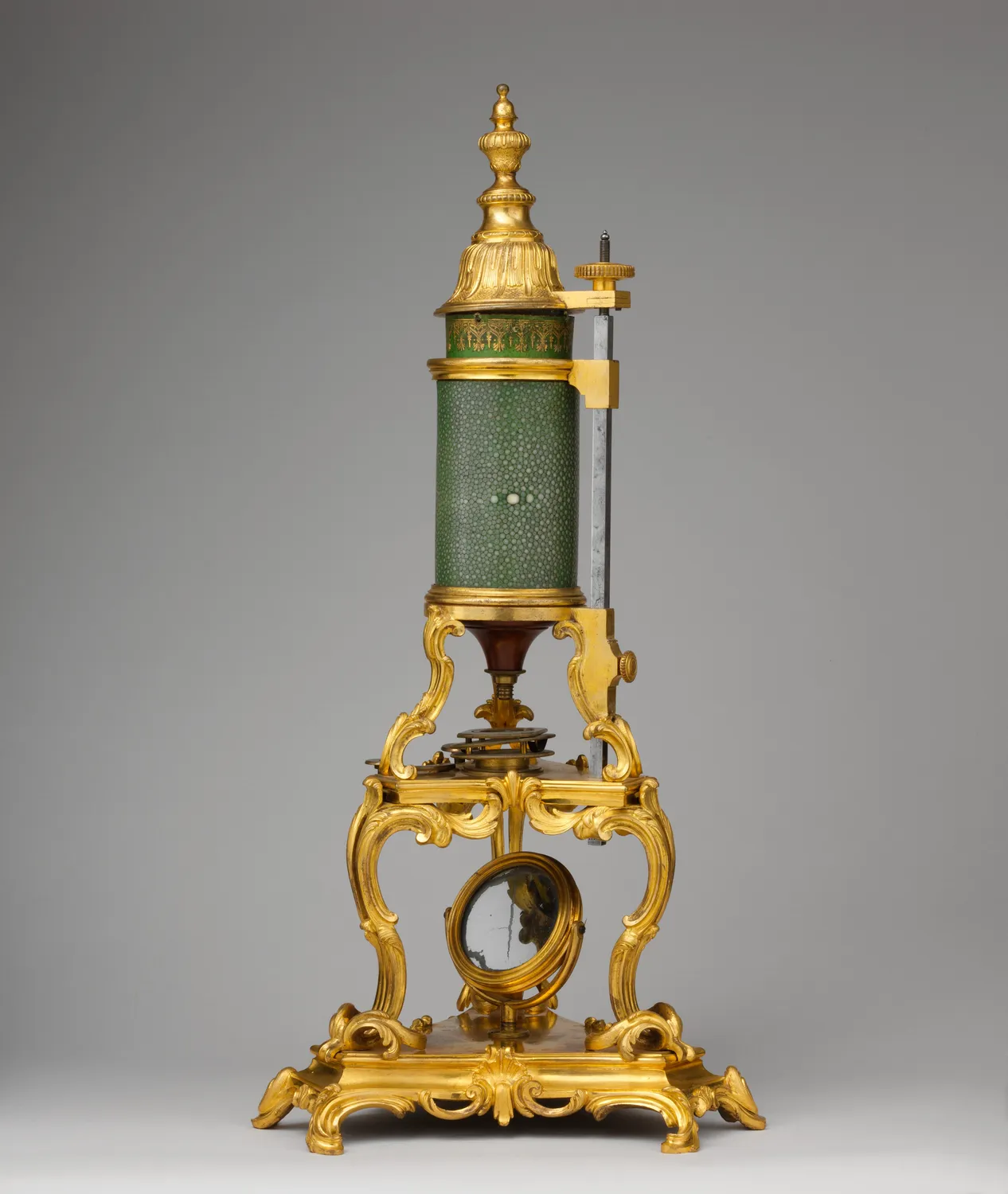
"Microscope MET DP108688" by Claude Siméon Passemant / Wikimedia Commons.
The invention of the microscope changed the way humans understand the natural world. Before microscopes, people could not see the tiny structures that make up living things. Once this tool was created, scientists were able to explore the hidden world of cells, bacteria, and other microscopic life.
The first microscope was invented in the late 1500s in the Netherlands. Most historians believe that Zacharias Janssen, a Dutch eyeglass maker, created the first compound microscope around 1590. A compound microscope uses more than one lens to magnify objects, making them appear much larger than they really are.
Later, in the 1600s, scientists like Robert Hooke and Antonie van Leeuwenhoek improved the design and began making discoveries. Hooke used his microscope to examine cork and saw tiny box-like shapes, which he called “cells.” Around the same time, van Leeuwenhoek built very strong single-lens microscopes. He was the first person to see bacteria, protozoa, and other tiny organisms in water, which he called “animalcules.”
The microscope became a powerful scientific tool that helped create the field of microbiology and supported the development of cell theory. Today, microscopes are used in classrooms, hospitals, and research labs around the world. They help scientists study everything from disease-causing germs to the structure of cells and tissues.
Thanks to the invention of the microscope over 400 years ago, we now know that all living things are made of cells, and we can understand life at a much deeper level.
Fun Fact: The strongest modern microscopes can magnify objects more than 10 million times—far more powerful than the early models!
When was the first microscope invented?
In the 1400sAround 1590In 1776In the 1900s
Who is believed to have invented the first compound microscope?
Antonie van LeeuwenhoekRobert HookeZacharias JanssenRudolf Virchow
What did Robert Hooke observe with his microscope?
AnimalculesBloodCork cellsDust particles
What did Antonie van Leeuwenhoek discover using his microscope?
VirusesPlanetsAnimalculesRocks
Why was the invention of the microscope important to science?
It made plants grow fasterIt allowed scientists to see tiny organismsIt helped people hear betterIt made telescopes stronger
What is the main idea of the passage?
Microscopes can break easilyMicroscopes were invented to study starsThe invention of the microscope helped scientists see tiny life formsGlass was hard to use in the 1500s
If microscopes had never been invented, what might scientists not know?
That the Earth movesThat light reflectsThat cells make up all living thingsThat animals breathe oxygen
Perfect For:
👩🏫 Teachers
• Reading comprehension practice
• Auto-graded assessments
• Literacy skill development
👨👩👧👦 Parents
• Reading practice at home
• Comprehension improvement
• Educational reading time
🏠 Homeschoolers
• Reading curriculum support
• Independent reading practice
• Progress monitoring
Reading Features:
📖
Reading Passage
Engaging fiction or nonfiction text
❓
Comprehension Quiz
Auto-graded questions
📊
Instant Feedback
Immediate results and scoring
📄
Printable Version
Download for offline reading
🔊
Read Aloud
Voice-over with word highlighting
Reviews & Ratings
No reviews yet. Be the first to share your experience!
Related Content
Antonie van Leeuwenhoek and the Discovery of Animalcules
This NGSS-aligned science passage explores the groundbreaking work of Antonie van Leeuwenhoek, a pioneer in microscopic ...
MS-LS1-1MS-LS1-2
Robert Hooke and the Naming of 'Cells'
This NGSS-aligned reading passage introduces middle school students to Robert Hooke's discovery and naming of 'cells' in...
MS-LS1-1MS-LS1-2
Rudolf Virchow and His Contribution to Cell Theory
This NGSS-aligned science reading passage introduces students to Rudolf Virchow, a key historical figure in cell biology...
MS-LS1-1MS-LS1-2
Matthias Schleiden and the Discovery That Plants Are Made of Cells
This NGSS-aligned science passage explains how Matthias Schleiden, a German scientist in the 1830s, discovered that all ...
MS-LS1-1MS-LS1-2
What are Prokaryotic Cells?
This NGSS-aligned science reading passage explains prokaryotic cells, the simplest type of cells found in single-celled ...
MS-LS1-1MS-LS1-2
What are Eukaryotic Cells?
This NGSS-aligned reading passage introduces middle school students to eukaryotic cells, which are complex cells found i...
MS-LS1-1MS-LS1-2
Prokaryotic vs. Eukaryotic Cells
This NGSS-aligned reading passage helps middle school students compare prokaryotic and eukaryotic cells. Supporting stan...
MS-LS1-1MS-LS1-2
What is an Organelle?
This NGSS-aligned reading passage introduces middle school students to the concept of organelles. Supporting MS-LS1-
MS-LS1-1MS-LS1-2
Chromoplast: Nature's Color Palette
This passage details chromoplast functions in pigment production, ecological signaling, and nutrition. Aligned with NGSS...
MS-LS1-1MS-LS1-2MS-LS1-6LS1.C
Parts of the Cell
This informational science passage, aligned with NGSS standard MS-LS1-1, introduces students to the parts of the cell an...
MS-LS1-1MS-LS1-2
The Nucleolus and Its Function
This NGSS-aligned reading passage focuses on the nucleolus, a key structure inside the cell’s nucleus responsible for ma...
MS-LS1-1MS-LS1-2
What Is Vapor Pressure?
This NGSS-aligned science passage explains the concept of vapor pressure in an age-appropriate, engaging way for middle ...
MS-PS1-4MS-LS1-2
Golgi Apparatus and Its Function
This NGSS-aligned reading passage introduces middle school students to the structure and function of the Golgi apparatus...
MS-LS1-1
Is a Platypus a Mammal?
This interactive science reading passage, titled "Is a Platypus a Mammal? The Monotreme Mystery!", delves into the uniqu...
MS-LS1-1
Where Do Platypus Live?
This engaging science reading passage, titled "Where Do Platypus Live? Finding Australia's Elusive Swimmer," explores th...
MS-LS1-1
The Amazing Red Panda
This engaging science reading passage, titled "The Amazing Red Panda: A Fluffy Tree Dweller," introduces students to one...
MS-LS1-1MS-LS4-D
Where Do Red Pandas Live?
This science reading passage, titled "Where Do Red Pandas Live? In the Mountain Forests," explores the specific habitat ...
MS-LS1-1
Przewalski's Horse
This engaging science reading passage, titled "Przewalski's Horse: A Wild Comeback Story," introduces students to the tr...
MS-LS4-DMS-LS1-1
The Quokka
This engaging science reading passage, titled "The Quokka: The Happiest Animal on Earth?", introduces students to one of...