Roman Roads and Aqueducts
Interactive passage with audio narration, comprehension questions, and printable PDF.
By completing this purchase you agree to our Terms of Use and Privacy Policy. Your subscription renews automatically until you cancel. You can cancel anytime from your account settings. All sales are final and non-refundable. Digital content is available for download in your account immediately upon purchase.
What's included
Roman Roads and Aqueducts preview and details
About this printable Roman Roads and Aqueducts reading passage (Grades 5-8)
Sample passage and quiz from Roman Roads and Aqueducts
Reading passage and comprehension quiz preview
Roman Roads and Aqueducts
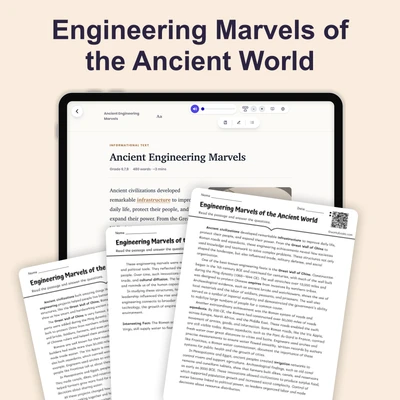
The engineers of Ancient Rome created one of the most advanced transportation systems in the ancient world. Roman roads and engineering projects connected far-reaching regions of the Roman Empire, from Britain to North Africa. The skills and tools developed by Roman engineers were essential for uniting the empire, moving armies, and encouraging trade.
Roman engineers were known for their mastery of infrastructure, or the basic physical systems needed for a society to function. The Romans built more than 400,000 kilometers of roads, including over 80,000 kilometers of paved roads. The Via Appia, constructed in 312 BCE, was one of the earliest and most famous Roman roads. Built with layers of stone, gravel, and sand, these roads were designed to be durable and straight, often stretching for miles across the landscape. Archaeological evidence shows that some Roman roads, such as those near Pompeii, have survived almost intact for over two thousand years.
Roman roads played a crucial role in military and economic life. Fast movement of legions (Roman armies) was possible because of these well-constructed routes. Primary sources, such as the writings of the historian Tacitus, describe how troops could march quickly over great distances thanks to the roads. Merchants also benefited, as goods like grain, olive oil, and pottery could be transported efficiently to distant provinces. Milestones, stone markers placed along the roads, provided travelers with important information about distances and destinations. This system of communication helped unify the vast empire and allowed the central government in Rome to maintain control.
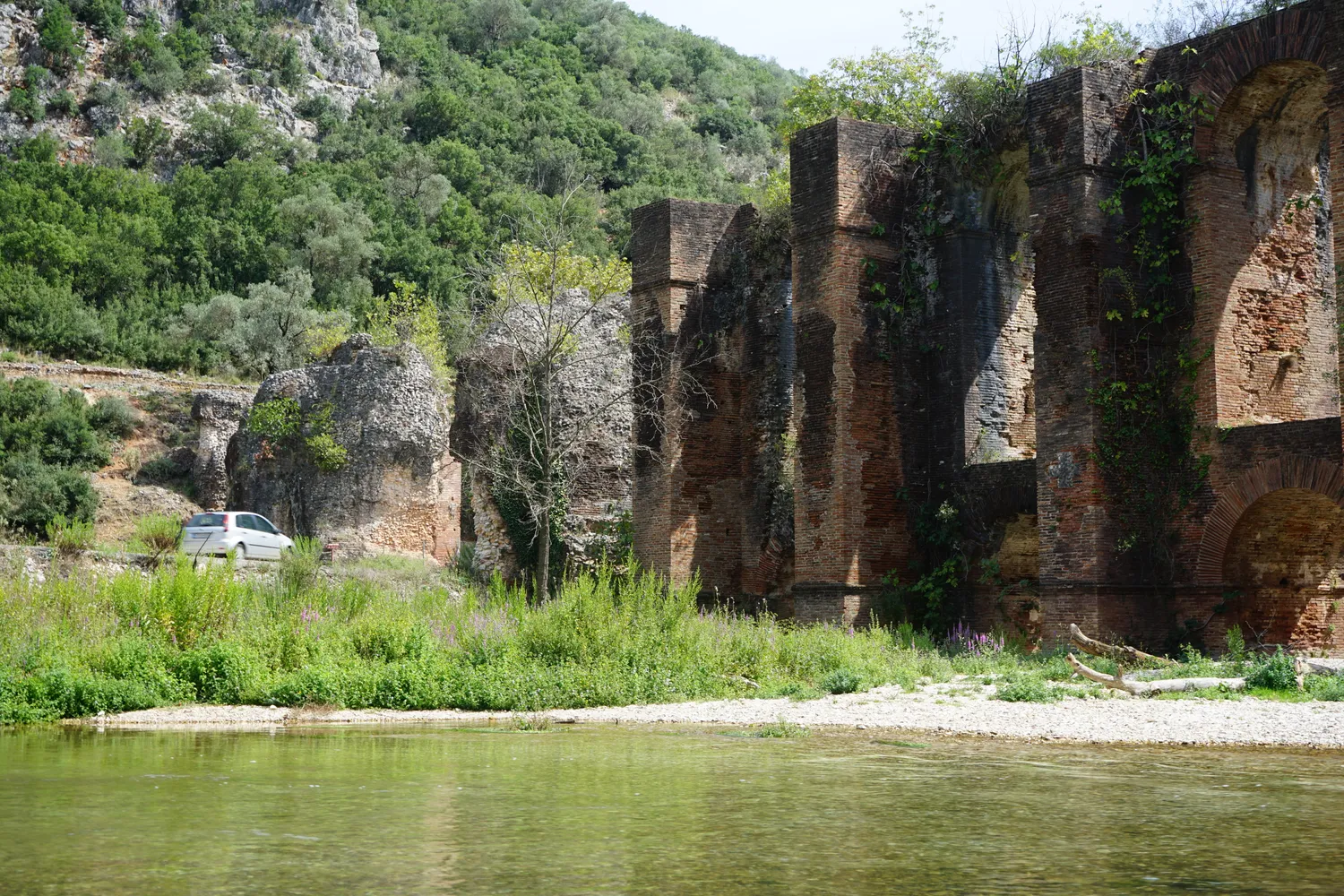
Roman engineering was not limited to roads. The Romans built impressive aqueducts to carry fresh water into cities. The Aqua Claudia, completed in 52 CE, supplied water to Rome for centuries. Bridges, tunnels, and sewers were also constructed using advanced techniques such as the arch and concrete. The social hierarchy of Rome meant that wealthy citizens and the army benefited most from these advances, but even ordinary people gained from improved sanitation and accessibility.
The legacy of Roman engineering is still visible today. Many modern highways in Europe follow the paths laid out by Roman surveyors. The Romans demonstrated how innovation and careful planning can shape a civilization’s future. Their achievements in road-building and engineering remain a model for infrastructure projects worldwide.
The Roman road system is an example of how geographic context, technology, and government policy combined to create lasting change in world history. The skills and systems developed by Roman engineers influenced later societies, connecting people and places in new ways.
Interesting Fact: The phrase “All roads lead to Rome” comes from the Roman road system, where over 29 major highways had their starting point in the city of Rome.
Comprehension quiz (8 questions)
1. When was the Via Appia built?
2. What was Aqua Claudia?
3. How far did Roman paved roads stretch?
4. Why were Roman roads important for the army?
5. What did milestones provide?
6. What is one effect of Roman road building?
7. Roman roads are still visible today. True or false?
8. What does 'infrastructure' mean?
Perfect for the way you teach
- Build comprehension skills
- Auto-graded quiz
- Differentiated reading
- Read together at home
- Improve fluency
- Quiet reading time
- Reading curriculum support
- Independent practice
- Track Lexile growth