The Journey to the Moon
Interactive passage with audio narration, comprehension questions, and printable PDF.
By completing this purchase you agree to our Terms of Use and Privacy Policy. Your subscription renews automatically until you cancel. You can cancel anytime from your account settings. All sales are final and non-refundable. Digital content is available for download in your account immediately upon purchase.
What's included
The Journey to the Moon preview and details
About this printable The Journey to the Moon reading passage (Grades 5-8)
Sample passage and quiz from The Journey to the Moon
Reading passage and comprehension quiz preview
The Journey to the Moon
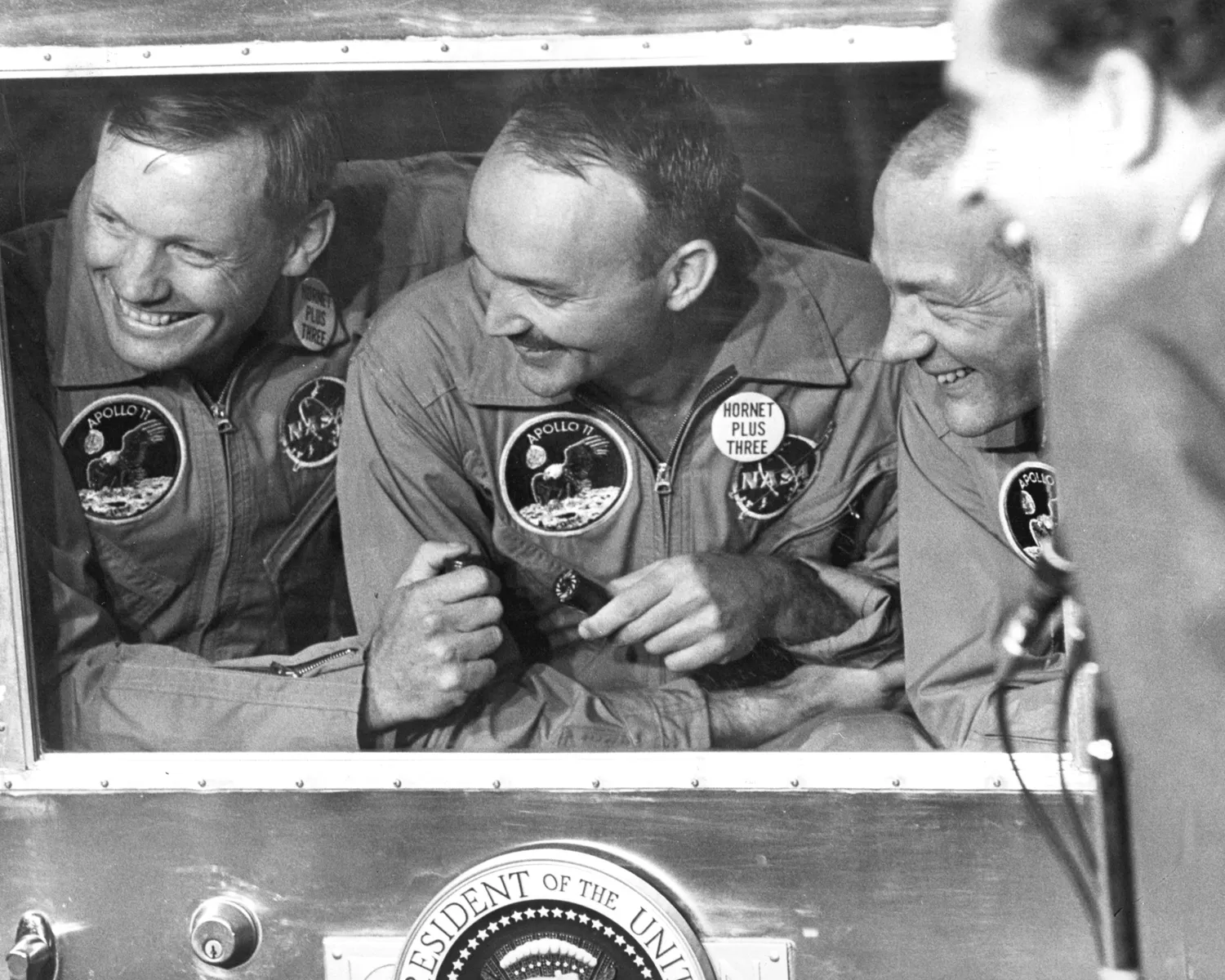
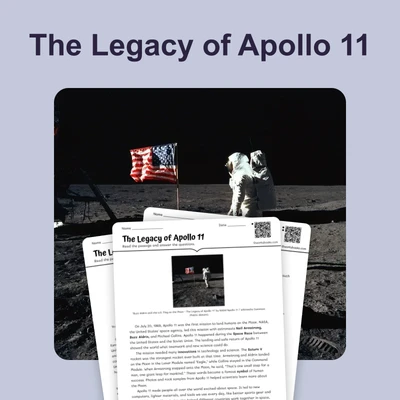
"The Apollo 11 mission, the first manned lunar mission, launched from the Kennedy Space Center, Florida via the Saturn V launch vehicle on July 16, 1969 and safely returned to Earth on July 24, 1969" by NASA Marshall Space Flight Center / Wikimedia Commons (Public domain).
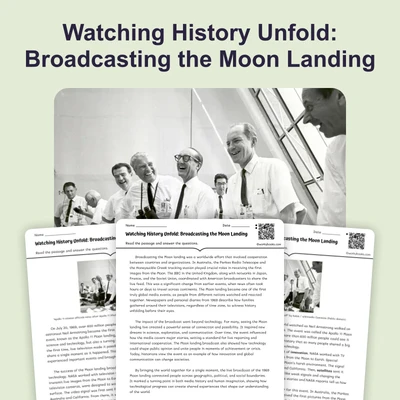
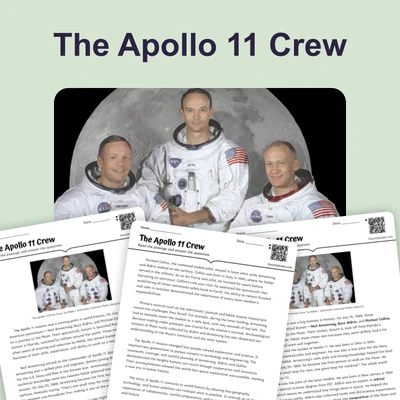
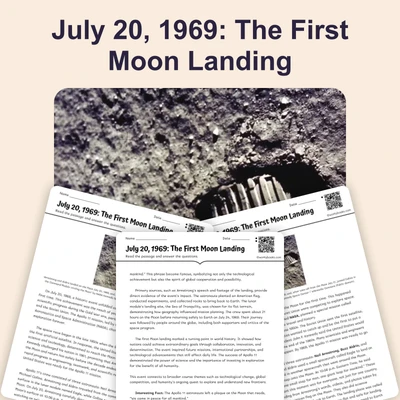
The Apollo 11 mission was the first time humans traveled to and landed on the Moon. On July 16, 1969, astronauts Neil Armstrong, Buzz Aldrin, and Michael Collins launched from Kennedy Space Center in Florida aboard the spacecraft Saturn V. The journey covered nearly 240,000 miles, taking over three days to reach the Moon. This mission was a major event in world history and marked a technological achievement for humanity.
The mission began with the powerful launch of the Saturn V rocket, the largest and most advanced rocket ever built at the time. As the crew left Earth's gravity, they entered orbit and prepared for the long journey through space. The spacecraft consisted of two main parts: the command module, called Columbia, where the astronauts lived, and the lunar module, called Eagle, which would land on the Moon. The astronauts used careful calculations, maps, and radio communication to navigate the vast distance. According to NASA transcripts, the crew maintained regular contact with Mission Control in Houston, Texas, sharing data about their position and health.
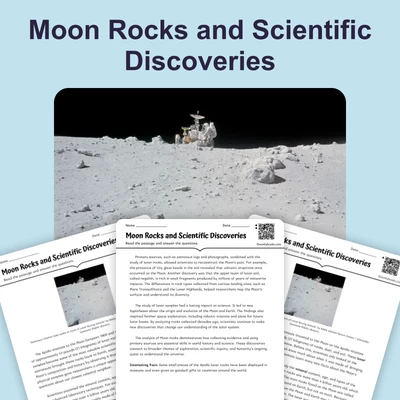
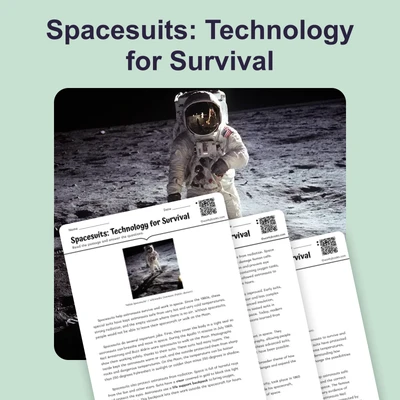
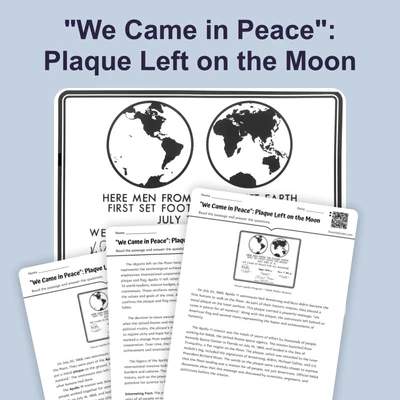
On July 20, 1969, Armstrong and Aldrin transferred into the Eagle and descended to the Moon’s surface, while Collins stayed in orbit aboard Columbia. Armstrong’s first words as he stepped onto the Moon, “That’s one small step for [a] man, one giant leap for mankind,” were broadcast live to millions around the world. The astronauts spent about 21 hours on the lunar surface, conducting scientific experiments and collecting rock samples. They used special equipment to study the Moon’s geology and placed a U.S. flag and a plaque with the message, “We came in peace for all mankind.” These items remain on the Moon today as historical artifacts.
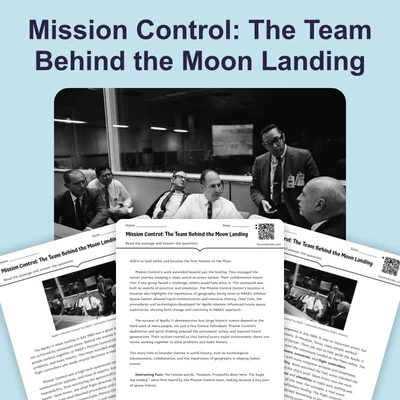
The return journey was challenging. The lunar module’s ascent stage launched Armstrong and Aldrin back to orbit, where they rejoined Collins in Columbia. The crew then traveled back to Earth, re-entering the atmosphere and splashing down in the Pacific Ocean on July 24, 1969. Primary sources, such as the official NASA mission log and the astronauts’ own accounts, reveal the intense training and teamwork required for success. The mission’s success was also shaped by the Cold War rivalry between the United States and the Soviet Union, as the two nations raced to achieve space milestones.
The Apollo 11 mission changed how people around the world saw science and exploration. It inspired new technologies, such as improved computers and materials, and encouraged international cooperation in space. The event also demonstrated the importance of collaboration and courage in facing the unknown. Today, the journey to the Moon remains a symbol of what humans can accomplish through determination and scientific innovation.
This historic event connects to broader themes in world history, such as the impact of technology on society, the influence of geography on human achievement, and the ways nations compete and cooperate to solve global challenges.
Interesting Fact: The astronauts left a silicon disk on the Moon inscribed with messages from leaders of 73 countries, promoting peace and unity.
Comprehension quiz (8 questions)
1. When did Apollo 11 launch?
2. Who stayed in orbit around the Moon?
3. Where did Apollo 11 splash down?
4. Why was the Apollo 11 mission significant?
5. What did the astronauts leave on the Moon?
6. What helped Apollo 11 succeed?
7. The Cold War influenced the Moon mission.
8. What does 'innovation' mean in the passage?
Perfect for the way you teach
- Build comprehension skills
- Auto-graded quiz
- Differentiated reading
- Read together at home
- Improve fluency
- Quiet reading time
- Reading curriculum support
- Independent practice
- Track Lexile growth