This learning resource is available in interactive and printable formats. The interactive worksheet can be played online and assigned to students. The Printable PDF version can be downloaded and printed for completion by hand.
This detailed history reading passage explores the development and significance of the Twelve Tables, Rome's first written code of laws. Aligned with CA HSS 6.7 and CCSS RI.6.1, the passage describes how the Twelve Tables were created in 451–450 BCE, what they contained, and their lasting impact on Roman society and modern law. Students will learn about Roman social hierarchy, the struggle between patricians and plebeians, and how geography and daily life shaped Roman legal traditions. The passage includes disciplinary vocabulary, primary evidence, and cause-and-effect relationships. Activities include a multiple-choice quiz, writing tasks, graphic organizers, and a Spanish translation. Read aloud audio and high-quality instructional materials help students engage with world history while building literacy and critical thinking skills.
CONTENT PREVIEW
Expand content preview
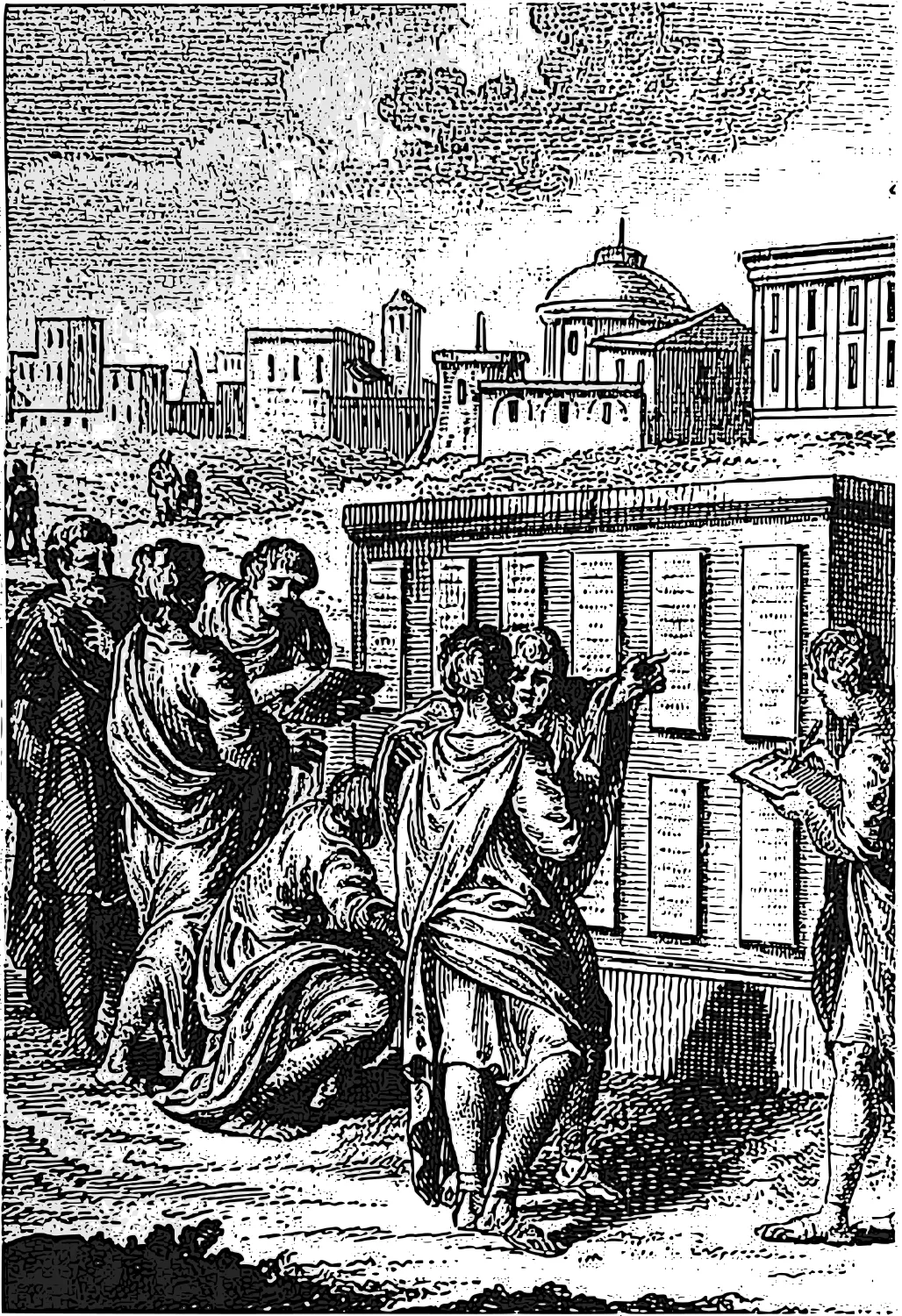
Twelve Tables Engraving Source: Wikimedia Commons
The Twelve Tables are the earliest written laws of Ancient Rome. Created in 451–450 BCE, these laws were carved onto bronze tablets and displayed in the Roman Forum for all citizens to see. The Roman Republic wanted to make sure that everyone, both rich and poor, knew their rights and responsibilities. By writing down the laws, Roman leaders hoped to create a more fair and organized society.
Before the Twelve Tables, Roman law was not written down. Judges, who were usually wealthy patricians, made decisions based on tradition. This system favored the powerful and sometimes led to unfair punishments for lower-class people, or plebeians. In 451 BCE, after years of protest and conflict known as the Struggle of the Orders, plebeians demanded equal legal treatment. As a result, a group of ten officials, called the Decemviri, was chosen to write down Rome’s laws for the first time.
The Twelve Tables covered many parts of daily life, such as family, property, crime, and debt. For example, they explained how debts should be paid and what would happen if someone broke a contract. Archaeological evidence and ancient authors like Cicero show that the laws also included rules about funerals, marriage, and punishment for theft. One law stated, "If a person breaks another’s bone with his hand or with a stick, he shall pay a penalty." Another required fathers to decide what would happen to newborns within eight days. These laws reflected both Roman customs and the needs of a growing city-state.
The creation of the Twelve Tables had a lasting impact. By making laws public, Rome took a step toward equality under the law. Although the laws were not always fair by modern standards, they set a pattern for later legal systems. The Twelve Tables influenced not only later Roman law but also the development of legal codes in Europe and beyond. The need to adapt these laws over time shows how societies change while still keeping some traditions. Even today, ideas from the Twelve Tables can be seen in modern constitutions and legal principles, such as the right to a trial or the importance of written laws.
Studying the Twelve Tables helps us understand how geography, social class, and daily life influenced Roman society. Rome’s location encouraged trade and contact with other cultures, which shaped its laws. The struggle between patricians and plebeians shows how ordinary people can push for more justice and rights. By learning about the Twelve Tables, we see how law connects to the larger themes of power, citizenship, and change in world history.
Interesting Fact: The original bronze tablets of the Twelve Tables were lost when Rome was invaded by the Gauls in 387 BCE, but their words survived through copies and writings by later Romans.
When were the Twelve Tables created?
451–450 BCE509 BCE387 BCE753 BCE
Who demanded written laws in Rome?
PatriciansPlebeiansDecemviriJudges
What happened to the original tablets?
They were lost to the GaulsThey were buried in RomeThey are in a museumThey were burned by plebeians
Why did Romans write down their laws?
To make laws public for allTo protect only the richTo hide rules from plebeiansTo replace the Forum
How did the Twelve Tables impact society?
Created equality under the lawEnded Roman RepublicBanned trade with GreeceStarted monarchy
What is an example of a law from the Tables?
Paying a penalty for breaking a boneVoting for a new emperorBuilding aqueductsWorshipping only one god
The Roman Forum displayed the laws. True or false?