Wealthy Planters and Small Farmers
Interactive passage with audio narration, comprehension questions, and printable PDF.
By completing this purchase you agree to our Terms of Use and Privacy Policy. Your subscription renews automatically until you cancel. You can cancel anytime from your account settings. All sales are final and non-refundable. Digital content is available for download in your account immediately upon purchase.
What's included
Part of this bundle

Wealthy Planters and Small Farmers preview and details
About this printable Wealthy Planters and Small Farmers reading passage (Grades 3-5)
Sample passage and quiz from Wealthy Planters and Small Farmers
Reading passage and comprehension quiz preview
Southern Colonies Planters
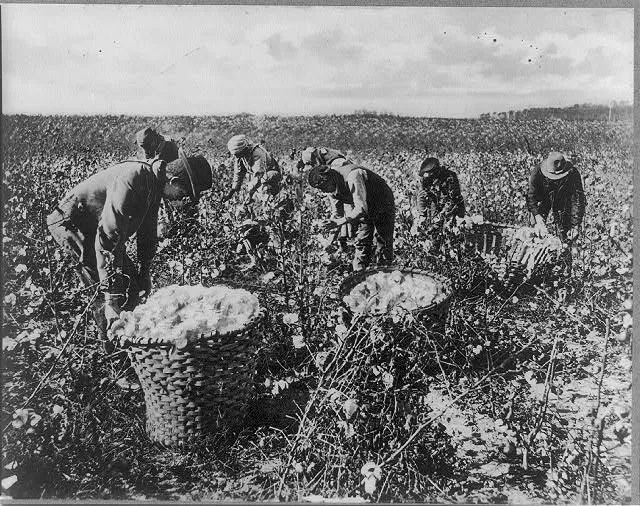
"Southern U.S. cotton picking" / Library of Congress.
The Southern Colonies in early America were shaped by a small group of powerful people called planters. These planters were wealthy landowners who owned huge farms called plantations. Most plantations grew crops like tobacco, rice, and indigo. These crops needed many workers, so planters forced enslaved people to do the hard work in the fields.
Planters were at the top of the social class in the South. They owned large amounts of land and had more money than almost everyone else. Because of their wealth, planters had a lot of influence over the government in the Southern Colonies. They often made important decisions about laws and taxes. Many planters even became leaders in the local government, serving as judges or members of the colonial assembly.
Life on a plantation was very different from life for most people in the colonies. The planter and his family lived in a large house with fine furniture. They held parties and social events with other wealthy families. The children of planters often had tutors or went to private schools. In contrast, enslaved people lived in small, plain houses and worked long hours with little rest or freedom.
The power of planters shaped daily life for everyone in the Southern Colonies. Because they controlled the land and the government, planters decided how the colonies would be run. They set rules about trade, taxes, and land use. Most small farmers and poor people had little say in these decisions. Over time, this led to an unfair system where a few rich planters had most of the power, and most people had very little.
Despite this, the Southern Colonies grew wealthy from their crops. The money planters earned from selling tobacco and rice helped build towns and ports like Charleston and Savannah. These cities became important trade centers in colonial America. But the wealth of the planters depended on the labor of enslaved people, who did not share in the benefits.
The story of Southern planters shows how a small group of people can have a big impact on history. Their choices shaped the economy and society of the South, and their influence lasted long after colonial times.
Interesting Fact: Some planters, like George Washington and Thomas Jefferson, later became important leaders in American history.
Comprehension quiz (8 questions)
1. Who were the planters?
2. What did plantations mostly grow?
3. Who did the hard work on plantations?
4. Why did planters have influence over government?
5. How did planters affect daily life?
6. What was unfair about the planters’ system?
7. Planters grew crops with small gardens. True or False?
8. What does 'influence' mean in the passage?
Common Core standards for Wealthy Planters and Small Farmers
Explain events, procedures, ideas, or concepts in a historical, scientific, or technical text, including what happened and why, based on specific information in the text.
Determine the meaning of general academic and domain-specific words or phrases in a text relevant to a grade 4 topic or subject area.
Write informative/explanatory texts to examine a topic and convey ideas and information clearly.
Perfect for the way you teach
- Build comprehension skills
- Auto-graded quiz
- Differentiated reading
- Read together at home
- Improve fluency
- Quiet reading time
- Reading curriculum support
- Independent practice
- Track Lexile growth