The Life Cycle of a Giant Panda — Reading Comprehension
Rate this
Premium Resource
Present
Present in classroom. No work saved
Assign
Classroom with student accounts, Track progress
Quick Play
No student accounts, assign with a link
Grades
6
PRINT+DIGITAL RESOURCE
This learning resource is available in interactive and printable formats. The interactive worksheet can be played online and assigned to students. The Printable PDF version can be downloaded and printed for completion by hand.
This engaging, audio-integrated reading passage, titled "The Life Cycle of a Giant Panda," explores the fascinating stages of a giant panda's life, from tiny cub to adult. Students will learn about their unique adaptations, such as their specialized diet of bamboo and their solitary nature, which are crucial for survival in their mountainous habitats. The passage defines key terms and highlights important aspects of their biology and conservation. Aligned with NGSS standard LS1.A: Structure and Function, this resource provides a comprehensive look at how these magnificent creatures are adapted to their environment. It includes a multiple-choice quiz, a glossary, and short answer questions to reinforce learning and vocabulary development.
CONTENT PREVIEW
Expand content preview
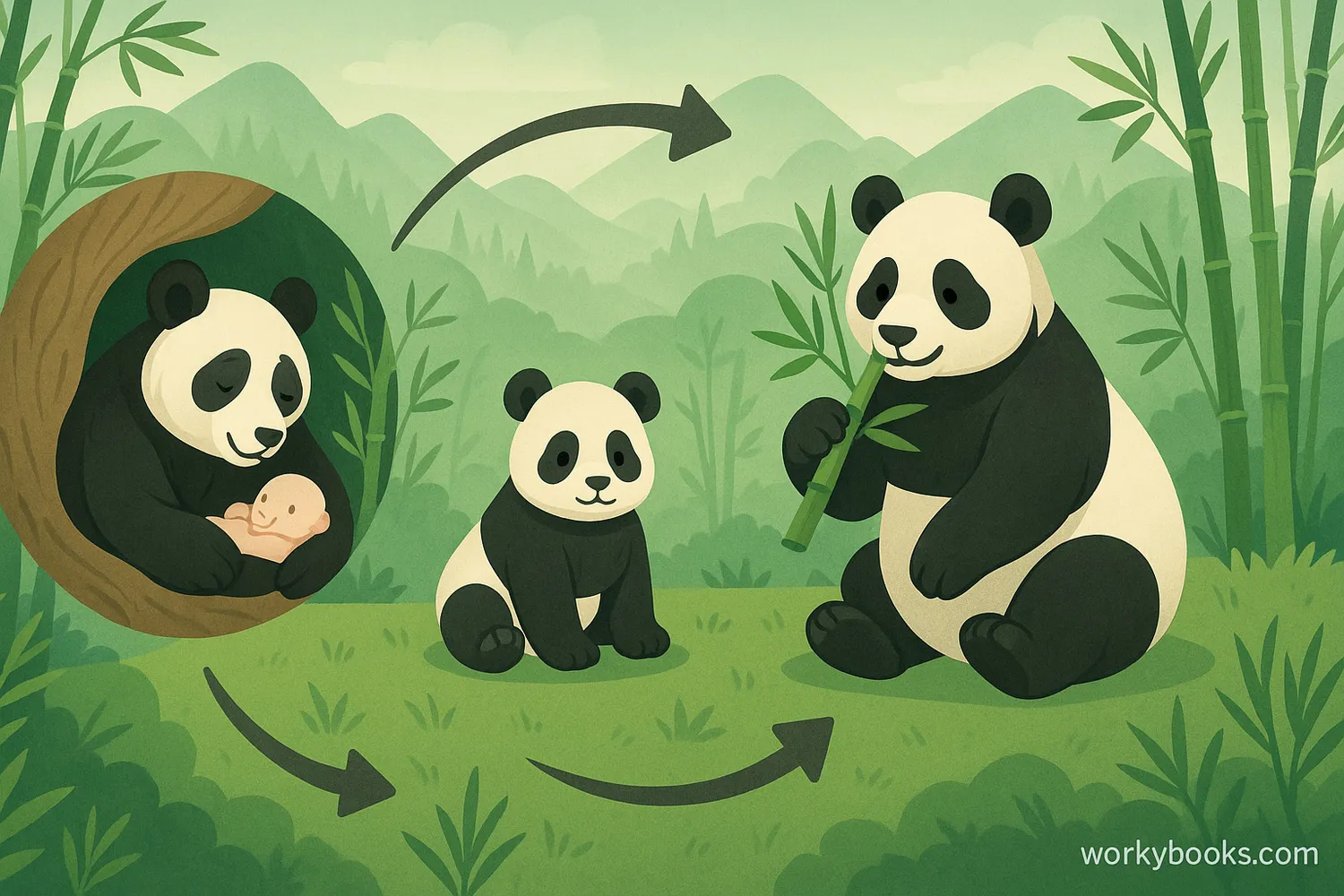
Giant pandas grow from tiny cubs to solitary adults in China’s mountain forests.
High in the misty mountains of China lives one of the world's most beloved animals—a creature that spends nearly every waking hour munching on bamboo and begins life as a tiny, helpless bundle smaller than a smartphone. The giant panda leads a remarkable existence filled with unique challenges and adaptations, from its vulnerable early days to its solitary adult life. This captivating cycle of growth, survival, and reproduction reveals how these iconic animals have evolved to thrive in their specialized mountain habitat.
The life cycle of a giant panda begins with birth, usually in a den high up in a hollow tree or cave. A newborn panda cub is incredibly small, weighing only about 3 to 5 ounces, roughly the size of a stick of butter! They are blind, toothless, and covered in sparse white fur. For the first few weeks, the mother panda provides constant care, cuddling her cub to keep it warm and safe. This early stage is crucial for the cub's survival, as it is completely dependent on its mother for everything.
As the cub grows, its distinctive black and white fur pattern begins to appear, and its eyes open around 40 to 60 days old. It starts to crawl, and by three to four months, it can walk clumsily. The mother continues to nurse the cub, but it will also begin to nibble on small amounts of bamboo, its primary food source, around six months of age. Bamboo is not very nutritious, so pandas need to eat a lot of it – up to 80 pounds per day for an adult! This specialized diet is a key adaptation that allows them to thrive in their specific environment.
Young pandas stay with their mothers for about 18 months to two years, learning essential survival skills like foraging for bamboo and climbing trees. This extended period of maternal care is vital for their development. Once they are ready, they leave their mother to live a mostly solitary life, establishing their own territories. Giant pandas reach sexual maturity around four to six years old. When it's time to mate, they briefly seek out another panda, and if successful, the female will give birth to one or two cubs in a new den, starting the amazing cycle all over again. Despite their efforts, giant pandas are an endangered species, facing threats like habitat loss. Conservation efforts are crucial to protect these magnificent creatures and ensure their continued existence.
Interesting Fact: A giant panda's digestive system is more like that of a carnivore, even though it mostly eats bamboo. They have a special wrist bone that acts like a thumb, helping them grip bamboo stalks.
How much does a newborn panda cub weigh?
3 to 5 ounces1 pound10 ounces5 to 10 pounds
What is the primary food source for giant pandas?
FishMeatBambooBerries
True or False: Giant pandas live a solitary life after leaving their mothers.
TrueFalse
Which word means 'a change that helps an organism survive'?
HabitatDependentAdaptationSolitary
Why is maternal care important for panda cubs?
For warmth and safetyLearning survival skillsDeveloping social bondsAll of the above
What makes bamboo a challenging food source?
It's hard to findNot very nutritiousIt's too toughIt has sharp thorns
How do pandas cope with their low-nutrition diet?
Eat other animalsEat vast amountsHibernate in winterStore fat reserves
What is a major threat to giant pandas?
PredatorsHabitat lossDiseaseClimate change
What might happen if all bamboo disappeared?
Pandas would find new foodPandas would become extinctPandas would migratePandas would evolve quickly
Why are conservation efforts important for pandas?
To study their behaviorTo increase tourismTo prevent extinctionTo capture them
Perfect For:
👩🏫 Teachers
• Reading comprehension practice
• Auto-graded assessments
• Literacy skill development
👨👩👧👦 Parents
• Reading practice at home
• Comprehension improvement
• Educational reading time
🏠 Homeschoolers
• Reading curriculum support
• Independent reading practice
• Progress monitoring
Reading Features:
📖
Reading Passage
Engaging fiction or nonfiction text
❓
Comprehension Quiz
Auto-graded questions
📊
Instant Feedback
Immediate results and scoring
📄
Printable Version
Download for offline reading
🔊
Read Aloud
Voice-over with word highlighting
Reviews & Ratings
No reviews yet. Be the first to share your experience!
Related Content
The Nature of Life Science
This passage, aligned with NGSS MS-LS1-1, introduces students in grades 6-8 to the foundational concepts of life science...
MS-LS1-1
Aerobic Organisms
This engaging, audio-integrated reading passage, titled 'Aerobic Organisms: The Breath of Life,' introduces students to ...
From Cells to Organisms
This educational passage, "From Cells to Organisms," explores the fundamental concept of how living things are built, st...
Using Dichotomous Keys to Identify Organisms
This audio-integrated passage, 'Using Dichotomous Keys to Identify Organisms,' introduces 6th-grade students to a fundam...
Science Vocabulary
This worksheet on domain-specific words will help students learn some science vocabulary. Students will be asked to matc...
L.3.6L.3.4.A
The Aorta: Molecules to Organisms of the Body's Largest Artery
This educational content features a fascinating reading passage, audio integrated for an enhanced learning experience, a...
Tools and Technology for Life Scientists
This informational passage for grades 6-8 explores the essential tools and technology used by life scientists, aligned t...
MS-LS1-1MS-LS1.A
Simple Machines Science Report
This science writing task requires students to clearly explain how three simple machines work using precise domain-speci...
W.5.4
Cryptobiosis: Pausing Life to Survive
This engaging, audio-integrated reading passage explores the amazing biological process of cryptobiosis, where organisms...
From Senses to Actions
This Grade 4-5 science passage, 'From Senses to Actions,' explores how our senses work together with the brain and body ...
The Science of Hibernation
This educational module, featuring an audio-integrated reading passage titled 'The Science of Hibernation,' is designed ...
How Bats Use Sound to See
This Grade 4-5 science passage, 'How Bats Use Sound to See,' explores the fascinating process of echolocation in bats. S...
Citizen Science and Ecological Monitoring
This engaging passage for grades 6-8 introduces the concept of citizen science and its critical role in ecological monit...
MS-LS2-1
Life Cycle Stages
This comprehensive word sort activity helps Grade 3 students understand the universal stages of life cycles as outlined ...
The Pumpkin Life Cycle
This informational worksheet explores the pumpkin lifecycle, guiding students through procedural steps in a scientific t...
RI.2.3RI.2.10
What Is Earth Science?
This engaging middle school science passage introduces students to the field of Earth science, aligning with NGSS standa...
MS-ESS1MS-ESS2MS-ESS3SEP
Barnacles and Biofouling
This engaging, audio-integrated reading passage, 'Barnacles and Biofouling,' delves into the fascinating world of how ti...
Life Makers
This engaging word sort activity helps elementary students understand the diverse methods of reproduction in living orga...
Growth and Development of Organisms
This middle school science passage, aligned with NGSS standards MS-LS1-4 and MS-LS1-5, provides an in-depth look at the ...