This learning resource is available in interactive and printable formats. The interactive worksheet can be played online and assigned to students. The Printable PDF version can be downloaded and printed for completion by hand.
This Grade 4-5 science passage, 'From Senses to Actions,' explores how our senses work together with the brain and body to help us respond quickly to the world around us. Students will learn about the nervous system, how messages travel from sense organs to the brain, and how the body reacts to different stimuli. Key concepts such as stimulus, response, receptors, and neurons are clearly explained with real-life examples, following the NGSS standards for general science. The passage includes a glossary for key vocabulary, a Spanish translation, and multiple-choice and writing activities to reinforce understanding. Audio integration supports learners of all backgrounds. This resource is perfect for building foundational knowledge in life science and helping students connect science concepts to their everyday experiences.
CONTENT PREVIEW
Expand content preview
From-Senses-to-Actions
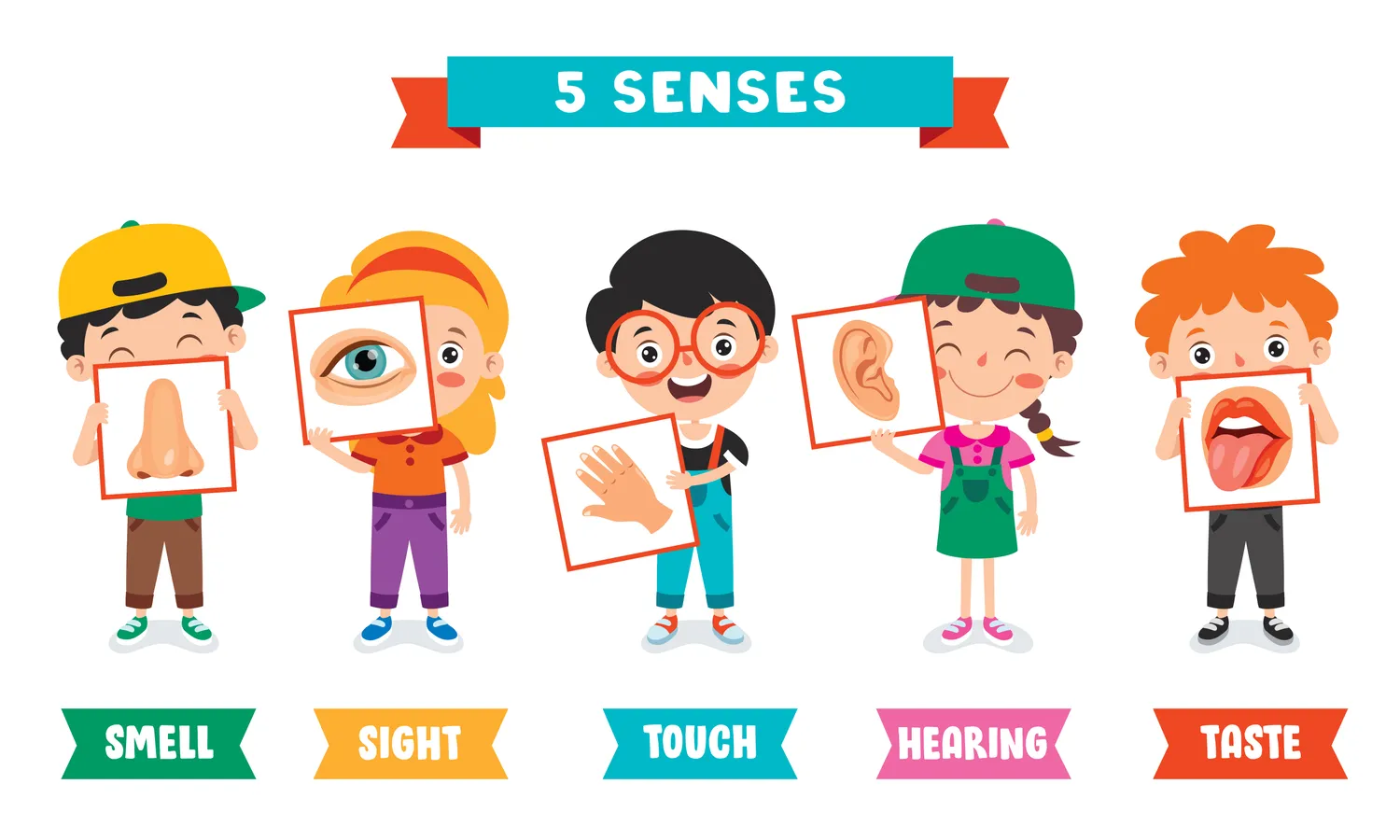
The human body is able to react quickly to things happening around us because of our senses and the way they work with the brain. Our senses include sight, hearing, taste, touch, and smell. Each sense has special parts called receptors that notice changes in the environment. For example, your eyes have receptors that detect light, and your skin has receptors for touch and temperature.
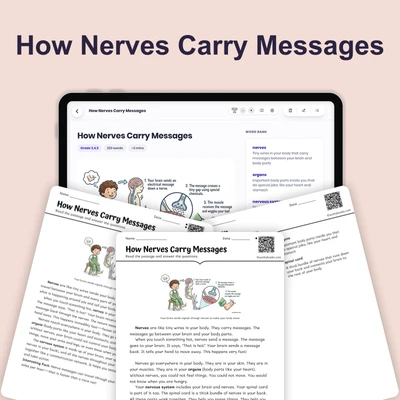
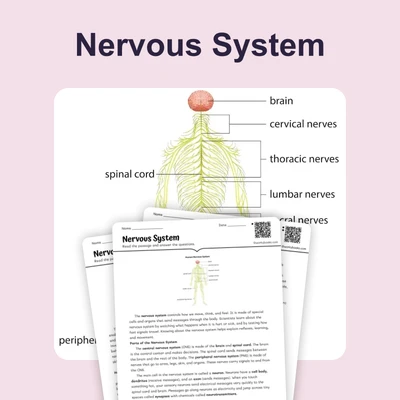
When something happens, like touching a hot stove, your skin’s receptors send a message called a signal through special cells called neurons. These neurons are like tiny wires that carry information very quickly. The signal travels to your brain, which acts like the control center of your body.
The brain receives the signal and quickly decides what to do. It sends a message back through other neurons to your muscles, telling them to move away from the danger. This whole process is called a response. The thing that causes you to react, like the hot stove, is called a stimulus.
This system helps keep us safe and lets us enjoy the world. For example, if you smell smoke, your nose’s receptors send a signal to your brain, and you know to move away or get help. Animals use their senses and responses in similar ways to find food or escape danger.
Without our senses and the nervous system, we would not be able to respond quickly to things around us. This amazing teamwork between the senses, brain, and muscles helps us survive and do everyday activities.
Interesting Fact: Some responses, like blinking when something comes near your eyes, happen so fast that the message does not even go to the thinking part of your brain first!
What is a sense organ example?
EyeHeartLungStomach
What carries signals in the body?
NeuronsBonesVeinsMuscles
What is a stimulus?
Something causing a reactionA type of muscleA kind of neuronPart of the stomach
Why do we move from a hot stove?
To protect ourselvesTo eat foodTo sleepFor exercise
How does a signal reach the brain?
Through neuronsThrough musclesThrough skinThrough bones
What would happen if you could not feel pain?
You might not avoid dangerYou could taste betterYou would run fasterYou would see more
Touching something hot is safe. True or false?
TrueFalse
What is the control center of the body?
BrainSkinHeartMuscle
Perfect For:
👩🏫 Teachers
• Reading comprehension practice
• Auto-graded assessments
• Literacy skill development
👨👩👧👦 Parents
• Reading practice at home
• Comprehension improvement
• Educational reading time
🏠 Homeschoolers
• Reading curriculum support
• Independent reading practice
• Progress monitoring
Reading Features:
📖
Reading Passage
Engaging fiction or nonfiction text
❓
Comprehension Quiz
Auto-graded questions
📊
Instant Feedback
Immediate results and scoring
📄
Printable Version
Download for offline reading
🔊
Read Aloud
Voice-over with word highlighting
Reviews & Ratings
No reviews yet. Be the first to share your experience!
Related Content
The Nature of Life Science
This passage, aligned with NGSS MS-LS1-1, introduces students in grades 6-8 to the foundational concepts of life science...
MS-LS1-1
Aerobic Organisms
This engaging, audio-integrated reading passage, titled 'Aerobic Organisms: The Breath of Life,' introduces students to ...
From Cells to Organisms
This educational passage, "From Cells to Organisms," explores the fundamental concept of how living things are built, st...
Using Dichotomous Keys to Identify Organisms
This audio-integrated passage, 'Using Dichotomous Keys to Identify Organisms,' introduces 6th-grade students to a fundam...
Science Vocabulary
This worksheet on domain-specific words will help students learn some science vocabulary. Students will be asked to matc...
L.3.6L.3.4.A
The Aorta: Molecules to Organisms of the Body's Largest Artery
This educational content features a fascinating reading passage, audio integrated for an enhanced learning experience, a...
Simple Machines Science Report
This science writing task requires students to clearly explain how three simple machines work using precise domain-speci...
W.5.4
Tools and Technology for Life Scientists
This informational passage for grades 6-8 explores the essential tools and technology used by life scientists, aligned t...
MS-LS1-1MS-LS1.A
Cryptobiosis: Pausing Life to Survive
This engaging, audio-integrated reading passage explores the amazing biological process of cryptobiosis, where organisms...
The Science of Hibernation
This educational module, featuring an audio-integrated reading passage titled 'The Science of Hibernation,' is designed ...
The Life Cycle of a Giant Panda
This engaging, audio-integrated reading passage, titled "The Life Cycle of a Giant Panda," explores the fascinating stag...
How Bats Use Sound to See
This Grade 4-5 science passage, 'How Bats Use Sound to See,' explores the fascinating process of echolocation in bats. S...
Citizen Science and Ecological Monitoring
This engaging passage for grades 6-8 introduces the concept of citizen science and its critical role in ecological monit...
MS-LS2-1
The Pumpkin Life Cycle
This informational worksheet explores the pumpkin lifecycle, guiding students through procedural steps in a scientific t...
RI.2.3RI.2.10
Life Cycle Stages
This comprehensive word sort activity helps Grade 3 students understand the universal stages of life cycles as outlined ...
What Is Earth Science?
This engaging middle school science passage introduces students to the field of Earth science, aligning with NGSS standa...
MS-ESS1MS-ESS2MS-ESS3SEP
Growth and Development of Organisms
This middle school science passage, aligned with NGSS standards MS-LS1-4 and MS-LS1-5, provides an in-depth look at the ...
MS-LS1-4MS-LS1-5
Life Makers
This engaging word sort activity helps elementary students understand the diverse methods of reproduction in living orga...
Barnacles and Biofouling
This engaging, audio-integrated reading passage, 'Barnacles and Biofouling,' delves into the fascinating world of how ti...