Growth and Development of Organisms — Reading Comprehension
Rate this
Premium Resource
Present
Present in classroom. No work saved
Assign
Classroom with student accounts, Track progress
Quick Play
No student accounts, assign with a link
Grades
5
6
7
8
Standards
MS-LS1-4
MS-LS1-5
PRINT+DIGITAL RESOURCE
This learning resource is available in interactive and printable formats. The interactive worksheet can be played online and assigned to students. The Printable PDF version can be downloaded and printed for completion by hand.
This middle school science passage, aligned with NGSS standards MS-LS1-4 and MS-LS1-5, provides an in-depth look at the growth and development of organisms, with a special focus on humans. Students will learn about the distinct stages of human life—from infancy, through childhood and adolescence, to adulthood—exploring the physical and biological mechanisms that drive these changes. The passage highlights how factors like genetics, hormones, nutrition, exercise, and sleep interact to influence growth. By comparing human development with processes like complete and incomplete metamorphosis in insects, the passage broadens students' understanding of life cycles in the natural world. The content also examines life expectancy and the science of aging. Activities include comprehension questions, writing prompts, and graphic organizers to reinforce learning. Audio integration ensures accessibility for diverse learners. This resource is ideal for grades 6-8, supporting scientific literacy and critical thinking.
CONTENT PREVIEW
Expand content preview
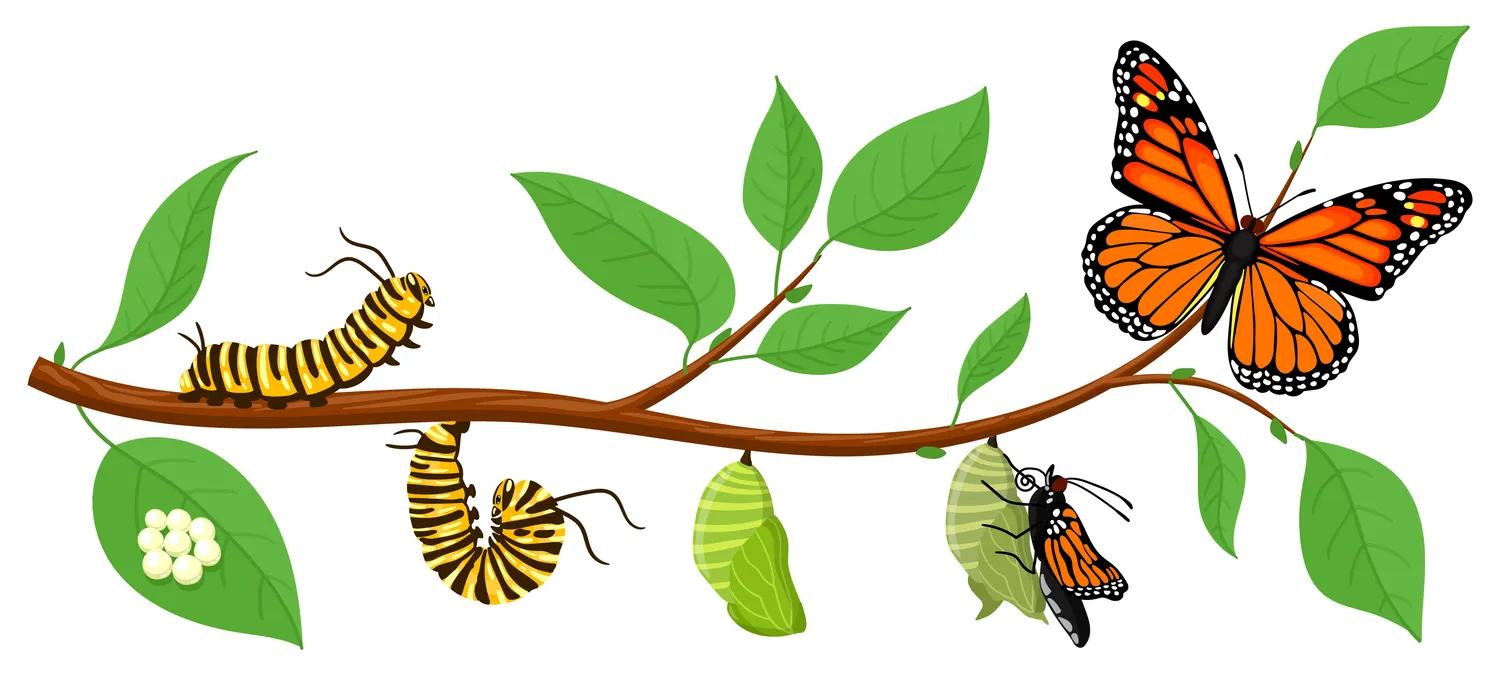
Butterfly life cycle.
Growth and development are essential biological processes that shape the life of every organism. Human beings, like all living things, experience a sequence of changes from birth through adulthood. These changes are visible in the way our bodies, abilities, and behaviors transform over time. Scientists study these stages to understand how genetics, environment, and internal processes interact to create the patterns we observe in nature.
Stages of Human Development
Human development begins with infancy, a period marked by rapid physical growth. During this stage, a baby's weight can double within the first six months, and their height increases quickly. Motor skills, such as crawling and grasping, develop as the nervous system matures. In childhood, growth continues but at a slower rate. Children gain new abilities, including language, reasoning, and complex movements, as their brains and bodies develop. Adolescence is the stage where major changes occur due to hormones. Growth spurts cause rapid increases in height and weight, and sexual maturity is reached. The body produces hormones like estrogen and testosterone, which trigger the development of secondary sexual characteristics. Finally, adulthood is a time of maintenance and gradual aging. While growth stops, the body works to repair tissues and maintain function. Over time, aging leads to slower cell division, reduced strength, and increased risk of disease.
Factors Affecting Growth and Development
Several factors influence how organisms grow and develop. Genetics determines traits like height, eye color, and body type. However, environmental factors such as nutrition and access to healthy food are crucial for proper development. A child who eats a balanced diet rich in proteins, vitamins, and minerals is more likely to reach their full genetic potential. Hormones act as chemical messengers that regulate growth and changes during puberty. Exercise and sleep are also vital. Physical activity strengthens muscles and bones, while sleep allows the body to grow and repair. Scientists have found that most human growth occurs during sleep due to increased hormone release at night.
Comparing Human and Other Organism Development
Not all organisms grow in the same way. Many insects, for example, undergo metamorphosis. In complete metamorphosis, insects like butterflies pass through four stages: egg, larva, pupa, and adult. Each stage looks very different and serves a unique function. In incomplete metamorphosis, insects such as grasshoppers go from egg to nymph to adult, with each stage resembling a smaller version of the adult. These patterns help scientists understand the diversity of life cycles. In both humans and insects, the environment and internal biological processes must work together for healthy development.
Life expectancy, or the average number of years an organism is expected to live, varies widely between species. In humans, advances in medicine, nutrition, and living conditions have increased life expectancy worldwide. However, aging is inevitable. Scientists continue to research how genetics, cellular processes, and lifestyle choices affect how we age.
Understanding growth and development helps us make healthy choices and appreciate the complexity of life on Earth. These processes are shaped by both inherited information and the environment, demonstrating the interconnectedness of living systems.
Interesting Fact: Some insects, like mayflies, spend most of their lives as aquatic larvae and live only a few hours as adults!
What happens during infancy in humans?
Rapid physical growth and development of motor skillsThe body stops growing and begins to ageHormone levels decrease sharplyComplete metamorphosis occurs
Which factor is NOT mentioned as affecting human growth?
NutritionExerciseWeatherHormones
In complete metamorphosis, what is the correct order of stages for a butterfly?
What is the main function of hormones during adolescence?
They trigger growth spurts and sexual maturationThey stop growth permanentlyThey determine eye colorThey make organisms sleep more
What does the term 'life expectancy' mean in the passage?
The average number of years an organism is expected to liveThe age when a person stops growingThe number of stages in insect metamorphosisA type of hormone
What is the meaning of the word 'metamorphosis' as used in the passage?
A change in form during an organism's life cycleA period of sleepA type of genetic diseaseA process of aging
Based on the passage, why is sleep important for growth?
Most human growth happens during sleep due to hormone releaseSleep helps insects complete metamorphosisSleep only affects adultsSleep is not important for growth
How is human development different from insect metamorphosis?
Humans do not change form as drastically as insects during developmentHumans lay eggs like insectsHumans skip the childhood stageHumans develop wings as adults
True or False: Genetics alone determines how tall a person will be.
TrueFalse
True or False: All organisms have the same life expectancy.
TrueFalse
Perfect For:
👩🏫 Teachers
• Reading comprehension practice
• Auto-graded assessments
• Literacy skill development
👨👩👧👦 Parents
• Reading practice at home
• Comprehension improvement
• Educational reading time
🏠 Homeschoolers
• Reading curriculum support
• Independent reading practice
• Progress monitoring
Reading Features:
📖
Reading Passage
Engaging fiction or nonfiction text
❓
Comprehension Quiz
Auto-graded questions
📊
Instant Feedback
Immediate results and scoring
📄
Printable Version
Download for offline reading
🔊
Read Aloud
Voice-over with word highlighting
Reviews & Ratings
No reviews yet. Be the first to share your experience!
Related Content
The Fascinating Dumbo Octopus: Deep-Sea Wonder
Aligned to NGSS, this passage explores Dumbo octopus adaptations like ear-like fins for swimming at 3,000-13,000 ft dept...
MS-LS1-5RI.6.3RI.7.3RI.8.8
Venus Flytrap Facts
This passage explains where Venus flytraps live in North Carolina bogs, how their snap traps work, and their unique way ...
MS-LS1-4RI.6.3RI.7.3RI.8.8
Pitcher Plants: Reproduction Facts
This passage describes tropical and North American pitcher plants, their liquid-filled traps, and how they get nutrients...
MS-LS1-4RI.6.3RI.7.3RI.8.8
What Abiotic Factors Determine the Type of Biome?
This NGSS-aligned middle school reading passage explains how abiotic factors—specifically temperature and precipitation—...
MS-LS1-5
What Is the Floor of an Aquatic Biome Called?
This NGSS-aligned science reading passage explains the benthic zone, which is the floor of an aquatic biome such as ocea...
MS-LS1-4
Echidna Puggle
This interactive science reading passage, titled "Echidna Life: From Egg to Puggle," delves into the fascinating reprodu...
MS-LS1-4
Seed Dispersal
This middle school science passage examines the fascinating process of seed dispersal and the diverse strategies plants ...
MS-LS1-4
Cell Division: Mitosis
This comprehensive science passage for middle school students explores the key concept of mitosis, the division of the n...
MS-LS1-4
Desert Birds
This informational passage for grades 6-8 examines how desert birds survive and thrive in some of the harshest environme...
MS-LS2-1MS-LS2-2MS-LS1-4
Asexual vs Sexual Reproduction
This NGSS-aligned passage for grades 6-8 explores sexual and asexual reproduction, comparing their underlying mechanisms...
MS-LS1-4MS-LS3-2
Reproductive System
This passage provides a comprehensive overview of the human reproductive system for middle school students, aligning wit...
MS-LS1-3MS-LS1-4
Fertilization and Early Development
This passage explores the scientific process of fertilization and early human development, aligning with NGSS standards ...
MS-LS1-4MS-LS3-2
Cytokinesis and Cell Growth
This middle school science reading passage explores the essential biological process of cytokinesis, the division of a c...
MS-LS1-4
Plant Reproduction
This comprehensive passage for grades 6-8 explores the fascinating world of plant reproduction, aligning with NGSS stand...
MS-LS1-4MS-LS3-2
Mammal Migration
This comprehensive passage on mammal migration, designed for grades 6-8 and aligned with NGSS standards MS-LS2-2 and MS-...
MS-LS2-2MS-LS1-4
How Animals Navigate
This engaging science passage for grades 6-8 examines the fascinating world of navigation strategies. Aligned with NGSS ...
MS-LS1-4MS-ESS3-3MS-ETS1-1
What Is a Tropical Savanna?
This NGSS-aligned science passage for grades 6-8 explores the rich animal diversity of the savanna ecosystem. Students w...
MS-LS2-1MS-LS2-2MS-LS2-4MS-LS1-4
The Cell Cycle
This middle school science reading passage introduces the cell cycle as the life of a cell from formation to division. A...
MS-LS1-4
Animal Survival Behaviors
This passage, aligned with NGSS standards MS-LS1-4 and MS-LS1-5, explores the complex and fascinating world of animal be...