This learning resource is available in interactive and printable formats. The interactive worksheet can be played online and assigned to students. The Printable PDF version can be downloaded and printed for completion by hand.
This engaging, audio-integrated reading passage, 'Barnacles and Biofouling,' delves into the fascinating world of how tiny marine organisms, specifically barnacles, interact with and alter their environment. Aligned with NGSS standard LS2.A: Interdependent Relationships, the passage explains what biofouling is and its significant impact on human activities, particularly shipping. Students will learn about the life cycle of barnacles, how they attach to surfaces, and the challenges they create for marine vessels. Key terms like 'larvae,' 'sessile,' and 'biofouling' are defined, providing a strong foundation for understanding these ecological interactions. The passage also touches upon the broader implications of these relationships within aquatic ecosystems, making it a valuable resource for grade 6 science education.
CONTENT PREVIEW
Expand content preview
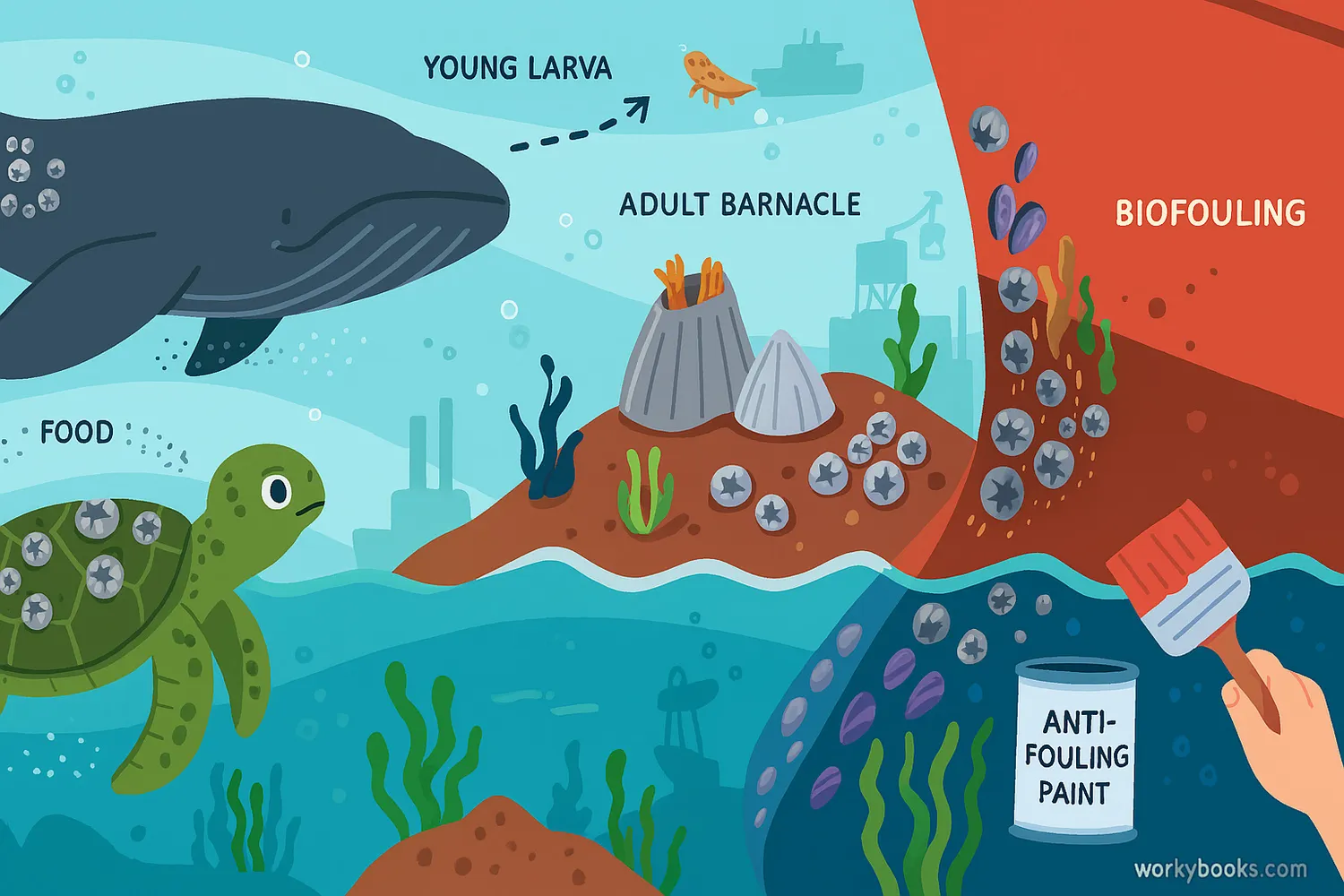
Barnacle life cycle and biofouling effects on ships, rocks, and marine animals.
Imagine a world where tiny creatures stick to everything, slowing down giant ships and making them use more fuel. This is the reality of barnacles and a process called biofouling. Barnacles are small, crustacean animals, related to crabs and lobsters, but they live a very different life. Instead of scuttling around, adult barnacles are sessile, meaning they stay fixed in one place for their entire lives.
How do these tiny creatures cause such big problems? It all starts when they are young. Barnacles begin their lives as free-swimming larvae. These microscopic larvae float around in the ocean, searching for a hard surface to attach to. They look for rocks, piers, or even the bottoms of ships. Once a suitable spot is found, the larva uses a special glue, one of the strongest natural glues known, to cement itself permanently to the surface.
After attaching, the larva undergoes a transformation, developing a hard, protective shell made of calcium carbonate. This shell shields the soft-bodied barnacle inside. Over time, many barnacles will attach to the same surface, creating a rough, bumpy layer. This accumulation of marine organisms on underwater surfaces is what we call biofouling. It's not just barnacles; algae, mussels, and other tiny creatures also contribute to this buildup.
Biofouling is a major headache for the shipping industry. When a ship's hull becomes covered in barnacles and other marine growth, it increases the ship's drag in the water. Drag is the force that resists movement. More drag means the ship has to work harder, using more fuel to maintain its speed. This leads to higher fuel costs and increased carbon emissions, which are harmful to the environment. To fight biofouling, ships are often painted with special anti-fouling paints that prevent marine organisms from attaching.
Beyond ships, barnacles also attach to whales, sea turtles, and even other marine organisms. While they generally don't harm these animals, they show just how widespread and persistent these tiny architects of the marine world can be. Their ability to find and cling to surfaces is a fascinating example of how organisms interact with and alter their environment.
Interesting Fact: Some species of barnacles can live for over 10 years, constantly filtering food from the water while cemented to their chosen spot.
What are barnacles related to?
FishCrabs and lobstersJellyfishSeaweed
What is the main material of a barnacle's protective shell?
ClayWoodCalcium carbonatePlastic
Why is biofouling a problem for ships?
Makes ships look dirtyIncreases drag and fuel useAttracts piratesMakes ships too heavy
How do barnacles initially attach to a surface?
They swim into placeThey use suction cupsThey secrete strong glueThey dig a hole
What does 'sessile' mean in the context of adult barnacles?
They can swim fastThey stay in one placeThey eat seaweedThey are very small
Which of these is NOT typically part of biofouling?
AlgaeMusselsBarnaclesSeabirds
Why are anti-fouling paints used on ships?
For decorationTo make ships lighterTo prevent marine growthTo attract fish
Increased drag on a ship's hull leads to higher fuel costs and carbon emissions. This statement is:
TrueFalse
If a ship's hull is covered in barnacles, what would be the likely effect on its speed?
It would go fasterIt would go slowerIts speed wouldn't changeIt would float higher
What could be a potential benefit of biofouling in a very specific, limited ecological context?
Making ships fasterProviding new habitat for small creaturesCleaning ocean waterGenerating electricity
Perfect For:
👩🏫 Teachers
• Reading comprehension practice
• Auto-graded assessments
• Literacy skill development
👨👩👧👦 Parents
• Reading practice at home
• Comprehension improvement
• Educational reading time
🏠 Homeschoolers
• Reading curriculum support
• Independent reading practice
• Progress monitoring
Reading Features:
📖
Reading Passage
Engaging fiction or nonfiction text
❓
Comprehension Quiz
Auto-graded questions
📊
Instant Feedback
Immediate results and scoring
📄
Printable Version
Download for offline reading
🔊
Read Aloud
Voice-over with word highlighting
Reviews & Ratings
No reviews yet. Be the first to share your experience!
Related Content
The Nature of Life Science
This passage, aligned with NGSS MS-LS1-1, introduces students in grades 6-8 to the foundational concepts of life science...
MS-LS1-1
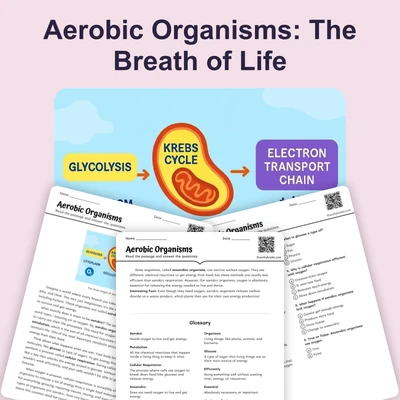
Aerobic Organisms
This engaging, audio-integrated reading passage, titled 'Aerobic Organisms: The Breath of Life,' introduces students to ...
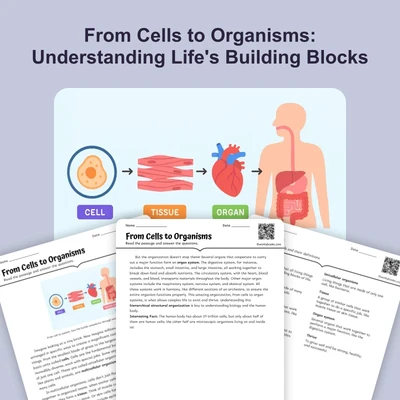
From Cells to Organisms
This educational passage, "From Cells to Organisms," explores the fundamental concept of how living things are built, st...
Using Dichotomous Keys to Identify Organisms
This audio-integrated passage, 'Using Dichotomous Keys to Identify Organisms,' introduces 6th-grade students to a fundam...
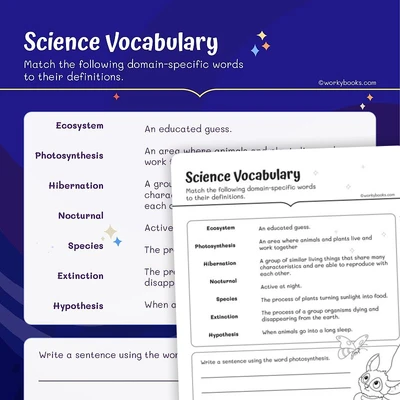
Science Vocabulary
This worksheet on domain-specific words will help students learn some science vocabulary. Students will be asked to matc...
L.3.6L.3.4.A
The Aorta: Molecules to Organisms of the Body's Largest Artery
This educational content features a fascinating reading passage, audio integrated for an enhanced learning experience, a...
Tools and Technology for Life Scientists
This informational passage for grades 6-8 explores the essential tools and technology used by life scientists, aligned t...
MS-LS1-1MS-LS1.A
Simple Machines Science Report
This science writing task requires students to clearly explain how three simple machines work using precise domain-speci...
W.5.4
Cryptobiosis: Pausing Life to Survive
This engaging, audio-integrated reading passage explores the amazing biological process of cryptobiosis, where organisms...
From Senses to Actions
This Grade 4-5 science passage, 'From Senses to Actions,' explores how our senses work together with the brain and body ...
The Life Cycle of a Giant Panda
This engaging, audio-integrated reading passage, titled "The Life Cycle of a Giant Panda," explores the fascinating stag...
The Science of Hibernation
This educational module, featuring an audio-integrated reading passage titled 'The Science of Hibernation,' is designed ...
How Bats Use Sound to See
This Grade 4-5 science passage, 'How Bats Use Sound to See,' explores the fascinating process of echolocation in bats. S...
Citizen Science and Ecological Monitoring
This engaging passage for grades 6-8 introduces the concept of citizen science and its critical role in ecological monit...
MS-LS2-1
Life Cycle Stages
This comprehensive word sort activity helps Grade 3 students understand the universal stages of life cycles as outlined ...
The Pumpkin Life Cycle
This informational worksheet explores the pumpkin lifecycle, guiding students through procedural steps in a scientific t...
RI.2.3RI.2.10
What Is Earth Science?
This engaging middle school science passage introduces students to the field of Earth science, aligning with NGSS standa...
MS-ESS1MS-ESS2MS-ESS3SEP
Life Makers
This engaging word sort activity helps elementary students understand the diverse methods of reproduction in living orga...
Growth and Development of Organisms
This middle school science passage, aligned with NGSS standards MS-LS1-4 and MS-LS1-5, provides an in-depth look at the ...