Amur Leopard Conservation
Interactive passage with audio narration, comprehension questions, and printable PDF.
By completing this purchase you agree to our Terms of Use and Privacy Policy. Your subscription renews automatically until you cancel. You can cancel anytime from your account settings. All sales are final and non-refundable. Digital content is available for download in your account immediately upon purchase.
What's included
Amur Leopard Conservation preview and details
About this printable Amur Leopard Conservation science reading passage, NGSS-aligned (Grade 6)
Sample passage and quiz from Amur Leopard Conservation
Reading passage and comprehension quiz preview
Amur Leopard Conservation
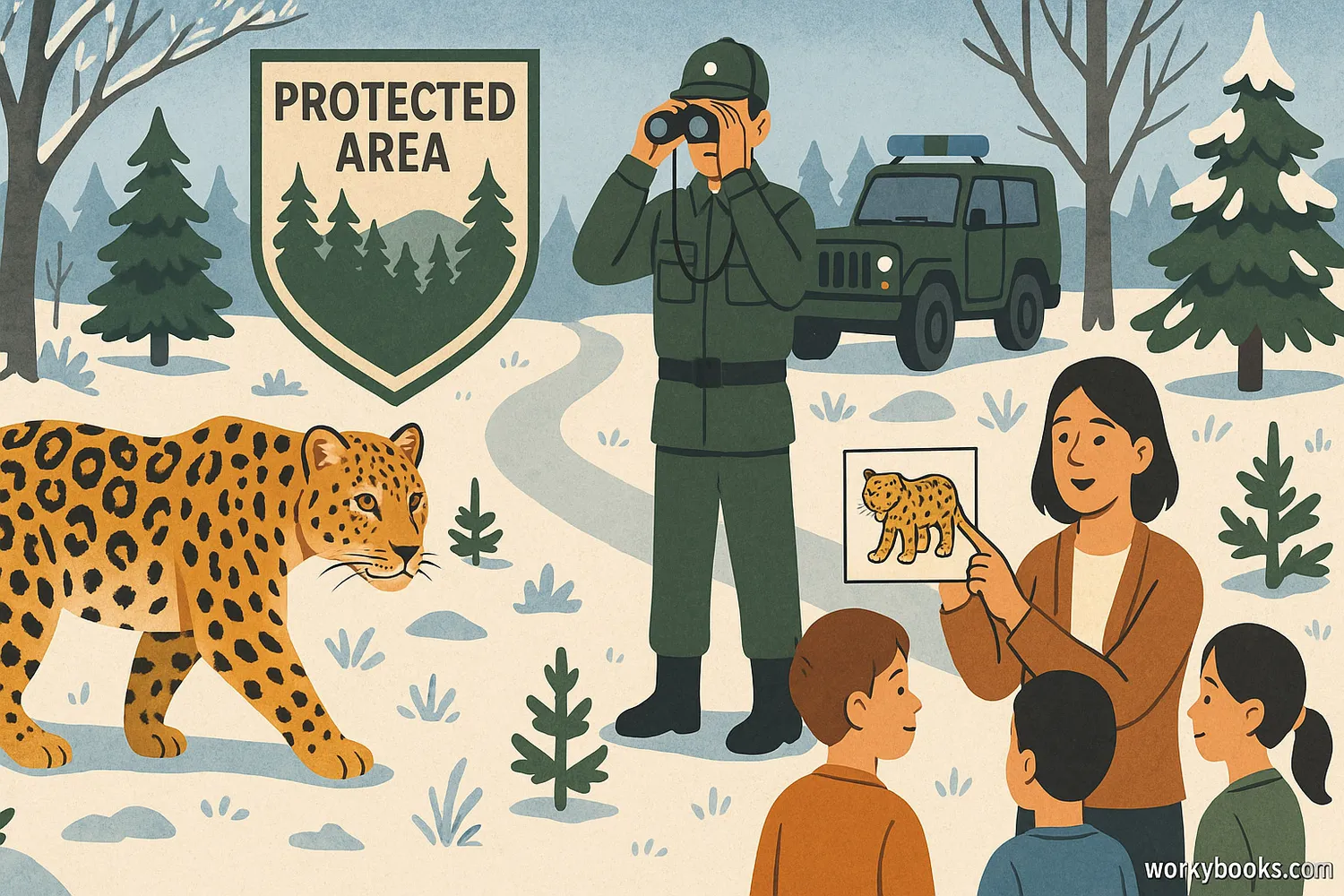
Imagine a world where one of the most beautiful and elusive big cats prowls the snowy forests of the Far East. This is the world of the Amur leopard, a creature so rare it faces constant danger. These magnificent animals, also known as the Siberian leopard, are found in a small region of Russia and China. Their existence is vital for maintaining biodiversity, which means having a wide variety of living things in an ecosystem. Think of biodiversity as a strong chain; if one link breaks, the whole chain is weakened.
The Amur leopard is critically endangered, meaning there are very few left in the wild. Scientists estimate fewer than 120 individuals remain. This makes their protection a global priority. One of the biggest threats to these leopards is habitat loss. Their forest homes are shrinking due to logging, wildfires, and human development, which clears land for farms or towns. When their habitat disappears, leopards lose places to hunt, mate, and raise their cubs. This directly impacts their ability to survive and thrive.
Another major problem is poaching, which is the illegal hunting of animals. Amur leopards are hunted for their beautiful fur and for their bones, which are sometimes used in traditional medicines. Their prey animals, like deer and wild boar, are also poached, leaving the leopards with less food to eat. This creates a difficult cycle, as fewer prey animals mean fewer leopards can survive.
To protect these precious creatures, various conservation efforts are underway. Establishing protected areas, like national parks and nature reserves, is crucial. These areas provide safe havens where leopards can live undisturbed. Anti-poaching patrols work to stop illegal hunting and protect both the leopards and their food sources. Education programs help local communities understand the importance of Amur leopards and how to live alongside them without conflict. Reforestation projects, where new trees are planted, help to restore their lost habitats.
These design solutions for conservation are essential for preserving the Amur leopard and the unique ecosystem they inhabit. By working together, we can ensure that future generations can still marvel at the beauty of this incredible big cat and understand its vital role in nature. Protecting the Amur leopard also helps maintain ecosystem services, which are the benefits humans receive from healthy ecosystems, such as clean air and water.
Interesting Fact: The Amur leopard is an excellent climber and can even drag its prey up trees to keep it safe from other predators.
Comprehension quiz (10 questions)
1. How many Amur leopards are estimated to be left?
2. What is another name for the Amur leopard?
3. Amur leopards are found in which two countries?
4. Why is biodiversity compared to a strong chain?
5. What happens to leopards when their habitat shrinks?
6. Which of these is NOT a conservation effort?
7. Why are Amur leopards considered 'critically endangered'?
8. What does 'poaching' mean in the passage?
9. If Amur leopards disappear, the ecosystem would be unaffected.
10. Protecting Amur leopards helps maintain what?
Perfect for the way you teach
- Build comprehension skills
- Auto-graded quiz
- Differentiated reading
- Read together at home
- Improve fluency
- Quiet reading time
- Reading curriculum support
- Independent practice
- Track Lexile growth