This learning resource is available in interactive and printable formats. The interactive worksheet can be played online and assigned to students. The Printable PDF version can be downloaded and printed for completion by hand.
This passage explores the fascinating evolution from barter to the earliest coins in ancient civilizations, focusing on the economic and social changes that occurred in the 6th century BCE. Students will learn how societies transitioned from trading goods directly to using standardized currency, with examples from Mesopotamia, Lydia, and China. The passage is aligned with CA HSS 6.2 and CCSS RH.6-8.2, ensuring students practice historical analysis and literacy skills. Activities include reading comprehension, vocabulary practice, graphic organizers, and writing prompts. Read aloud audio and Spanish translation are provided for accessibility. Key topics include currency, economic exchange, and the geographic and technological factors that influenced the development of money. This resource supports deeper understanding of ancient economies and the impact of innovation on daily life.
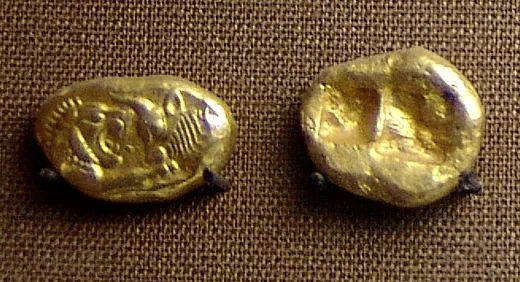
The development of money transformed ancient civilizations and shaped the way people exchanged goods and services. In the 6th century BCE, societies across Mesopotamia, Lydia, and China shifted from barter—the direct trading of items—to the use of coins and other forms of currency. This change made trade more efficient and influenced economic, social, and political systems.
Early economic systems relied on barter, where people exchanged items such as grain, livestock, or pottery. However, barter had limitations. It required a "double coincidence of wants," meaning both parties needed to have what the other wanted. For example, if a potter wanted wheat but the farmer did not want pottery, no trade could occur. Archaeological evidence from ancient Mesopotamia—such as clay tablets recording trades—shows how people struggled with these challenges. Over time, some societies used commodity money, like cowrie shells in China or weighed silver in Egypt, to make exchanges easier, but these forms were still not standardized.
The first true coins appeared in Lydia, a kingdom located in what is now western Turkey, around 600 BCE. The Lydians minted coins from a natural alloy of gold and silver called electrum. These coins, stamped with images and set weights, could be trusted for their value. Lydia's King Croesus is often credited with creating the first bimetallic coin system. Archaeological discoveries of Lydian coins provide direct evidence of their use in trade and taxes. Meanwhile, in China, bronze coins shaped like knives and spades were also introduced. These innovations made it possible to conduct business with strangers and over greater distances.
The introduction of coins led to significant changes in society. Governments could collect taxes more easily, and merchants could trade across vast regions without complicated negotiations. Coins also helped shape social hierarchies, as those who controlled the minting of coins gained power and prestige. Furthermore, the standardization of currency supported the growth of marketplaces and urban centers, which became important economic and cultural hubs.
The transition from barter to coins marked a turning point in world history, connecting economies and cultures in new ways. The creation of money allowed ancient civilizations to expand trade networks, increase efficiency, and innovate in technology and governance. Understanding how money developed helps historians analyze broader themes of human adaptation and progress.
Interesting Fact: Some of the oldest known coins from Lydia still show clear images and inscriptions, offering a glimpse into ancient art and royal symbols.
Where did the first coins appear?
LydiaRomeEgyptGreece
What is barter?
Trading without moneyUsing gold coinsPaying taxesMaking pottery
Who was King Croesus?
Lydian king who minted coinsChinese emperorEgyptian pharaohGreek philosopher
Why did coins help trade grow?
Coins had set valueCoins were heavyCoins were made of clayCoins replaced writing
What effect did coins have on society?
Made taxes easierReduced tradeEnded farmingStopped travel
What is 'electrum'?
Gold and silver alloyA type of potteryA government taxA trade market
Coins were first made in China. True or false?
TrueFalse
Which word means 'system of money'?
CurrencyBarterPotteryHierarchy
Perfect For:
👩🏫 Teachers
• Reading comprehension practice
• Auto-graded assessments
• Literacy skill development
👨👩👧👦 Parents
• Reading practice at home
• Comprehension improvement
• Educational reading time
🏠 Homeschoolers
• Reading curriculum support
• Independent reading practice
• Progress monitoring
Reading Features:
📖
Reading Passage
Engaging fiction or nonfiction text
❓
Comprehension Quiz
Auto-graded questions
📊
Instant Feedback
Immediate results and scoring
📄
Printable Version
Download for offline reading
🔊
Read Aloud
Voice-over with word highlighting
Reviews & Ratings
No reviews yet. Be the first to share your experience!
Related Content
Ancient Civilizations and the Environment
This engaging history reading passage explores how ancient civilizations such as Mesopotamia, Egypt, and the Maya adapte...
Gender Roles in Ancient Civilizations
This engaging history reading passage explores the roles of men and women in various ancient civilizations, including Me...
Writing Prompts Ancient Civilizations
Step into the shoes of an archaeologist with this engaging worksheet focused on ancient civilizations. Students will be ...
W.5.2.A-2W.5.1.CW.5.1.D
Power and Authority in Ancient Civilizations
This passage explores the roles of men in positions of power within ancient civilizations, focusing on their authority i...
Ancient Monarchy
This reading passage explores the concept of monarchy in ancient civilizations, focusing on the origins, structure, and ...
Evidence in Ancient History
This engaging history reading passage investigates how archaeologists and historians discover clues about how ancient pe...
Ancient Theocracy
This engaging history reading passage explores the concept of theocracy in ancient civilizations, where priests and reli...
Ancient Mathematics
This passage explores the essential role of mathematics in ancient civilizations, including Mesopotamia, Egypt, Greece, ...
Ancient Canaan
This educational passage explores the land of Canaan, the historical homeland of the ancient Israelites. Students will l...
Ancient Science and Medicine
This comprehensive reading passage explores the development of science and medicine in ancient civilizations, including ...
Ancient Literature
This passage explores the importance of ancient stories and poems from civilizations such as Greece, India, and Israel. ...
Ancient Agriculture Farming
This passage explores the transformative impact of farming on ancient societies, examining how the Neolithic Revolution ...
Ancient Writing Systems
This engaging history reading passage explores the origins and evolution of ancient writing systems, including cuneiform...
Geography of Ancient Israel
This passage explores the rich geography of Ancient Israel, focusing on how landforms, climate, and natural resources sh...
Slavery Across Civilizations
This detailed history reading passage explores the role and impact of slavery across several ancient civilizations, incl...
Social Classes in Ancient Societies
This passage explores the concept of social hierarchies in ancient civilizations, focusing on why societies such as Meso...
Social structures in Ancient World
This passage explores the organization and significance of family life in ancient societies, focusing on how extended fa...
Polytheism and Monotheism in Ancient Times
This passage explores the religious beliefs of ancient civilizations, focusing on the differences and similarities betwe...
Women in Ancient Societies
This reading passage explores the complex roles of women in the ancient world, focusing on civilizations such as Mesopot...