Power and Authority in Ancient Civilizations — Reading Comprehension
Rate this
Premium Resource
Present
Present in classroom. No work saved
Assign
Classroom with student accounts, Track progress
Quick Play
No student accounts, assign with a link
Grades
6
7
8
PRINT+DIGITAL RESOURCE
This learning resource is available in interactive and printable formats. The interactive worksheet can be played online and assigned to students. The Printable PDF version can be downloaded and printed for completion by hand.
This passage explores the roles of men in positions of power within ancient civilizations, focusing on their authority in both the family and government. Students will examine the social hierarchy, the concept of patriarchy, and how male-dominated leadership shaped daily life in societies such as Mesopotamia, Egypt, and Greece. The text incorporates archaeological and primary source evidence to illustrate how geography, culture, and tradition influenced these power structures. Activities include multiple-choice questions, writing prompts, graphic organizers, and a timeline to support historical thinking skills. The passage aligns with CA HSS 6.1 and CCSS RH.6-8.1, and is accompanied by a Spanish translation and read aloud audio for accessibility. Key vocabulary and a glossary help students master academic language. This resource is ideal for building critical thinking and analysis in the study of ancient history and social organization.
CONTENT PREVIEW
Expand content preview
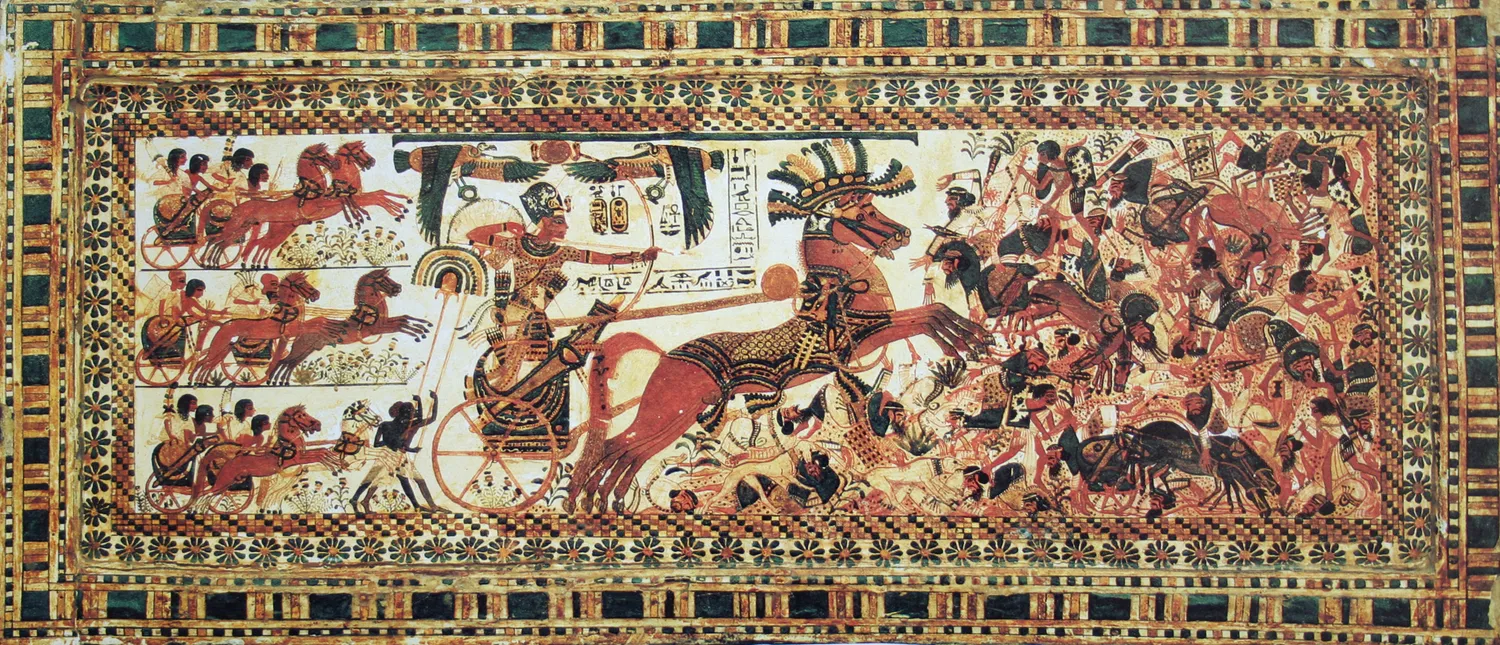
"The Pharaoh Tutankhamun destroying his enemies" Source: Wikimedia Commons (Public domain).
Throughout ancient history, men commonly held positions of authority in both family life and government. In many early civilizations, societies were organized as patriarchies, meaning that men, particularly fathers and kings, made important decisions for their families, cities, and nations. This pattern can be seen in ancient Mesopotamia, Egypt, and Greece, where male leaders shaped laws, customs, and daily life for centuries.
In ancient Mesopotamia, the region between the Tigris and Euphrates rivers, men dominated most areas of public life. The Code of Hammurabi, created around 1754 BCE, is one of the oldest known sets of laws. This legal code, carved into a tall stone stele, clearly laid out different rules for men and women. For example, only men could own land and lead households, while women had fewer legal rights. Similar practices were found in Sumer, where kings and priests—all male—controlled religious ceremonies and government decisions. Archaeological evidence, such as the clay tablets from the city of Ur, shows that men signed contracts and led trade agreements, reinforcing their dominant role.
In ancient Egypt, the pharaoh was almost always male and considered both a king and a god. Pharaohs like Ramses II and Tutankhamun commanded armies, built massive monuments, and led religious rituals. Most families were also led by men, who made decisions about work, property, and marriage. However, evidence from tomb paintings and letters shows that some women, like Queen Hatshepsut, could become powerful rulers, though this was rare. The Nile River shaped Egyptian society, and men’s control over resources and land was key to their power.
In ancient Greece, especially in the city-state of Athens, patriarchy was part of daily life and government. Only free-born men could participate in the assembly, vote, or hold office. Women and enslaved people were excluded from political life. Philosophers such as Aristotle wrote that men were naturally suited to rule, reflecting the ideas of their time. Yet, in the city-state of Sparta, women had more freedom compared to Athens, although men still held most official power. Greek literature, like Homer’s "Iliad," often described heroes and kings making decisions for entire communities.
The influence of male authority in ancient civilizations lasted for thousands of years and is an important example of how societies organized themselves. While men were usually at the top of the social hierarchy, evidence shows that women could sometimes rise to positions of leadership. Understanding patriarchy helps historians explain how laws, traditions, and daily life were shaped in different places and times.
Learning about men in power connects to larger questions about how people organize their societies, make rules, and distribute power—topics that remain important in world history today.
Interesting Fact: In ancient Mesopotamia, a man’s beard was often a symbol of his status and power. Kings and officials wore carefully styled and curled beards to show their authority.
Who created the Code of Hammurabi?
Babylonian king HammurabiPharaoh Ramses IIGreek philosopher AristotleQueen Hatshepsut
Which river shaped ancient Egyptian society?
Nile RiverYellow RiverAmazon RiverEuphrates River
Who could participate in the Athenian assembly?
Free-born menAll womenEnslaved peopleForeigners
Why did men hold most power in patriarchies?
Traditions and laws favored menWomen chose not to leadGeography demanded itReligious leaders were all women
How did the Code of Hammurabi show male authority?
Only men could own landIt allowed women to voteWomen led assembliesIt made women pharaohs
How was Sparta different from Athens for women?
Women had more freedomWomen could be kingsWomen led governmentWomen had fewer rights
Most ancient leaders were male. True or false?
TrueFalse
What does "hierarchy" mean?
Ranked system of authorityReligious celebrationAncient monumentA kind of government
Perfect For:
👩🏫 Teachers
• Reading comprehension practice
• Auto-graded assessments
• Literacy skill development
👨👩👧👦 Parents
• Reading practice at home
• Comprehension improvement
• Educational reading time
🏠 Homeschoolers
• Reading curriculum support
• Independent reading practice
• Progress monitoring
Reading Features:
📖
Reading Passage
Engaging fiction or nonfiction text
❓
Comprehension Quiz
Auto-graded questions
📊
Instant Feedback
Immediate results and scoring
📄
Printable Version
Download for offline reading
🔊
Read Aloud
Voice-over with word highlighting
Reviews & Ratings
No reviews yet. Be the first to share your experience!
Related Content
Ancient Civilizations and the Environment
This engaging history reading passage explores how ancient civilizations such as Mesopotamia, Egypt, and the Maya adapte...
Gender Roles in Ancient Civilizations
This engaging history reading passage explores the roles of men and women in various ancient civilizations, including Me...
Writing Prompts Ancient Civilizations
Step into the shoes of an archaeologist with this engaging worksheet focused on ancient civilizations. Students will be ...
W.5.2.A-2W.5.1.CW.5.1.D
Ancient Monarchy
This reading passage explores the concept of monarchy in ancient civilizations, focusing on the origins, structure, and ...
Evidence in Ancient History
This engaging history reading passage investigates how archaeologists and historians discover clues about how ancient pe...
Ancient Theocracy
This engaging history reading passage explores the concept of theocracy in ancient civilizations, where priests and reli...
Ancient Mathematics
This passage explores the essential role of mathematics in ancient civilizations, including Mesopotamia, Egypt, Greece, ...
Ancient Canaan
This educational passage explores the land of Canaan, the historical homeland of the ancient Israelites. Students will l...
Ancient Money Barter
This passage explores the fascinating evolution from barter to the earliest coins in ancient civilizations, focusing on ...
Ancient Science and Medicine
This comprehensive reading passage explores the development of science and medicine in ancient civilizations, including ...
Ancient Literature
This passage explores the importance of ancient stories and poems from civilizations such as Greece, India, and Israel. ...
Ancient Agriculture Farming
This passage explores the transformative impact of farming on ancient societies, examining how the Neolithic Revolution ...
Ancient Writing Systems
This engaging history reading passage explores the origins and evolution of ancient writing systems, including cuneiform...
Geography of Ancient Israel
This passage explores the rich geography of Ancient Israel, focusing on how landforms, climate, and natural resources sh...
Slavery Across Civilizations
This detailed history reading passage explores the role and impact of slavery across several ancient civilizations, incl...
Social Classes in Ancient Societies
This passage explores the concept of social hierarchies in ancient civilizations, focusing on why societies such as Meso...
Social structures in Ancient World
This passage explores the organization and significance of family life in ancient societies, focusing on how extended fa...
Polytheism and Monotheism in Ancient Times
This passage explores the religious beliefs of ancient civilizations, focusing on the differences and similarities betwe...
Women in Ancient Societies
This reading passage explores the complex roles of women in the ancient world, focusing on civilizations such as Mesopot...