Anglerfish Habitat and Diet
Interactive passage with audio narration, comprehension questions, and printable PDF.
By completing this purchase you agree to our Terms of Use and Privacy Policy. Your subscription renews automatically until you cancel. You can cancel anytime from your account settings. All sales are final and non-refundable. Digital content is available for download in your account immediately upon purchase.
What's included
Anglerfish Habitat and Diet preview and details
About this printable Anglerfish Habitat and Diet science reading passage, NGSS-aligned (Grade 6)
Sample passage and quiz from Anglerfish Habitat and Diet
Reading passage and comprehension quiz preview
Anglerfish Habitat and Diet
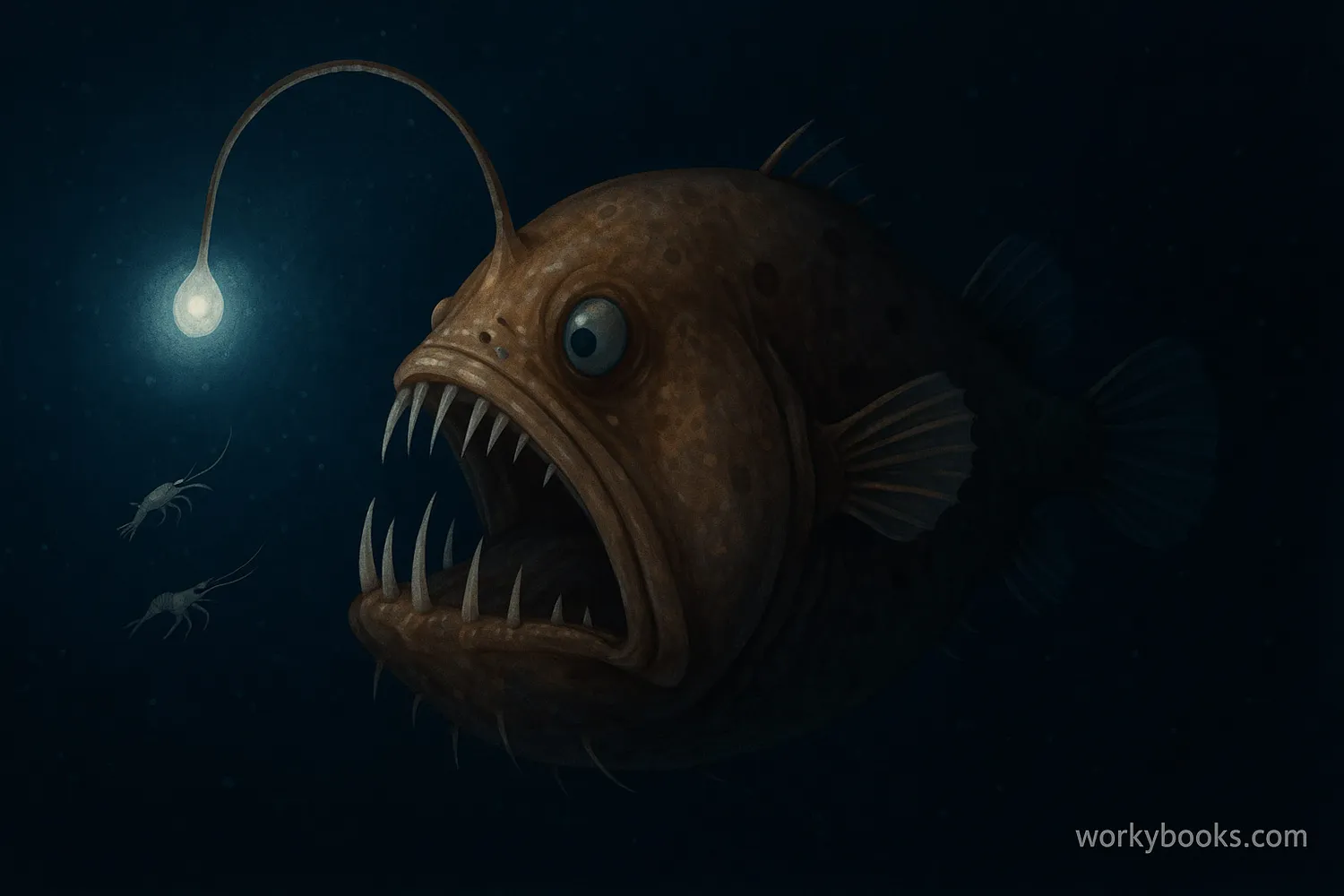
Imagine a world so dark, sunlight never reaches it. This is the deep sea, a mysterious ecosystem where some of the most unusual creatures on Earth live. Among them is the anglerfish, a fish with a truly remarkable way of life. These creatures have developed incredible adaptations to thrive in an environment where food is scarce and hiding places are few.
Anglerfish are found in oceans all over the world, but they prefer the abyssal zone, thousands of meters below the surface. This extreme habitat is characterized by crushing pressure, freezing temperatures, and, most importantly, a complete lack of light. In such a dark world, finding food is a huge challenge. This is where the anglerfish's unique hunting strategy comes into play. They are carnivores, meaning their diet consists entirely of other animals.
The most famous feature of the anglerfish is its 'fishing rod,' a long, fleshy growth called an illicium that extends from its head. At the tip of this illicium is a glowing bait, a sac filled with light-producing bacteria. This phenomenon is called bioluminescence. The anglerfish uses this natural light as a lure to attract unsuspecting prey, such as small fish and crustaceans, in the pitch-black depths. Once a curious creature comes close enough to investigate the light, the anglerfish strikes with astonishing speed, engulfing its prey in its large, toothy mouth.
This method of hunting is crucial for survival in an environment with limited resource availability. Food resources in the deep sea are scattered and rare. By luring prey directly to them, anglerfish conserve energy they would otherwise spend actively searching for food. This clever adaptation allows them to be successful predators in their challenging deep-sea home, securing enough sustenance to survive and reproduce, maintaining their population within this unique food web.
Interesting Fact: Some female anglerfish are much larger than the males, and the male will permanently attach himself to the female, becoming a tiny parasite that provides sperm when needed.
Comprehension quiz (10 questions)
1. Which zone do anglerfish prefer to live in?
2. What is the 'fishing rod' on an anglerfish called?
3. Why is finding food a challenge in the deep sea?
4. How does an anglerfish lure its prey?
5. What does 'carnivores' mean for anglerfish?
6. What is the primary benefit of the anglerfish's hunting strategy?
7. Why is resource availability a challenge in the deep sea?
8. If a deep-sea creature relies on sunlight for energy, could it survive in the abyssal zone?
9. The anglerfish's adaptation of bioluminescence helps it find food in dark environments. True or False?
10. What does 'bioluminescence' mean?
Perfect for the way you teach
- Build comprehension skills
- Auto-graded quiz
- Differentiated reading
- Read together at home
- Improve fluency
- Quiet reading time
- Reading curriculum support
- Independent practice
- Track Lexile growth